
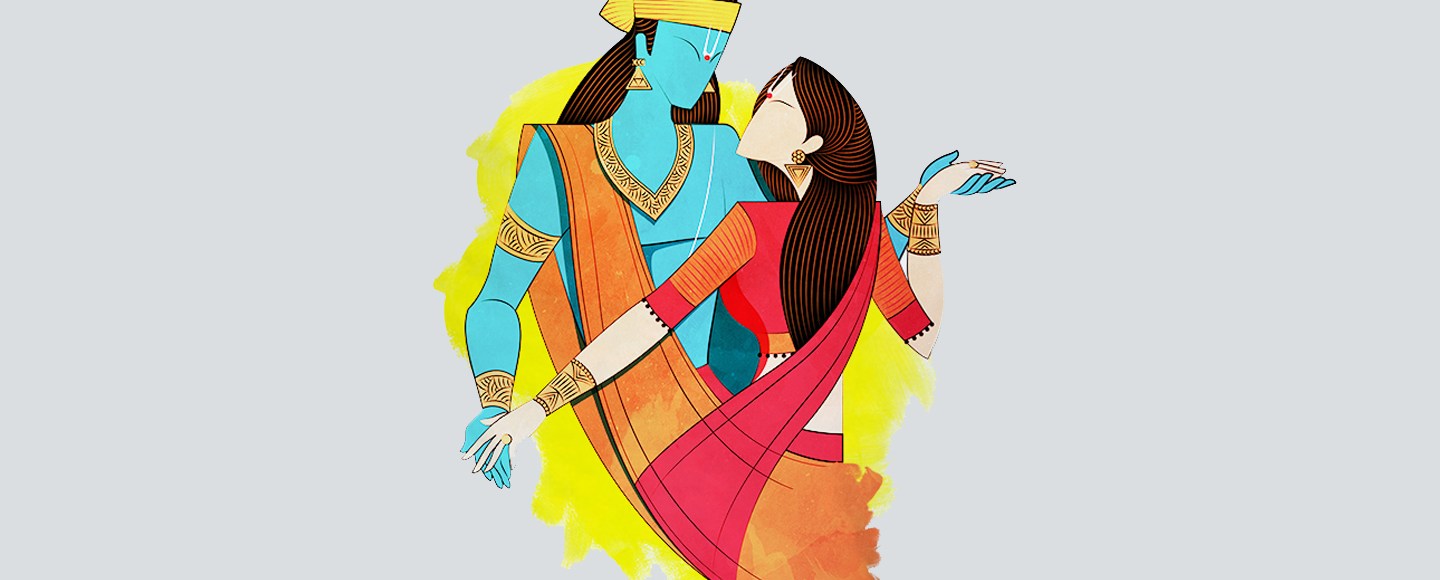

My grandmother was born on Janmashtami and so, naturally, she was named Krishna. It’s a unisex name. Much like Krishna the god himself, who I suspect was gender-fluid in his divine omnipotence.
Krishna the god goes from man to woman in my imagination, like Sushant Divgikr the drag queen, and he moves his body in sacred sensuousness, like Anusha Hegde the belly dancer.
Like a man, he charms you and demands surrender. Like a woman, he lights up each cell of your body with his own love and benevolence, raising you to the skies.
I am not religious, but Krishna is a religion unto himself. When my grandma died peacefully in her sleep, Krishna in his godliness taught me that life means death. When the walls of my first marriage were falling apart, he taught me that faith means fearlessness. When I stepped out of home for the first time to earn my own living, he taught me that work means worship. When I battled social mores to be with a partner of my own choosing, he taught me that love means courage.
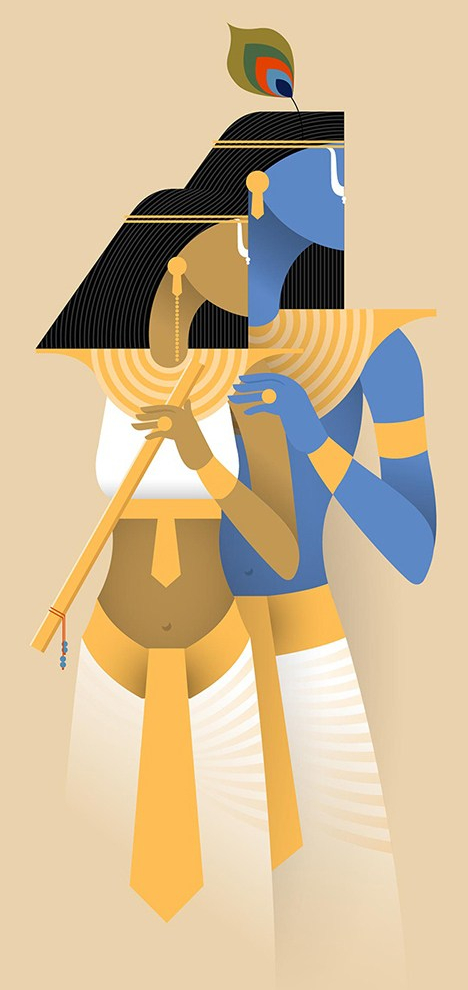
Krishna called me toward him in his characteristic insidious ways. He dipped me in the fire of domestic abuse so that I would call out his name. He carried me on wings around the world so that I would see his different forms. He took me to the end of my tether on a deserted road in a frozen corner of the planet so that I could have an epiphany. He threw me into the arms of a lifetimes-old playmate so that I could experience his own life-giving ecstasy. He teased me with sorrows and joys with unpredictable regularity, so that I may learn to wait for him under any circumstance, calmly, patiently, stoically.
He changed forms – sometimes the tantrum-throwing child, sometimes the furious mother. Once he was an overbearing boss, at another time a petulant employee. He warmed me when hardships left me bare and cold; he cooled me when I got fired up fighting injustice.
But he was always there. Even if I forgot him at times, he never forgot me. Even if I was busy with my own little existence and my own little preoccupations, he was always there every time I looked up.
Every time I looked up, he was there.

Mere mortals give such limited definitions to love – tying it down in ropes of morality, fidelity, certification, declarations – but Krishna was the antithesis of all that. He was a born rebel. He loved thousands of women, all equally, and his divine consort was married to another man. The slim threads of matrimony could not contain his all-encompassing Love, the one with the capital L, the one that lit up the world and laid the path of idolatry for centuries to come.
In fact, in him, it is her who comes first. Radhe-Krishna. He is gender-fluid like that.
What is Krishna? A mythological being, a historical reality, an imaginary god? Every time I wonder, he tells me, You are like a fish asking, what is water? So now I don’t ask, I just swim in him.
And every time I look up, he is there.
Illustrations by Yashashri Kambli. First published in eShe’s September 2019 issue.
Discover more from eShe
Subscribe to get the latest posts sent to your email.
 eShe
eShe 
the Srimad Bhagvatham canto 4 chapter 24 text 50 describes – “The Lord’s belly is extremely charming with three thick folds, it is so round as to resemble a pipal tree leaf in shape, and when He inhales and exhales, the shaking of His belly looks so attractive that the whole universe wishes to enter into His gorgeous deep navel”. So, I think you are right that Shri Krishna did belly dance.
another reference from the Bhavansaar sangraha says- “Krishna Kunda daam chapala, Bandhura Tunda shobhita Tarala”.
which, if translated to English from Sanskrit, says- “the jasmine garland of Krishna is moving restlessly, as the wavy thick belly/abdomen of Lord Krishna quivers and dances furiously”. And many men have practiced romantic Bhakti/Maadhurya Bhakti towards Lord Krishna in the mood of Radha or Gopis.
please do share your opinions on this.
LikeLike
That’s so interesting! Thank you for sharing this!
And the belly dance description!!! Priceless 😀
LikeLike
Here is a detailed description of Lord Krishna’s belly and deep navel from Suka Sari Stava written by Kaviraj Krishnadas Goswami:
“adhas-tiryag-rekha-sarid-upari sa nabhi-sarasi
tayor madhye vastir dhruvam agha-ripor asti pulinam
sada rasa-kridam yad iha nija-vritty-adbhuta-nati-
cayaih sri-radhaya hridaya-nata-rajah pranayati
adhah-below; tiryak-curved; rekha-line; sarit-the stream; upari-above; sa-that; nabhi-of the navel; sarasi-lake; tayoh-of the two; madhye-in the middle; vastih-the lower part of the abdomen; dhruvam-certainly; agha-ripor-of Lord Krishna, the enemy of Agha; asti-is; pulinam-the shore; sada-continually; rasa-kridam-the pastime of the rasa dance; yat-which; iha-here; nija-her own; vriti-activity; adbhuta-wonderful; nati-of dancers; cayaih-with a host; sri-radhayah-of Srimati Radharani; hridaya-of the heart; nata-of dancers; rajah-the king; pranayati-performs.
In between Lord Hari’s navel-lake and the river that is the lower line of His abdomen is a plain where the king of dancers, Sri Radha’s heart, performs a rasa dance with her many wonderful associates.
Text 40
sri-vasti-romavali-nabhi-dambhan
nipana-sad-rajju-sudhoda-kupan
trisharta-gopi-gana-go-gananam
panaya dhatasrijad acyutange
sri-vasti-the lower abdomen; roma-of hairs; avali-line; nabhi-navel; dambhat-on the pretext; nipana-for drinking; sat-transcendental; rajju-with ropes; sudha-uda-of nectar; kupan-wells; trisha-by thirst; arta-afflicted; gopi-of gopis; gana-of thehost; go-of cows; gananam-of the host; panaya-for drinking; dhata-the creator Brahma; asrjat-created; acyuta-of the infalliable Personality of Godhead; ange-on the body.
On the pretext of fashioning a navel and lower abdomen decorated with a line of hairs, the creator Brahma placed on the body of the infallible Personality of Godhead a series of nectar watering-places to slake the thirst of the surabhi cows that are the vraja-gopis.
Text 41
gopi-mano-dhanya-cayanya-vasana-
tushapaharottara-samskritau vidhih
nilopalolukhalatam ninaya yat
krishnavalagnam hridi me cakastu tat
gopi-of the gopis; manah-of the thoughts; dhanya-of grain; caya-of the abundance; anya-other; vasana-of desires; tusa-the chaff; apahara-for removing; uttara-samskritau-in the matter of the final perfection; vidhih-the creator Brahma; nila-upala-sapphire; ulukhalatam-to the state of being a mortar; ninya- brought; yat-which; krishna-of Lord Krishna’s body; avalagnam-the middle part(the abdomen); hridi-in the heart; me-my; cakastu- may be manifested; tat-that.
May Lord Krishna’s abdomen, which the creator Brahma transformed into a sapphire grinding-mortar to remove the chaff of material desires from the granary of the gopis’ thoughts, appear in my heart.
Text 42
krishnavalagnasya mishad uma-pater
visphardhayaradhanayardite muhuh
purvapara-sthula-vibhaga-samyuto
dhatra vitirno damaruh smaraya kim
krishna-of Lord Krishna; avalagnasya-of the middle part of the body; mishat-on the pretext; uma-pateh-of Lord Siva, the husband of Uma; vispardhaya-with rivalry; aradhanaya-with worship; ardite-afflicted; muhuh-at every moment; purva-first; apara-and second; sthula-large; vibhaga-with parts; samyutah-endowed; dhatra-by the creator; vitirnah-presented; damaruh- damaru drum; smaraya-to cupid; kim-how is it?
Why, on the pretext of fashioning Lord Krishna’s waist, did the creator Brahma gave an excellent damaru drum, broad at both ends, to the demigod Kama? Kama attained this gift by always worshiping Brahma, and now that he has it, he is able to challenge Lord Siva himself.
Text 43
harer vakshah-kakudmatyor
visargam antarasthitam
madhya-dambhad dvayor navyam
jaihva-mulaksharam vyadhat
hareh-of Lord Hari; vakshah-of the chest; kakudmatyoh-of the hips; visargam-creation; antara-between; asthitam-situated; madhya-of the waist; dambhat-on the pretext; dvayoh-of both of them; navyam-new; jaihva-mula-aksharam-the letter jihvamuliya; vyadhat-placed.
On the pretext of fashioning a thin waist, the demigod Brahma placed a jihvamuliya letter between Lord Hari’s broad chest and hips.
Note: In this verse the Lord’s waist is compared to the jihvamuliya letter: )(.
Text 44
drishtva bakarer avalagna-saushthavam
nijavalagnasya ku-kirti-sankaya
durgasu durga-janakasya bhu-bhrito
darishu parindra-gana vililyire
drishtva-having seen; baka-areh-of Lord Krishna, the enemy of Bakasura; avalagna-of the waist; saushthavam-excellence; nija-of their own; avalagnasya-of the waist; ku-kirti-defemation; sankaya-fearing; durgasu-inaccessible; durga-janakasya-of the Himalaya mountains; bhu-bhritah-of the mountain; darisu-in the caves; parindra-of lions; ganah-the community; vililyire- disappeared.
Seeing the handsomeness of Krishna’s thin waist, and fearing their own waists would no longer be glorious in comparison, the lions became embarrassed and fled, disappearing into Himalayan caves.
Text 45
lavanya-vanya-bhrama-bhanga-purne
baki-ripor nabhi-hrade gabhire
trisharta-gopi-hridayebha-pali-
magnaiva nonmajjati sa kadapi
lavanya-of beauty; vanya-the flood; bhrama-with a whirlpool; bhanga-and waves; purne-full; baki-ripoh-of Lord Krishna, the enemy of Putana; nabhi-of the navel; hrade-in the lake; gabhire-deep; trisha-by thirst; arta-afflicted; gopi-of the gopis; hridaya-of the hearts; ibha-of elephants; pali-the herd; magna-drowned; na-not; unmajjati-to emerge; sa-they; kadapi-at any time.
Drowning in Krishna’s deep navel-lake filled with whirlpools and waves of handsomeness, the thirsty elephants of the gopis’ hearts will never rise again.
Text 46
sri-krishna-vigraha-tamala-sura-drume ‘smin
sobha-maranda-bhrita-nabhi-sukitaro ‘sti
lobhad vadhu-drig-ali-palir iha pravishta
yat sa punar na hi nireti rase nimagna
sri-krishna-of Lord Krishna; vigraha-of the form; tamala-tamala; sura-drume-in the desire-tree; asmin-in this; sobha-of transcendental beauty; maranda-honey; bhrita-held; nabhi-of the navel; sukotarah-the hollow; asti-is; lobhat-out of greed; vadhu-of the young girls of Vraja; drik-of the eyes; ali-of bumble-bees; palih-the swarm; iha-here; pravishtah-has entered; yat-because; sah-they; punah-again; na-not; hi-certainly; nireti-will emerge; rase-in the nectar; nimagna-immersed.
In the tamala desire-tree of Sri Lord Krishna’s form is a navel-hollow filled with the honey of handsomeness. Entering there and greedily drowning in the honey, the bumblebees of the gopis’ eyes will never come out again.
Text 47
vishnor gangajani bali-nutan nicagagre ‘nghri-padmat
tan-matsaryat tri-bali-mahitad urdhvaga nabhi-padmat
saureh krishnajani tanuruhali-cchalat pasyatam ya
tasmin pritim janayati param vasanam samvidhuya
vishnoh-from Lord Vishnu; ganga-the Ganges river; ajani-became manifested; bali-by Bali Maharaja; nutat-glorified with prayers; nicaga-descending; agre-from the tip; anghri-padmat-of His lotus feet; tat-of that; matsaryat-out of envy; tri-three; bali-by the Bali Maharaja’s of the three folds of skin at the Lord’s waist; mahitat-glorified; urdhvaga-ascending; nabhi-padmat-from the lotus-navel; saureh-from Lord Krishna; krishna- the Yamuna river; ajani-was manifested; tanuruha-of hairs; ali- of a multitude; chalat-on the pretext; pasyatam-one may see; ya-which; tasmin-for Him; pritim-love; janayati-creates; param-other; vasanam-desire; samvidhuya-cleansing.
The Ganga descended from Lord Vishnu’s lotus feet, which were praised by Bali Maharaja. Impelled by jealousy, the Yamuna appeared as a line growing up from Krishna’s lotus navel, which is praised by three Balis. One who sees this becomes free of material desires and attains pure love.
Note: “Bali” also means fold of skin.” The {.sy 168}three Balis” are the three folds of skin at the Lord’s waist.
Text 48
nabhi-bilat sami samutthita harer
ya bhati romavali-krishna-pannagi
svam pasyatam sukshmatamapy ahar-nisam
cittanilan sanculuki-karoti sa
nabhi-of the navel; bilat-from the hole; sami-half; samutthita-emerged; hareh-of Lord Hari; ya-which; bhati-is manifested; roma-of hairs; avali-line; krishna-black; pannagi- snake; svam-own; pasyatam-one should see; sukshmatam-most clever; api-also; ahah-day; nisam-and night; citta-of thoughts; anilan-the winds; sanculuki-karoti-makes into mosels of food; sa-that; snake.
See the line-of-hairs black snake half-emerged from the hole that is Lord Hari’s navel! This clever line-of-hairs snake lives by day and night swallowing the breezes that are our thoughts.
Text 49
lavanima-madhu pitva nabhi-padman murarer
vraja-yuvati-jananam netra-bhringarbha-kelih
udara-nalina-patre ya papatoccalanti
tanuruha-tati-dambhat saiva sete pramatta
lavanima-of beauty; madhu-the honey; pitva-having drunk; nabhi-of the navel; padmat-from the lotus flower; murareh-of Lord Krishna, the killer of the Madhu demon; vraja-of Vrajabhumi; yuvati-jananam-of the young girls; netra-of the eyes; bhringa-arbha-of the young bumble-bees; kelih-pastimes; udara-of the abdomen; nalina-lotus; patre-on the petal; ya-which; papata-falls; uccalanti-rising up; tanuruha-of hairs; tati-series; dambhat-on the pretext; sa-that; eva-certainly; sete-rests; pramatta-intoxicated.
After drinking the honey of handsomeness from the lotus flower of Krishna’s navel, the playful young bumblebees of the vraja-gopis’ eyes become intoxicated, and although they try to fly away, they fall onto the lotus petal of His abdomen, where they stay disguised as a line of hairs.
Text 50
jita-cala-dala-nilambhojini-parna-jalam
madhurima-hrita-pasyal-loka-netrali-malam
tilakitam iva loma-sreni-kaliyakena
tri-bhuvana-jaya-lakshmya bhati govinda-tundam
jita-defeated; cala-moving; dala-with petals; nila-blue; ambhojini-of the lotus; parna-of petals; jalam-network; madhurima-by sweetness; hrita-enchanted; pasyat-looking; netra-of eyes; ali-of bumble-bees; malam-with a garland; tilakitam- marked with tilaka; iva-as if; loma-of hairs; sreni-kaliyakena-with a line; tri-the three; bhuvana- worlds; jaya-defeating; lakshmya-with beauty and glory; bhati- is manifest; govinda-of Lord Govinda; tundam-the abdomen.
Defeating a host of trembling blue lotus petals, garlanded with bumblebees of the gazing eyes of devotees enchanted by its sweetness, and ornamented with the tilaka mark of a line of hairs, Govinda’s abdomen shines with a splendor that conquers the three worlds.
Text 51
kasturika-lipta-tamala-navya-
dalosma-hrit-saurabha-mardavabham
atundilam tundilitakhilakshi-
bhringali divyaty udaram bakareh
kasturika-with musk; lipta-anointed; tamala-tamala; navya-fresh; dala-of the leaf; usma-burning pride; hrit-removing; saurabha-with it’s fragrance; mardava-and delicate beauty; abham-appearance; atundilam-thin; tundilita-filled; akhila-of everyone; akshi-of the eyes; bhringa-of bumble-bees; ali-with th multitude; divyati-is splendidly manifest; udaram-the abdomen; baka-areh-of Lord Krishna, the enemy of Bakasura.
Decorated with the bumblebees of the devotees’ eyes, and with it’s delicate handsomeness and sweet fragrance cooling the burning pride of a fresh tamala leaf anointed with musk, Krishna’s slender waist shines with great splendor.
Text 52
hridy ucchalat-tanuruha-cchala-nihsrita-sri-
nabhi-hradanupatitadi-rasa-pravaham
alpocca-parsva-yugalam dara-nimna-madhyam
madhye mano mama harer udaram cakastu
hridi-on the chest; ucchalat-rising; tanuruha-of hairs; chala-on the pretext; nihsrta-flowing; sri-nabhi-navel; hrada-to the lake; anupatita-falling; adi-transcendental; rasa-of nectar; pravaham-river; alpa-a little; ucca-high; parva-sides; yugalam-two; dara-a little; nimna-deep; madhyam-in the middle; madhye-in the middle; manah-the mind; mama-my; harer-of Lord Hari; udaram-the abdomen; cakastu-may be manifest.
May the stream of nectar, it’s banks a little shallow, and it’s middle a little deep, that descends from the mountain of Lord Hari’s chest and falls in the lake of His navel, and is disguised as a line of hairs, flow into my thoughts.
Text 53
radha-citta-marala-drik-sapharika-sasvad-vilasaspadam
kanci-sarasa-pali-nisvani-tatam lomali-saivalakam
lavanyamrita-puritam tribalika-sukshmormi-vibhrajitam
sri-nabhi-nalinam lasaty agha-ripoh sri-tunda-sat-palvalam
radha-of Srimati Radharani; citta-of the mind; marala-the swan; drik-of her eyes; sapharika-of the saphari fishes; sasvat-eternal; vilasa-of pastimes; aspadam-abode; kanci-of the Lord’s belt; sarasa-of the cranes; pali-of the host; nisvani-of the cooing sounds; tatam-on the shore; loma-of hairs; ali- series, or bumble-bees; saivalakam-with saivalak plants; lavanya-of beauty; amrita-with the nectar; puritam-filled; tri-balika-of three folds of skin; sukshma-little; urmi-with waves; vibhrajitam-manifested; sri-nabhi-of the navel; nalinam-with the lotus flower; lasati-is splendidly manifest; agha-ripoh-of Lord Krishna, the enemy of Agha demon; sri-tunda-of the abdomen; sat-transcendental; palvalam-pond.
A playground for the swan of Radha’s thoughts and the saphari fish of Her eyes, its shores filled with sounds of the cranes of His sash of bells, its moss a line of hairs, filled with the necatar of handsomeness, handsome with gentle waves of three folds of skin, and glorious with the graceful lotus of a navel, the lake of Krishna’s abdomen shines with great splendor.
Text 54
sri-radhika-parsva-mattalika-yuga-
sva-preyasi-sparsa-samutsukau sada
sri-parsva-san-nagara-tallajau hareh
su-vartulau snigdha-mridu virajatah
sri-radhika-of Srimati Radharani; parsva-of the sides; mattalika-excellent; yuga-pair; sva-own; preyasi-beloveds; saprasa-the touch; samustsukau-eager; sada-always; sri-parsva- the sides; sat-transcendental; nagara-gallants; tallajau- excellent; hareh-of Lord Hari; su-very; vartulau-round; snigdha-smooth, glistening, and beautiful; mridu-soft; virajatah-are splendidly manifest.
Yearning for the touch of the two beautiful girls that are the sides of Sri Radhika, the two handsome, gentle, and affectionate heroes that are the two sides of Lord Hari’s torso shine with great splendor.”
Another description from the Brahma Vaivarta Puran (this description is no more mentioned in today’s editions of the Puran):
“Lord Krishna in an effort to lure the elusive damsels started waving his form with eternal grace and spirit shaking gently and then furiously the Lord’s tummy which was pudgy started to ripple and wobble waves danced on it the gopis unable to resist the charm of the soft and cuddly tummy of the Lord came rushing allured by this divine vision
The gopīs hath never seen this form of the Lord swaying in the wind this side of the Lord had not been revealed to them sure he had kissed them and hugged them but never this this was unique exquisite they started poking his tummy and were glued to the sight of the waves the ripples on his stomach the Lord felt a wave of joy rush this entire being”
Another description from the Skanda Puran personified the long necklace of Krishna and describes that the necklace is paralyzed and rendered motionless as it is in touch with the handsome belly of Lord Krishna which has three thick folds of fat (healthy fat) and a deep gorgeous navel, the Lord’s belly and navel are storehouses of extreme handsomeness and love and compassion, the necklace, unable to bear the extreme love and compassion emitted from Lord Hari’s belly has got paralyzed with unbearable joy and pleasure
As someone who has fallen for Krishna for years, it is His belly with it’s three folds and His deep lotus navel which continuously make me fall at His feet, I don’t know what many might think, but I have no crush, no friend, it’s only Krishn whom I am attracted to, am not interested in any other crush or friend. In my personal imaginations, when He hits demons with His 👊🏼, with every punch, His thick belly shakes sideways which looks exceedingly attractive, then on seeing His wrath, I get extremely attracted to His handsomeness, nd also scared of His anger, then after putting his foes to death, He notices my fear, then, in an attempt to comfort me, He bends slightly forward, which makes His belly bulge and navel deepen, and makes it wave, wobble and dance playfully, He remaining still, but only His abdomen doing the dance, this erases my fear, then He expands His form using His supernatural powers, which makes Him slightly gigantic, takes me in His lap, His embrace, and makes His belly dance playfully, while I rest on that bulging belly leaning against it. (Krishna’s belly isn’t toned or hard as portrayed today in modern images, His belly is quite bulging, has three folds and a deep navel(as described in purans).
LikeLiked by 1 person
You could also try making a post entirely dedicated to the appearance of Lord Hari’s abdomen. Generally, His eyes, face, nose, chest are extensively talked about, but very less is spoken about His abdomen and today’s paintings wrongly portray His abdomen as thin and toned as today’s standards of a “hero” from movies 😅.
LikeLiked by 1 person
Yes then I would have to interview you about it 😃
LikeLike
You could also try making a post dedicated to the appearance of the Lord’s abdomen. His face, His eyes and nose are talked about extensively, but His abdomen is very less spoken about, now His abdomen is very wrongly portrayed in paintings and images as being thin and toned due to the modern influence of standards set for movie heroes 😅 as having a toned or thin abdomen. Scriptures describe Lord Krishna’s/Lord Vishnu’s belly as having healthy fat and a deep lotus like shapely navel.
LikeLiked by 1 person
Or maybe you can write about it for us 😄
LikeLike
I apologise for so many replies. I thought this website belongs to you.
LikeLiked by 1 person
It does, actually 😀 and you are most welcome!
LikeLike
I seriously apologise for all these.
LikeLike
To be Honest, I had no Idea that you are real Aekta Kapoor 😬. I thought that there are many in India whose name could be Aekta Kapoor. I really didn’t pay much attention.
LikeLike
😅And I wasn’t actually forcing/requesting a post on this. I just simply suggested 😅 as it was an expression of my opinions. This post of yours was nice 👍🏼. As of interview, I keep this particular topic very secret😅 as some conservative people might feel their religious sentiments hurt, so I commented anonymously. So, above all this post was nice and it was nice interacting with you. Have a good day ma’am 😊🙏🏼
LikeLike
Pingback: Dancing in devotion – 100 Paths
Pingback: 3 mantras that gave me strength during India’s second covid wave – 100 Paths