


By Shailaja Rao
Nonprofit organizations devoted to independent cinema have always operated under financial pressure, but those pressures have reached a critical point. Independent film itself is in crisis. It is against this backdrop that the decisions made by nonprofit organizations in North America to screen the Bollywood film Dhurandhar: The Revenge deserve examination.
In 2025, film industry stakeholders gathered at Sundance to confront what had become, in their own words, overwhelmingly obvious: independent film no longer has a viable business model, with declining streamer interest, a shrinking distribution system, and a widening gap in the kind of daring, challenging cinema that nonprofits were built to champion.
The financial data is stark. A 2025 analysis of nearly 6,500 arts nonprofits in the US found that 2024 brought across-the-board revenue losses – with government grants down 26 percent, foundation giving down 25 percent, and donations from individuals and corporations sliding back to or below pre-pandemic levels, all while operating costs continued to climb.
By mid-2025, hundreds of arts organizations had lost previously approved federal grants, creating an estimated $27 million shortfall in the sector – and with the US Congress considering cuts of up to a third of remaining National Endowment for the Arts (NEA) funding, the financial outlook for the coming year remains uncertain.
Dhurandhar: The Revenge released worldwide on March 19th, and audiences appear to be embracing the nearly four-hour film without complaint. At a time when theatrical attendance is in steady decline – with 780 million tickets sold in 2025 in the United States, nearly 5 percent below the prior year and well under half the pre-pandemic norm – this film stands as a notable commercial exception.

I should disclose upfront that I have not seen the film and do not plan to – a position that may seem contradictory given that I am a film festival programmer who has served on a festival jury and led a festival as an associate director. My reason is simple: we are already bombarded by disturbing images from around the world in our daily news feeds, and I have no desire to seek out additional divisiveness, violence and bloodshed on screen. That is a line I am not willing to cross.
What interests me here is not the film itself, but what the decisions made around it reveal about the organizations that profess to champion a very different kind of cinema.
The film did not arrive without warning. Critics and scholars have been unambiguous about what this two-part film series represents. Writing in Himal Southasia, scholar Raza Rumi situates it within a longer ideological arc: Dhurandhar “represents the culmination of a decades-long project to cast Hindu nationalism as the antidote to an unreliable, ‘terrorist’ and inherently evil Pakistan,” and “unmistakably crossed the proverbial Rubicon when it comes to cinematic propaganda in India.”
Newslaundry‘s review of the sequel is blunt: “Part 2 is angrier, louder, and more blatant in its messaging. It’s also emptier” with “more blood, more gore, more Hindutva, more fearmongering.”
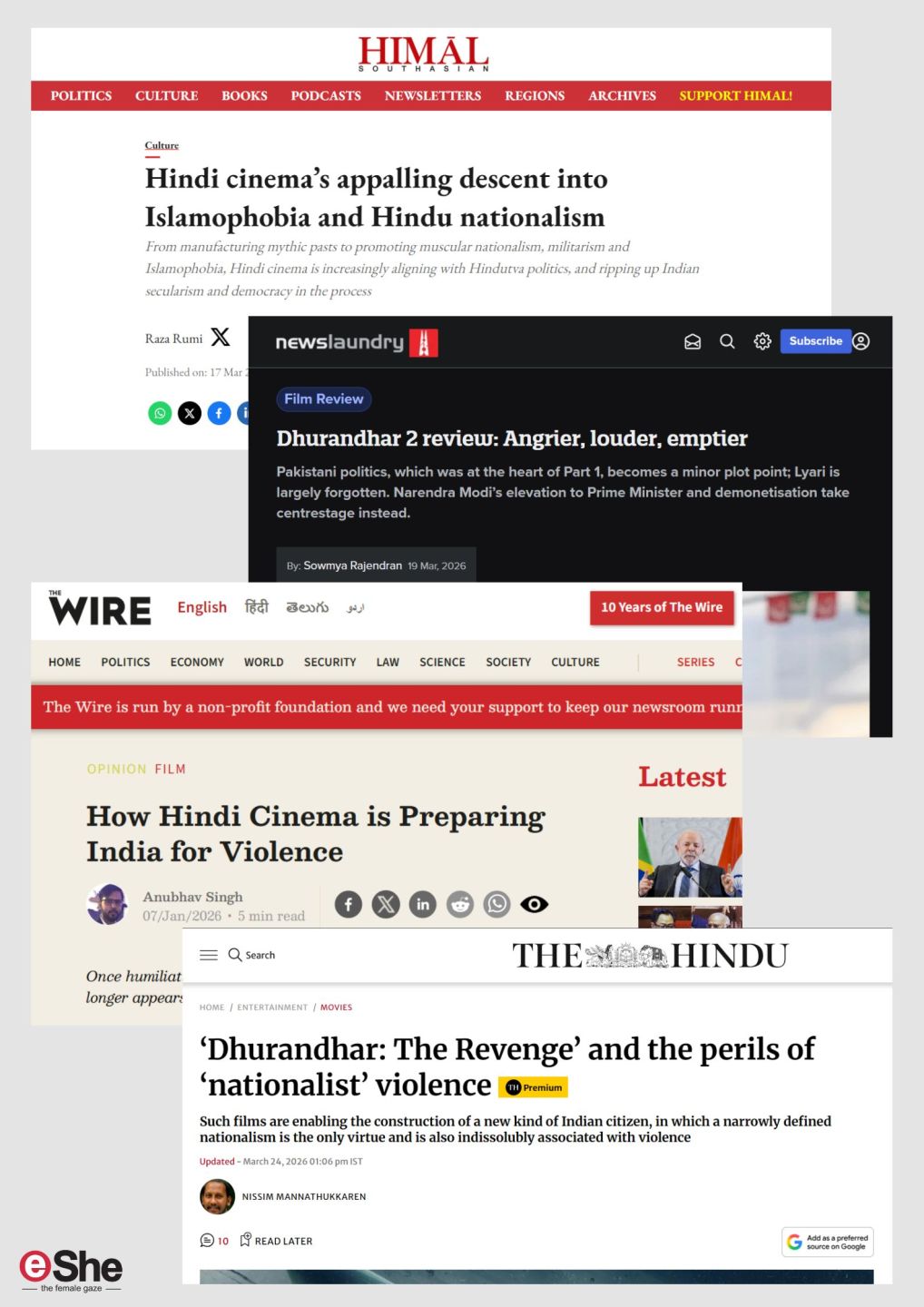
What makes this more than a standard debate about a controversial film is a deeper mechanism that The Wire identifies. Most troubling is not that the film incites violence directly, but that it conditions audiences, shaping how violence feels and who deserves to be its target.
As The Hindu newspaper points out, “This propaganda is not in favour of the state, like many Hollywood films, but in favour of the ruling party, thus collapsing together the state and the party.”
By weaving actual footage of terror attacks into a fictional story, the line between drama and documentation is deliberately blurred. The enemy on screen is not merely a cinematic villain – the slide from character to community is, as critics argue, engineered rather than incidental.
This context matters because it is precisely the kind of cinema that organizations devoted to independent, socially conscious filmmaking have historically positioned themselves against.
India’s Film Critics Guild issued a formal statement condemning “targeted attacks, harassment, and hate directed toward film critics” for their reviews of Dhurandhar, describing coordinated abuse including direct threats, vicious online campaigns, and attempts to tamper with existing reviews and persuade publications to alter their editorial positions.
The suppression extended beyond individuals: film critic Anupama Chopra’s video review on The Hollywood Reporter India was quietly made private, without explanation, after it drew right-wing backlash online for being mildly critical of the film’s gore and relentless action.
The most substantive criticism of this film has come from independent media outlets whose values align closely with the missions of the Toronto International Film Festival (TIFF) and Tasveer, a South Asian nonprofit based in Seattle.
And yet, this is the film these social-impact nonprofits chose to screen.
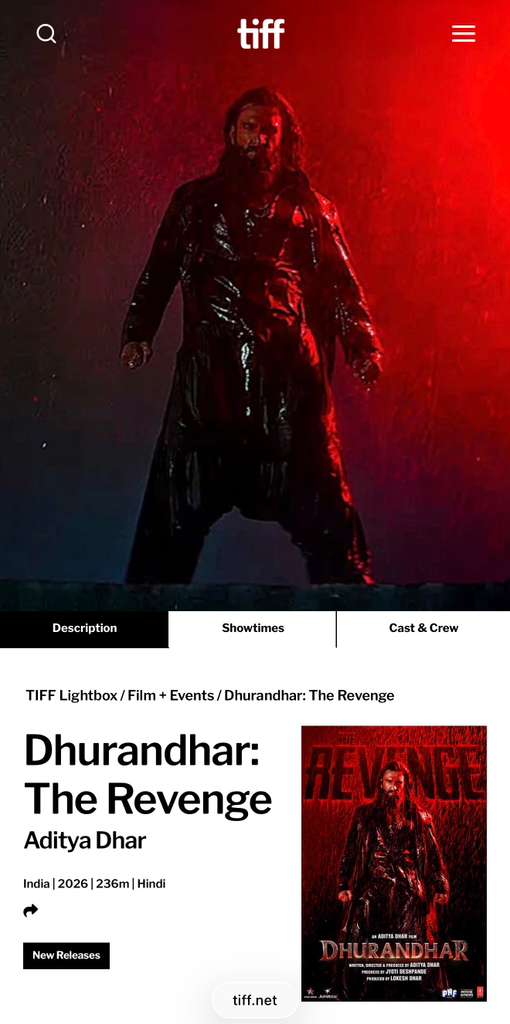
TIFF, a Canadian not-for-profit, is celebrated for its mission to “transform the way people see the world through film”. That mission now invites scrutiny. What once read as a clear statement of purpose becomes harder to reconcile in this context.
One has to wonder whether screening a film that independent critics, scholars and a formal guild of film professionals have identified as normalizing extreme violence and amplifying divisive rhetoric sits comfortably within TIFF’s mission or whether the decision was driven by something else entirely. Was it a desire to stay relevant? Revenue? Perhaps both.
Another telling example comes from Tasveer, whose mission is to “inspire social change through films, art, and storytelling.” Tasveer’s website describes how the organization was born in the aftermath of 9/11, after being troubled by the “stereotyped and highly prejudicial images of South Asians in the mainstream media,” and set out to “recast the harmful labels” through film, art and storytelling.
Given that critics have accused Dhurandhar: The Revenge of reinforcing stereotypes and amplifying prejudice against South Asian Muslims, Tasveer’s founding purpose makes the decision to screen it all the more difficult to reconcile.
Announcing a public screening is not an accident – it requires research, investment, planning and promotion. The organization acted only after facing significant community backlash, ultimately removing its Instagram post and cancelling the event. One is left to wonder whether the screening would have gone ahead had no one objected.

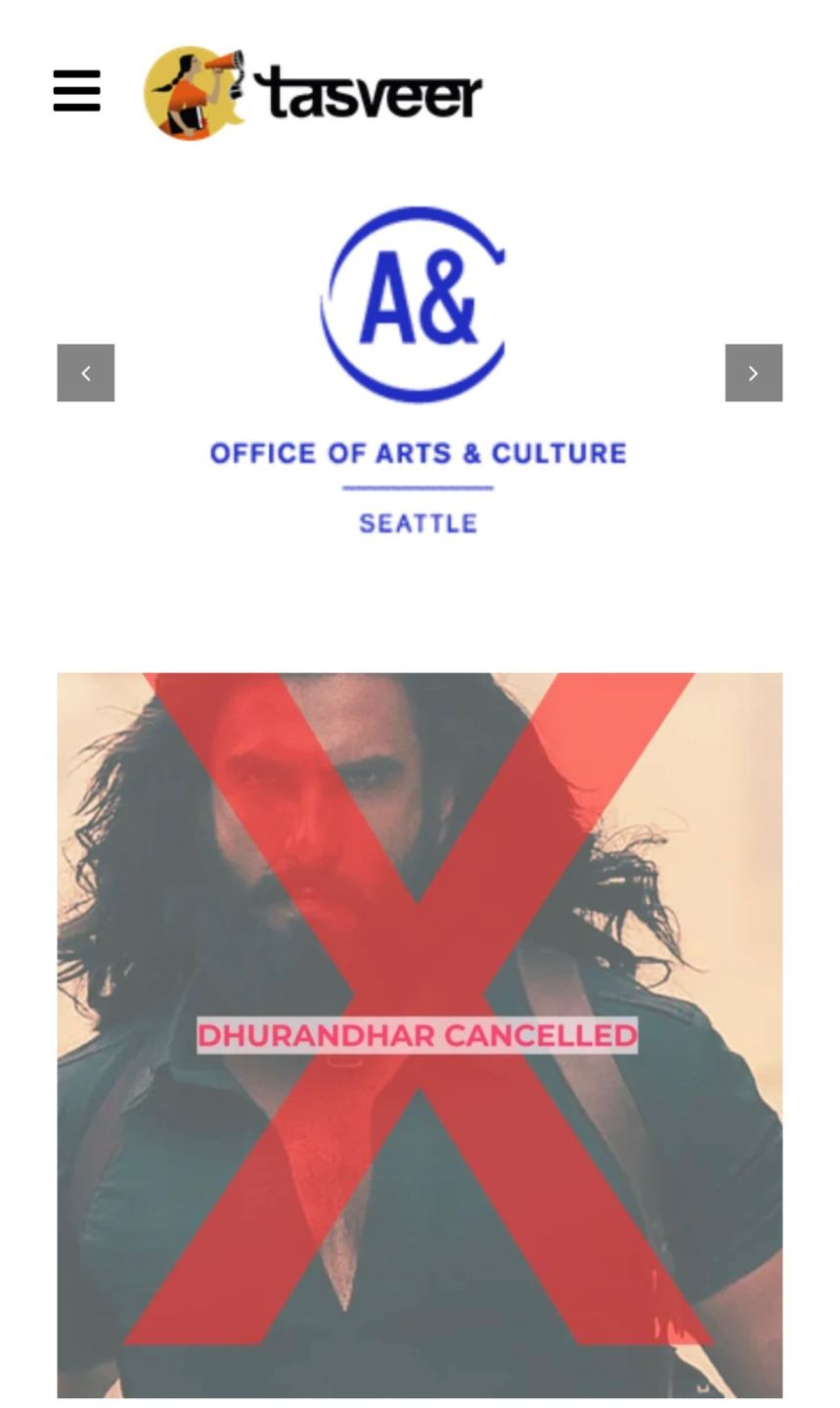
Screening the film was not inevitable – programming decisions are choices, and there is no shortage of South Asian cinema that challenges, provokes and inspires without resorting to propaganda or communal division.
Mission statements like “inspiring social change” or “transforming the way people see the world” are not throwaway phrases. They represent an organization’s promise to its community – the donors, filmmakers and audiences who believe in what it claims to stand for. It doesn’t take much to unravel them.
As India’s Film Critics Guild noted, interference with honest critical discourse “strikes at the core of independent film criticism and undermines the editorial autonomy that a functioning cultural ecosystem relies upon.” The same principle applies to the programming decisions of nonprofit organizations.
The moment an institution strays from the values it was built on, whether under financial pressure, the lure of relevance, or simple poor judgment – those carefully chosen words lose their meaning entirely.
The funding landscape has never been more difficult, but financial hardship is not a ‘Values Waiver.’ Every organization in this sector faces the same constraints, and most do not resolve them by screening films that contradict their own missions.
The question is not whether keeping the lights on matters. It is whether doing so at any cost is something these organizations can honestly defend to the communities they claim to serve.

Shailaja Rao is the executive director of eShe. Email: shailaja@esheworld.com
Discover more from eShe
Subscribe to get the latest posts sent to your email.
 eShe
eShe 
0 comments on “Sold out: ‘Dhurandhar’, nonprofit film festivals and the cost of compromise”