


By Smriti Sinha
A pristine, sleepy Himalayan region where tourists go in search of self, Ladakh has been pushed into the spotlight over the past few years. If a sudden abrogation of Article 370 in 2019 saw Ladakh suddenly step out of the shadow of Jammu & Kashmir and become a Union Territory, this year saw it speak up for its rights by demanding inclusion in the Sixth Schedule of the Constitution.
Ordinary Ladakhis took the brunt of the protests and subsequent backlash by the authorities. “We are emotionally drained,” says Padma Angmo, who, along with Rigzin Angmo, co-founded Nima Goos Goos, Ladakh’s first women-owned, women-led startup. With a dodgy internet connection, transportation hit, a small business like Nima Goos Goos is most affected by the government’s crackdown.
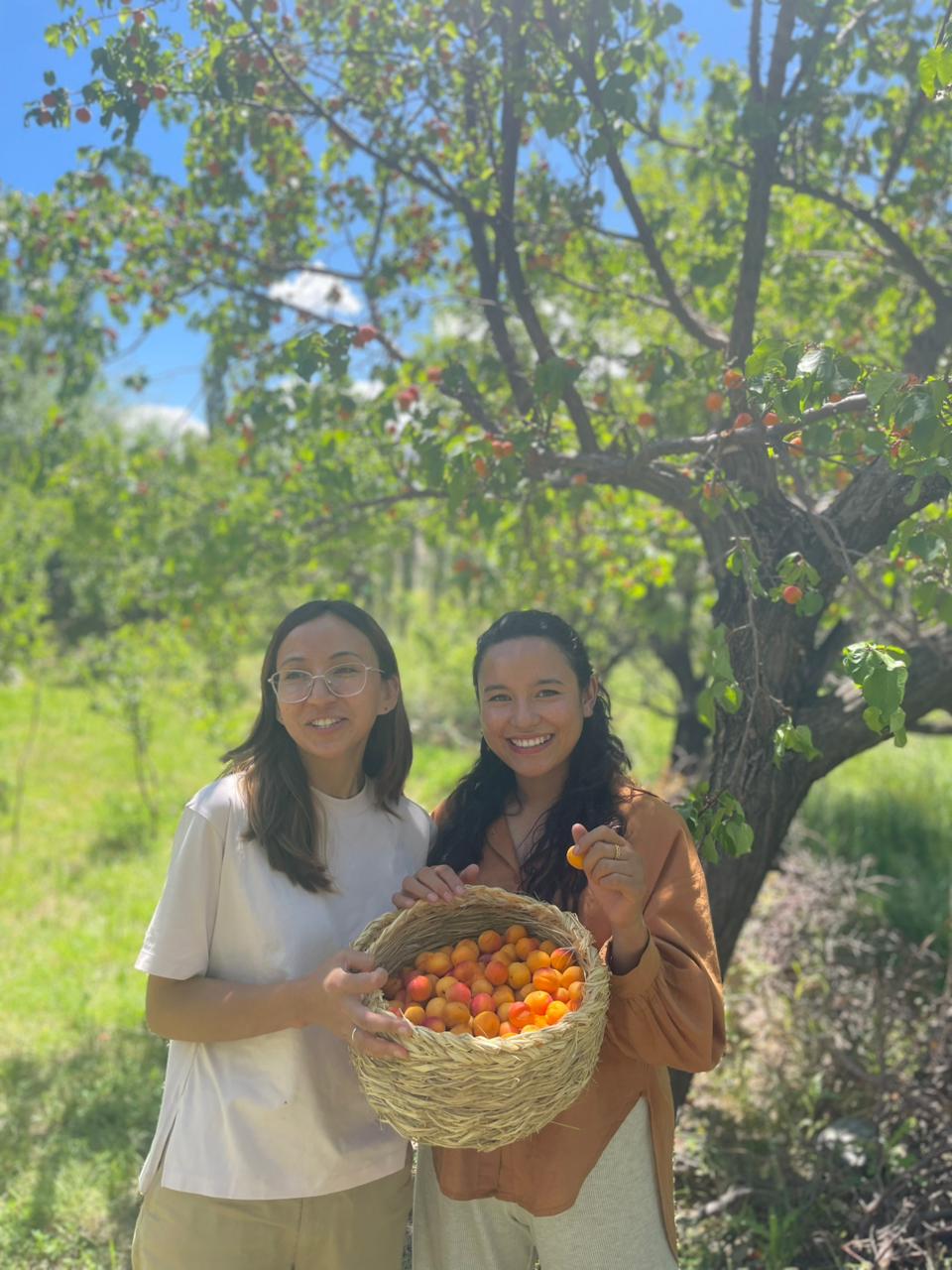
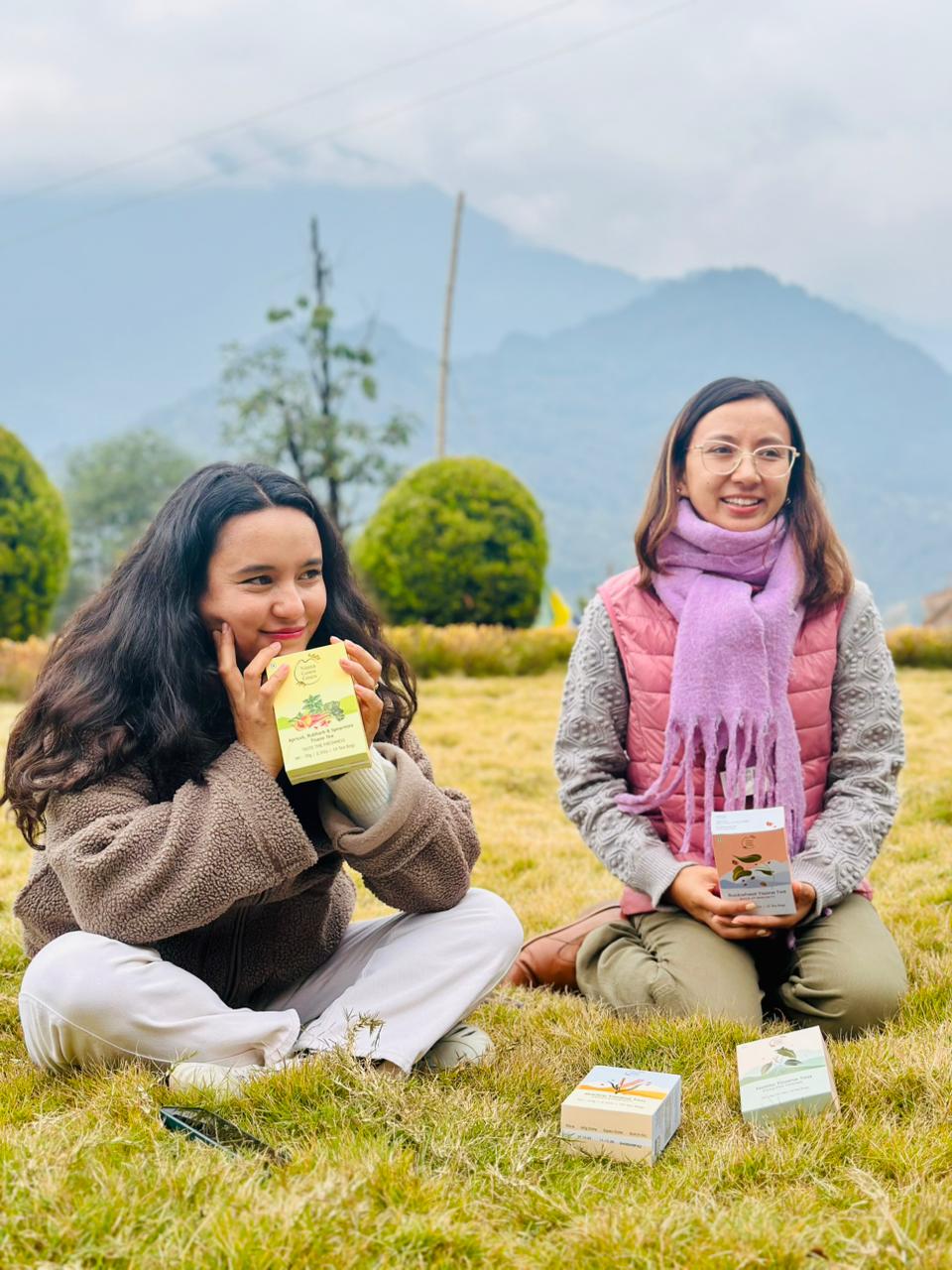
Nima Goos Goos, which means ‘sunflower’ in Ladakhi, sells artisanal Himalayan products, including tisanes and condiments. Padma and Rigzin conceived it as a part of the Naropa Fellowship’s Live-Action Project. “It is a year-long component of the programme where we design and develop entrepreneurial solutions to address challenges in the Himalayan region,” says Rigzin.
Vocal for local
“We were in the right place at the right time,” say the young entrepreneurs, talking about the birth of the startup. They share how the Union Territory status saw funds flowing into a region where entrepreneurship was an alien concept.
“All kids here go out for higher education, like we did. We were raised to aim for government jobs or look for work outside,” says Rigzin, who is a political science graduate from Lady Shri Ram College, Delhi University.
However, the Naropa Fellowship programme – they were a part of the founding cohort – inspired them to nurture their local produce and celebrate it by taking it outside the region to share with others. “We connected over our deep love for our food, herbs, and Ladakh’s indigenous wisdom,” she says.
They work with women farmers and foragers from remote Ladakhi villages to source organically grown and wild-harvested ingredients, transforming them into unique herbal tisane teas and condiments.
The startup takes pride in how it is pioneering a regenerative local economy – centring women cultivators and wild harvesters across Ladakh’s fragile mountain ecosystems.
Warming up to tisane
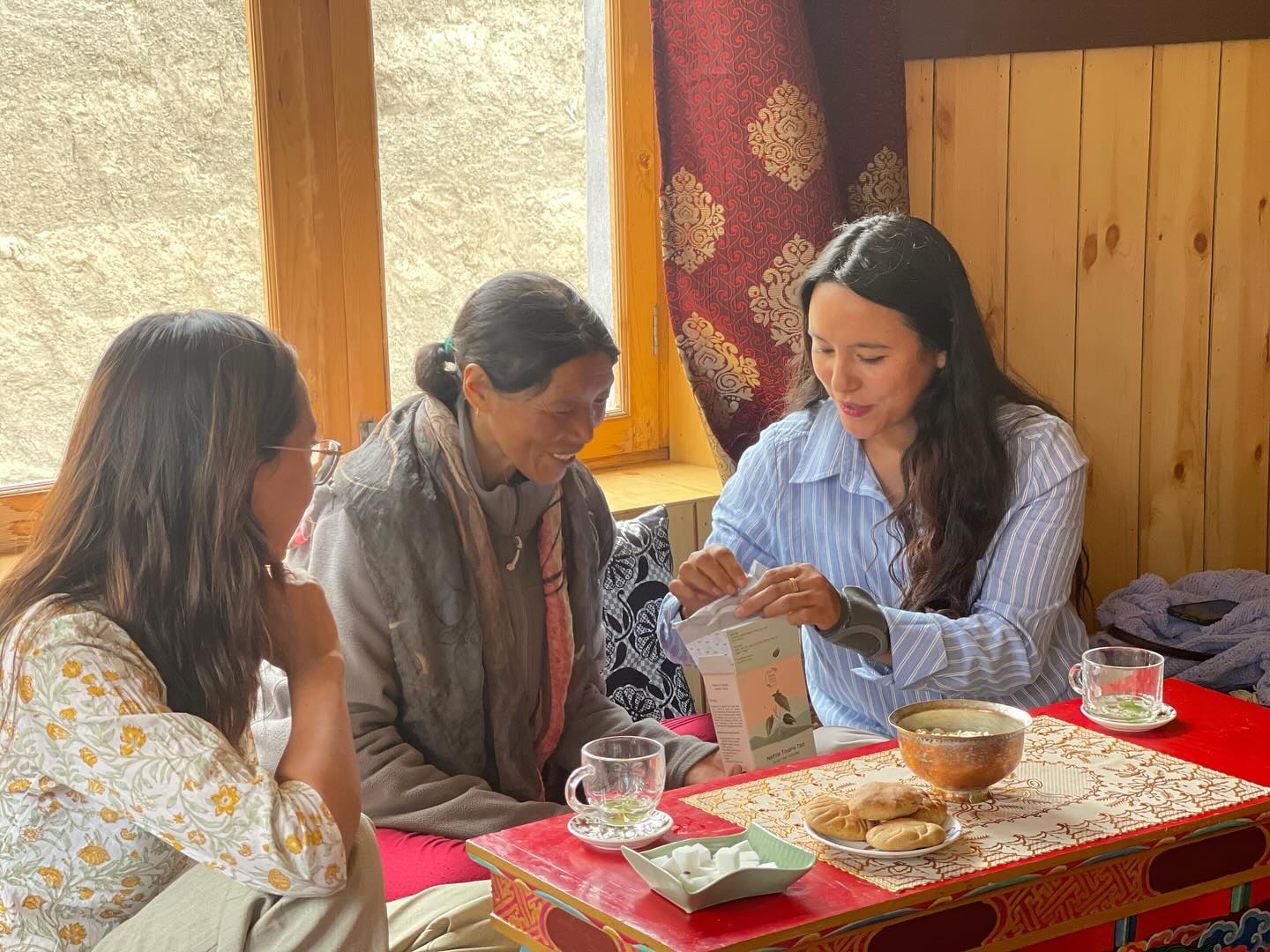
Simply put, a tisane is a beverage made from the decoction of herbs, spices, flowers, fruits, or other plant material, and is not from the tea plant. “Technically, then, our green tea is not really a tea but a tisane.” A substantial part of Nima Goos Goos’ business comes from tisane.
Which makes us ask, for a country guzzling tea or coffee by glassfuls, is tisane just a trend, or is there a clear shift towards something cleaner, healthier? Rigzin is quick to point out that even Ladakhis are traditional drinkers of butter tea. “Gen Z is shifting to caffeine-free beverages,” she says. So much so that many would rather import tisane than have regular caffeinated beverages.
According to IMARC, the tisane market in India stood at a little over ₹1,900 crore in 2024 and is set to cross ₹6,000 crore by 2033.
An early export interest from Japan, Europe, and Indian retailers and hospitality brands signals strong market demand, say the founders.
Most people are moving from coffee to matcha, from tea to tisane. That is where Nima Goos Goos comes in. The trick, Padma says, is in changing the mindset. The younger generation is easier to convince. The Gen Zs, even the millennials, are veering towards tisane on their own. For them, price is not the deciding factor; the health benefits are.
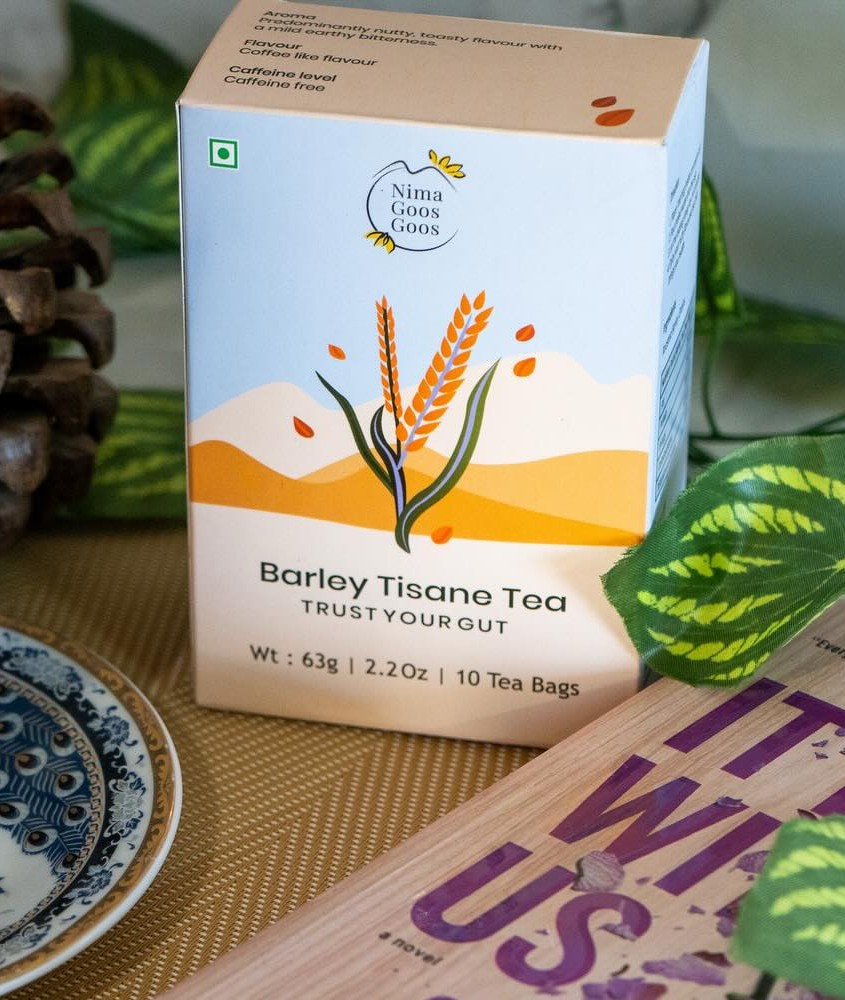
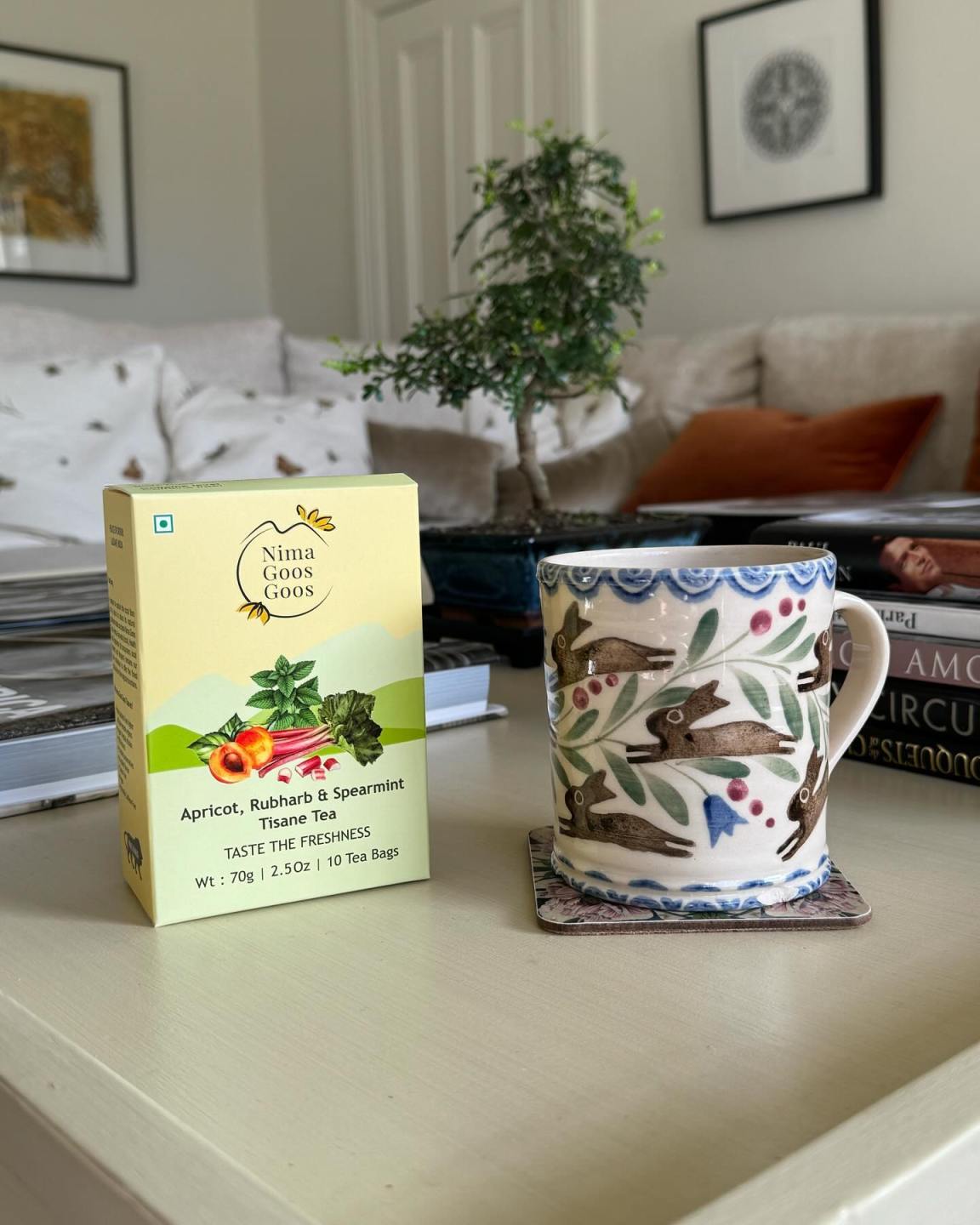
Price-wise, Padma says, a glass of their tisane may be a little more expensive than a cup of masala tea at an outlet. But it is the health benefits that make their products feasible in the long run. For instance, buckwheat tisane is packed with antioxidants and helps reduce inflammation. The nettle tisane flushes out toxins.
For the younger lot, it is also about aesthetics, adds Rigzin: “Who can deny that the blue pea tea looks more beautiful on Instagram?”
Many firsts
The political development in 2019 boosted the trajectory of the company with a lot of opportunities coming their way through the Union Ministry of Food Processing and the Directorate of Industries and Commerce.
Alsisar Impact, a key early backer of frontier enterprises across the Himalayas, played a catalytic role in scaling Nima Goos Goos. Their mentorship, on-ground presence and investor facilitation enabled the founders to build a market-ready, impact-aligned brand while remaining anchored in community and climate resilience.
“We believe enterprises from frontier regions such as Ladakh are redefining the future of entrepreneurship – where culture, climate and commerce intersect to create global impact. Nima Goos Goos is an example of that vision,” says Alsisar Impact co-founder Anuj Sharma.
Becoming a private limited company in 2024 was a huge decision, “but it was our biggest growth,” says Padma, adding, “In Ladakh, we don’t have women-led private limited companies. Being able to raise money in itself is a big milestone.”
Recently, Nima Goos Goos raised equity funding, again, the first in Ladakh to do so, closing an investment round with participation from prominent impact investors such as Ritesh Agarwal, Group CEO and founder, OYO; Sonali Mehta-Rao, founder of Ahaana Ventures; and Mumbai-based Angel investor Anushi Mehta.
With the funding, they plan to establish Ladakh’s first women-run food processing and packaging unit in Leh. Underscoring the vital role local women foragers play in the enterprise, Padma says, “This is more than just a funding milestone – it’s a movement to reclaim and re-imagine Himalayan food systems led by the very women who’ve safeguarded these traditions for generations.”
By 2026, they aim to onboard hundreds of women farmers and foragers, “creating a decentralised supply network rooted in traditional knowledge and local biodiversity.”

Startup struggles
Building a team has been a challenge because Ladakh doesn’t exactly have skilled manpower. “We got interns from colleges in Ladakh because we want to pass our knowledge down to them… there may be better talents outside of Ladakh, but what will change on the ground if we do so?” asks Rigzin.
“And let’s not forget that our local women contribute hugely… from foraging to packaging,” chips in Padma.
The team travels to Delhi and Mumbai for pop-up events, and most of their advertising has been word of mouth or through Instagram. But as they expand, the founders plan to rope in more people. Also, on the anvil is adopting villages.
Logistics is also a major issue. For starters, roads are cut off for months on end due to the weather. Sending a package to Delhi can take up to five days. While the political uncertainty made the work tough, Padma says, they have a loyal set of customers who wait patiently for their products to arrive.
However, they are toying with the idea of stocking up at a central location, such as Delhi and ferrying their products from there.
Being a woman entrepreneur in Ladakh hasn’t been a struggle per se, says Padma, pointing out that stepping out of your comfort zone is a challenge in any case. However, as Rigzin shares, they cannot stay put in Ladakh. Work takes them out of the region, and while making their pitch or participating in entrepreneur programmes, it has been very evident how their male counterparts have it easier.
She also says that it gets a bit easier every time there is a woman at the helm. “Women tend to step up for fellow women,” she says.
Being the source
Padma says they are not in competition with the other players in the tisane market. “If you focus on competition, you would want to expedite everything… we want to help the farmers and foragers… we want to keep our eye on our sustainable goal,” she adds.
“The more people join us, the easier it will be for us to stay on our own path,” she says.
Co-founder Rigzin adds, “There have been times when firms also catering to the tisane market have contacted us to ask if we would be interested in white labelling, a practice where we would manufacture and they would sell the product under their label. We have always said no to such deals… we are not raw material suppliers.”
She goes on, emphatically: “Our chamomile tea tastes different from that from Darjeeling… these companies know that, and we would not succumb to such pressures for a quick buck. We will continue to be the voices of our region.”
This sets them apart from their rivals: they are the source. In fact, Rigzin says, there are other local players in the market, happy that others are taking the path they created. With their first mover advantage, coupled with the networks of their investors, Nima Goos Goos is comfortably placed.
Slow and steady: that is how Padma and Rigzin have grown their business and hope to continue. In a region caught between identity and change, Nima Goos Goos stands as quiet proof that progress, like tea, takes time.

Smriti Sinha is a Delhi-based journalist with close to two decades of experience working in India’s top media publications. Find her on LinkedIn.
Discover more from eShe
Subscribe to get the latest posts sent to your email.
 eShe
eShe 
0 comments on “From the hills of Ladakh, Nima Goos Goos brews a new story – of tisanes and tenacity”