


By Priyanka Dalal
As a city-bred woman and someone who has cycled solo across Europe and other countries, sport for me was about competition and performance: about honing my skills to my physical and mental best, about being alert, about making my body move as per the needs of the game, and vying for the win.
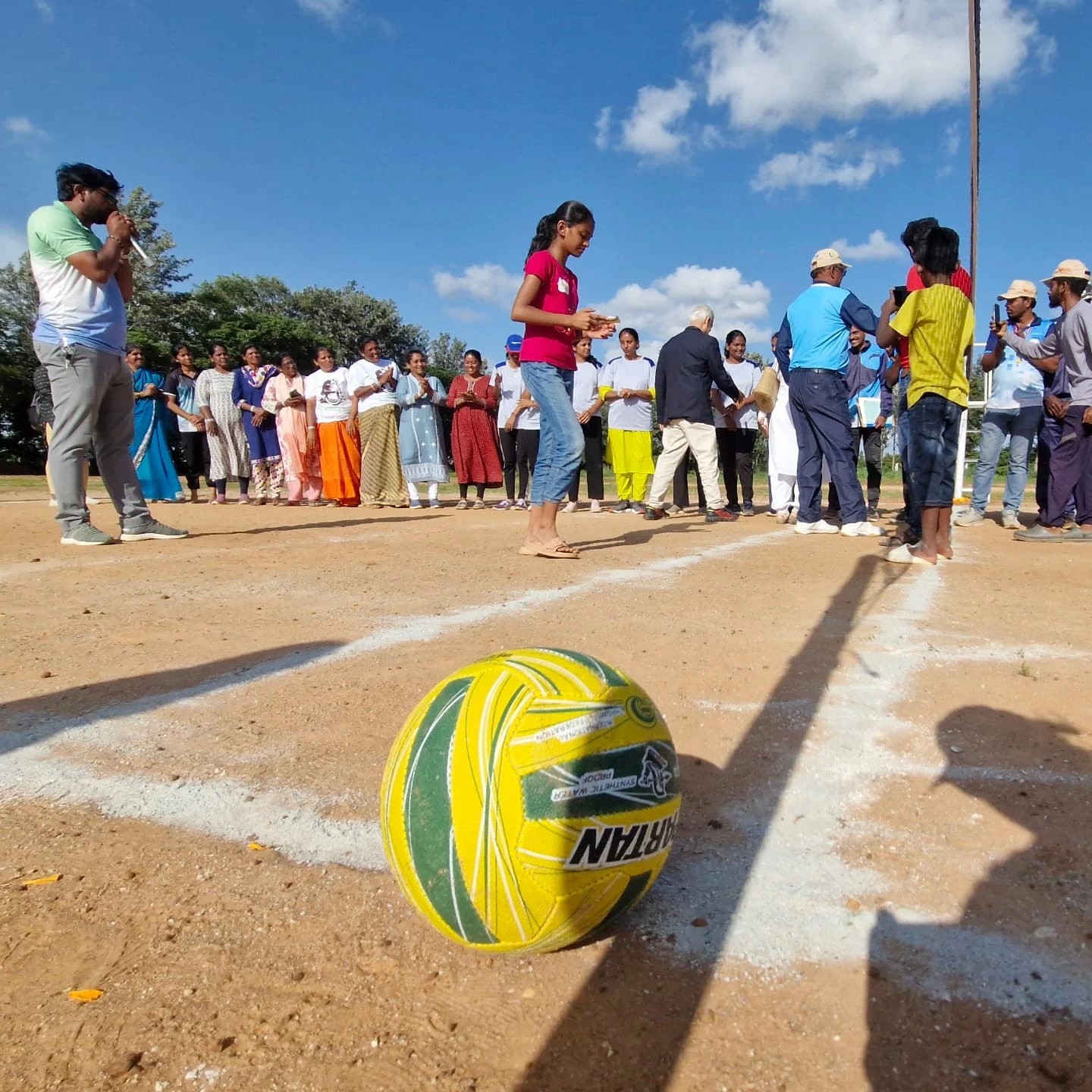
Then I got a chance to attend the Isha Gramotsavam cluster-level throwball tournament being held in a rural college campus in Chikkaballapur, about 70 kilometres from Bengaluru. I went there as a volunteer for Isha Foundation; I had heard about their Gramotsavam project, but this was the first time I was attending any of their events.
Each team represented a specific panchayat, which meant that two or more villages could come together to field a team. There weren’t too many eligibility requirements – just a minimum number of players and a few age-related rules. One could participate even without training or practice.
At first, I wondered why the rules were so lax – it all made sense only later.
On the field, these rural women and girls were full of enthusiasm and gusto. If they won a match, they cheered loudly and danced, and when they lost, they appeared visibly sad. I found myself consoling one of the young girls crying profusely after her team lost a match. “Practise more next time, surely you will do better,” I encouraged her.
But it struck me that not only were these women untrained, they also lacked any kind of sports gear and had no time to practise, bogged down as they were with household chores. Why would they want to participate in a throwball tournament at all, I wondered.
Reminiscing about my school days, I remembered how hard the girls’ football teams practised to have a reasonable chance at winning tournaments. As it happened, once I enrolled at KC College, Mumbai, there was no football team for girls. I put in much efforts to convince the sports teacher and vice-principal to start one.
We managed to muster together the bare minimum number of players even though many of the girls had no prior experience playing in a proper team! All this took a few months, so when the district tournament began, we were completely unprepared. Our first match was with GN Khalsa college, the traditional champions, and we were absolutely routed.
While I understand the joy of participation, having a chance at actually winning the game is also important for me to enjoy myself. Coming from this background, I didn’t understand the motivation of these village women participating in this Gramotsavam throwball tournament. Later conversations with the organising team and referees helped me understand the reality.
The Isha Gramotsavam was launched in Chikkaballapur, Karnataka, in 2023 though it has been taking place in Tamil Nadu since 2004. Now it has spread to other states as well, including Telangana, Andhra Pradesh, Odisha and Kerala. With over 50,000 players and 30,000 villages participating in these games, it is rural India’s largest sports event, often called the “Rural Olympics”.
“It takes persistence to convince these women to leave their families and duties even for a day to step out onto the court,” said Raghav, a farmer from Yadiyur, Tumkur district, who spends a few months each year as a core volunteer in Isha Gramotsavam’s Karnataka efforts.

“We have to visit the village in person and spend time there so that the locals trust us enough to not entirely dismiss us. And then we must visit a few more times. Finally, one or two of the more proactive women will take up our proposition and go about building the team amidst their local network,” he said.
Seeing my stunned look, Raghav continued, “The challenge is for them to forgo the identity of a wife, mother, daughter-in-law, or daughter, and do something that is purely for their joy, entertainment and, dare I say, fitness.”
Narayanswami, a senior referee at the tournament venue, echoed these views. “From morning to evening, these women take care of their families and domestic chores. They are shy at home because older people are always around. Here they play, dance and fully enjoy themselves. They play beautifully with a lot of skill and stamina. It’s very appreciable. It must definitely happen once every year!” he told me.
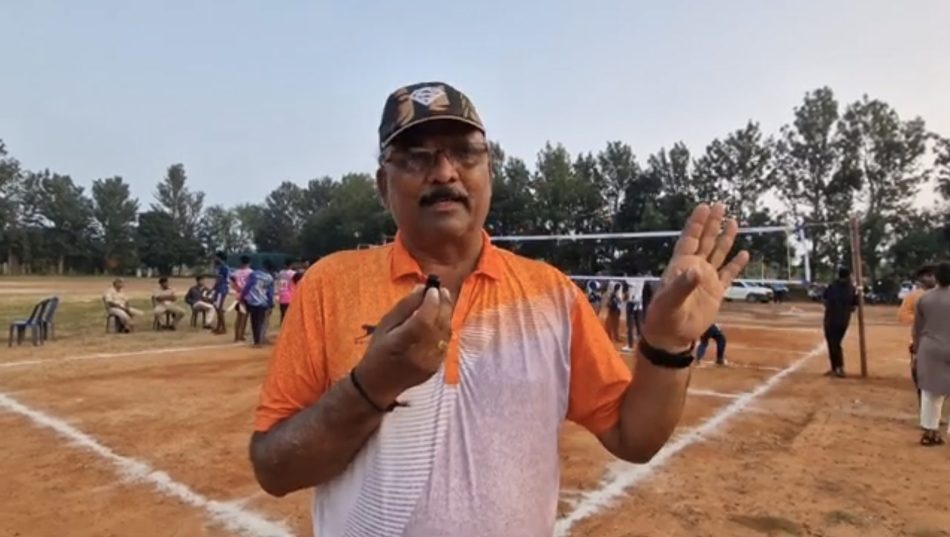
A retired physical education teacher Narayanswami has been associated with volleyball for 40 years as state-level and national-level referee. Both Raghav and Narayanaswami told me that, due to government efforts, there are volleyball courts in almost all villages in the area. However, these courts are only frequented by young boys.
“Women don’t use these courts. It takes a lot of coaxing, especially by our women volunteers, for the women and girls to even step on a court,” shared Raghav.
For these women, the motivation is not about qualifying for the tournament or winning the trophy or even doing their personal best. It is about coming together with other women, taking an outing from their daily schedules, interacting with different people, and having a great time.
I was happy to see a lot of women referees at this event, such as Pavithra, a national sports player for three years and now a physical education lecturer. She was all praise and passion when I asked her about her experience.

“I got this opportunity to referee because of the Isha Foundation here. They have encouraged the village women to step out of their houses, forget their worries, and have some entertainment together as a team. I hope such sports events happen every year; women should come in large numbers and participate,” she said.
In the big city, I am surrounded by women who have broken norms, made bold choices and are questioning social stereotypes. Moreover, I have a support system of friends and family who cheer me on whenever I set off for any offbeat adventures or make any unusual life choices.
In the village these dynamics are significantly different. “Even if we succeeded a few times in bringing the women together for games, the village folks were not supportive. They ridiculed the women so much that many refused to leave their house-bound lives,” says Raghav.
Despite the naysayers, over these decades, many iconic stories have emerged of village women transforming their lives through throwball. From 13-year-olds to sari-clad grandmothers, all have been part of winning teams at the inter-state finale that happens at Isha Yoga Centre, Coimbatore, usually in the presence of the religious head of the organisation, Sadhguru, and eminent chief guests like cricketing legend Sachin Tendulkar.

Rama from the Sontiyam village of Vishakhapatnam Zilla in Andhra Pradesh told the Isha Foundation volunteers when they first visited her village: “We don’t know how to play.” Despite initial hesitations, the volunteers managed to convince Rama and her friends to start. Since then, their women’s team has won several matches and even became the runners-up at the Isha Gramotsavam finals.
After this journey, Rama shared in an interview, “My team members have become so active that one can’t believe such a transformation. I am yet to recover from the shock of witnessing all this. I am wondering – are we truly, really here?”
Through my involvement in these events, I got insights into the empowerment disparity that exists between urban and rural women of our country, and deepened my understanding of village life significantly. I hope that, through various grassroot-level interventions, the situation for our rural sisters will change very soon.
Priyanka Dalal is a YouTuber, blogger, passionate traveller, digital nomad and independent writer. She currently lives in a village near Coimbatore. You can find her on Twitter and Instagram.
Discover more from eShe
Subscribe to get the latest posts sent to your email.
 eShe
eShe 
0 comments on “These throwball players at India’s ‘Rural Olympics’ changed my perspective of women’s sport”