

By Julia Dutta
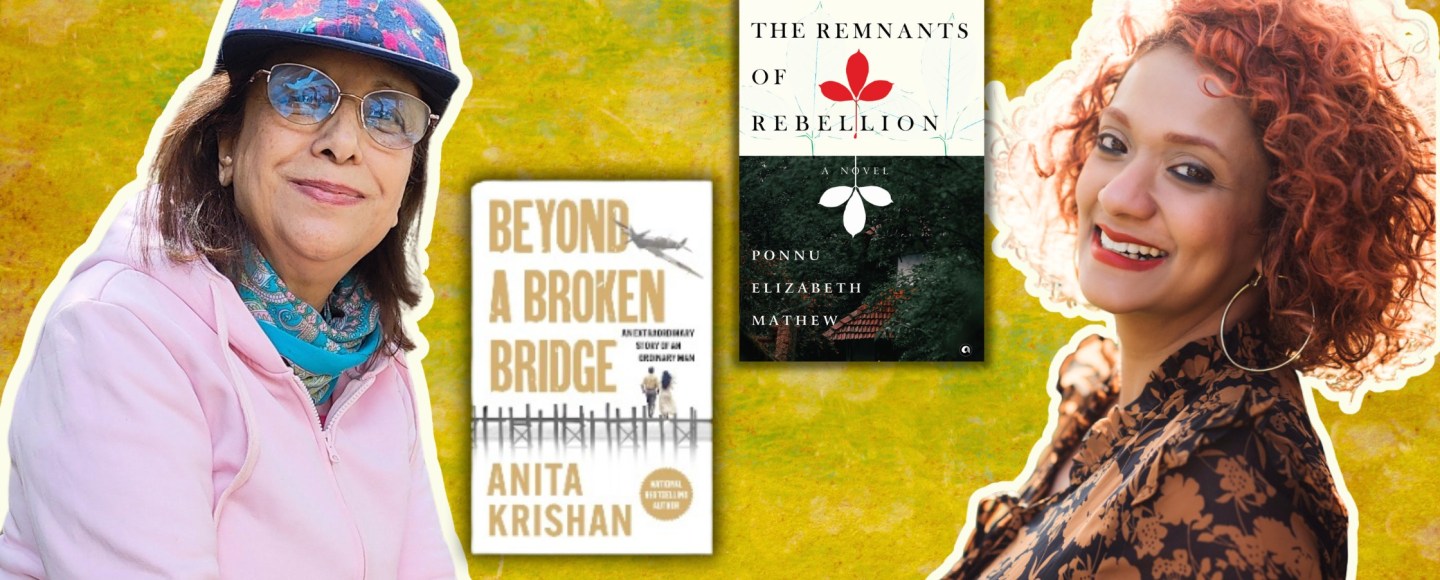
Two new novels set in early 20th century India explore themes of love, loss and belonging, and weave historical events within the lived experiences of ordinary people.
Beyond a Broken Bridge (Finger Print Publishing, ₹399) by bestselling author Anita Krishan takes us to pre-Partition India, from Rangoon to Lahore, in a plot steered by love and hope.
The Remnants of Rebellion (Aleph Book Company, ₹899), the debut novel of journalist Ponnu Elizabeth Mathew, explores the personal, political, and social elements that converge in a family of Syrian Christians over three generations in Kerala.
We spoke to both authors about their new releases.
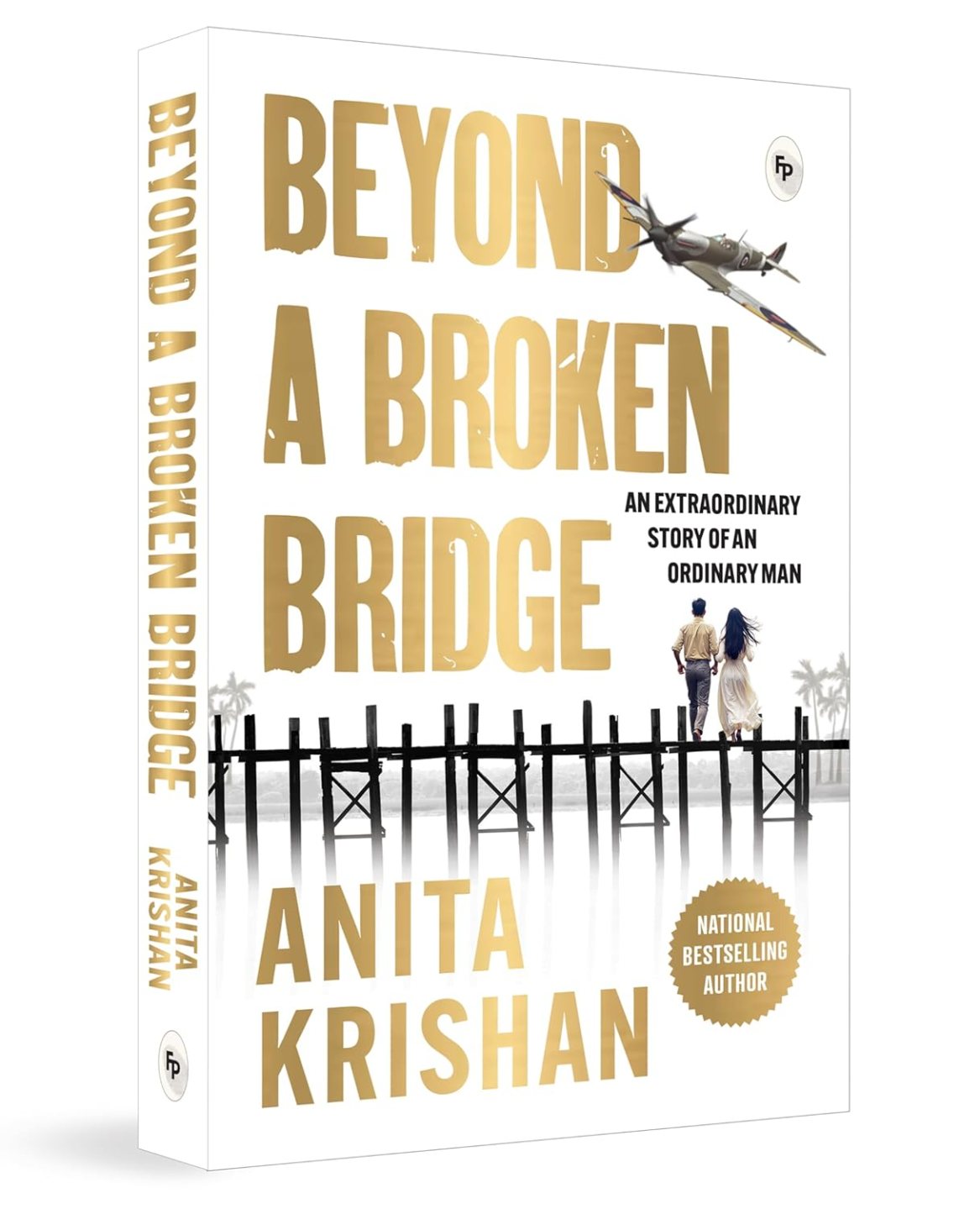
Beyond a Broken Bridge
By Anita Krishan
Born in Shimla, Anita Krishan, an educator turned bestselling novelist, is known for the powerful storytelling and human insight in her works. Her newest work is set in an era spanning World War II and India’s Independence.
Beyond a Broken Bridge (2025) is a beautiful tale of three people who crossed over from Burma to India in the face of immense trials. Escaping from the Japanese bombing of Rangoon, they traverse for days through dangerous jungles, keeping the faith that they would reach India alive. The story is nail-biting and the love stories complex and fraught with a sense of loss and longing.
“As someone from the first generation born after Independence, I grew up listening to these stories firsthand from those who actually lived through them. Their experiences – raw, painful and deeply human – left an indelible impression upon me,” says the Delhi-based 70-year-old author, who did her Master’s in English literature from Himachal University.
“Though much has already been written about those times, I felt that the voice of the common man, with his quiet struggles, resilience and untold sacrifices, still remained unheard. My story is an attempt to preserve these lived realities before they fade into oblivion, and to share them with the readers who deserve to not just know the history, but the human soul behind it,” she tells eShe.
The part of the writing process that Krishan found most difficult was weaving real historical events with singular human perspectives. “That meant more than recounting facts – it required breathing life into history through emotions, heartbreaks and resilience. Crafting this delicate balance called for deep reflection and thoughtful planning while retaining both authenticity and emotional truth,” she explains.
One of the characters in the book, Mansur, particularly left an impression on me – he was ready to turn his first wife into a house help in order to marry the woman he loves! I ask Krishan about these grey shades in this characterisation.
“Mansur, like most of the characters in my story, is largely imagined, though rooted in the realities of pre-Independence India. Those were the times when women were financially and socially dependent on men, making them vulnerable to exploitation and emotional neglect. Mansur’s character also reflects the tragic outcome of being forced into marriage by a strict, domineering father – choices imposed on him that ultimately shaped his flawed conflicted personality. Through him, I wanted to explore how personal desires, social pressures, and patriarchal structures intertwined in that era, often at the cost of women’s dignity and freedom,” she replies.

Notwithstanding individual standpoints and views, Krishan says she hopes readers realise that history has a way of repeating itself. “Wars, violence, and conflicts continue to plague humanity, and it is always the common man who pays the heaviest price for the arrogance and reckless decisions of the egocentric leaders. Yet, isn’t the choice in our hands? Should we allow hate and divisions to persist among us for the benefit of the power hungry?” she asks.
She goes on: “Hate only multiplies hate, but love, compassion, and understanding hold the power to heal and transform the world. My book is a reminder that the world needs leaders who build peace and not conflicts. For, our true progress lies in brotherhood, empathy and unity. Divided, humanity may falter – together, it can thrive.”
This is a story of war, of homeland, of personal growth, of love and deceit. It is set in the period 1939 to 1947, a time marked by open wars, political upheavals and deep social constraints, especially for women, who were often restricted by tradition and dependency.
“Yet, even in those difficult times, the power of love gave individual courage to endure and, at times, to rebel,” says Krishan, adding, “Sadly, in contemporary times, while the world has advanced in technology and communication, wars and conflicts have not disappeared… they have taken new and more potent forms. Women today enjoy far greater independence and a stronger voice, yet they still face struggles for equality in many parts of the world. They are still vulnerable victims of violence and neglect.”
Even so, Krishan leaves the reader on a hopeful note: “What remains unchanged is the transformative strength of love – it continues to transcend barriers, heal wounds, and give humanity its greatest hope amidst chaos.”
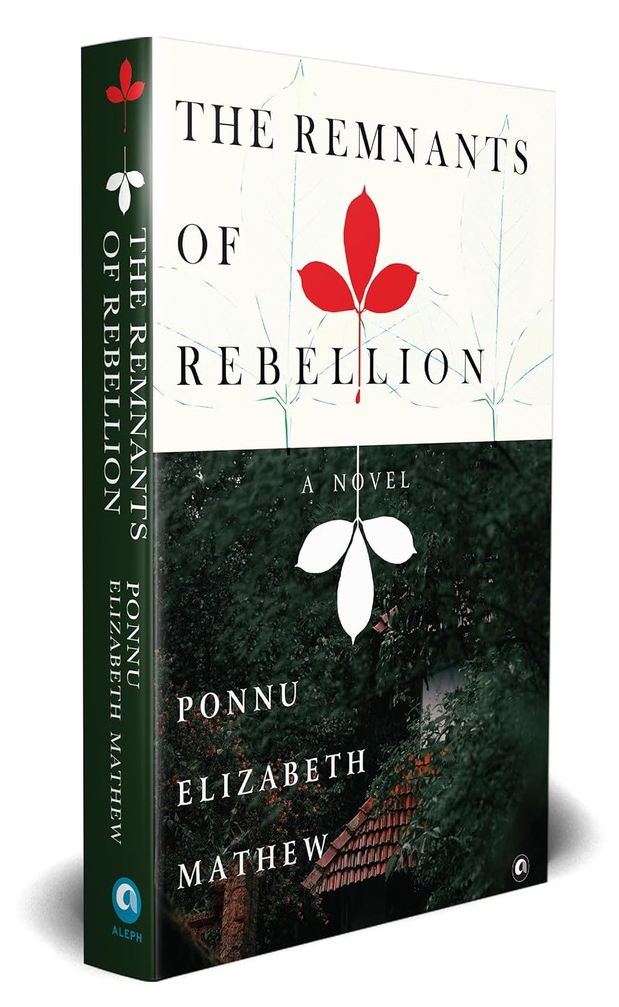
The Remnants of Rebellion
By Ponnu Elizabeth Mathew
A journalist and artist based in Bengaluru, Ponnu Elizabeth Mathew’s writing has focused on art, culture, music and literature. A former newscaster, she holds a Master’s degree in mass communication from Women’s Christian College, Chennai, and a foundation in visual arts from Hampi Kannada University. She is currently pursuing a Master’s in Christian Studies.
It took her 10 years to write her debut novel, The Remnants of Rebellion (2025), which focuses on the Naxalite Movement in Kerala. “This book is inspired by a real-life incident from my grandfather’s life, when he was the superintendent of a rubber estate in Kerala in the late 1960s. This was the time when the Naxalbari movement was at its peak in West Bengal, and its influence extended down south to Kerala because of the state’s strong communist ideologies,” Mathew tells eShe.
Around the time, a protest by estate employees left an assistant superintendent stabbed to death. “I have fictionalised this story and set part of it in a present-day timeline. The Kerala police acted quickly to quell the violence that began with the Naxalbari movement, though, unfortunately, their methods were sometimes questionable,” she explains.

The book’s narrative alternates between Eesho and Aleyamma, his granddaughter, who inherits a large colonial bungalow from him. There is rebellion in each generation, as the working or marginalised classes clash with the bourgeois or upper castes. Through 320 pages and immersive storytelling, the author keeps the reader engaged in the history, social and political structure of this region of India.
This includes stories of chattel slavery, highlighting that society back then was not egalitarian for anyone, including women, lower castes and minorities. “While contemporary Kerala has made substantial progress towards inclusion and equality, largely thanks to mass education and social reform, subtle inequalities persist, and there is still progress to be made,” says Mathew.
The book speaks of other issues such as moral policing and women’s sexual freedoms, which are in fact relevant even in the present day. For instance, Aleyamma has an unconventional relationship with Roy, a fellow artist who is already married. While there is always a promise to stay with her, Roy (to me, at least) cuts a pathetic picture of someone willing to break marital vows but not willing to follow through to the aisle or even remain with the woman he supposedly loves!
“I have taken inspiration for this character from a few people I have met in my life. So, Roy is real in many ways like the other characters in the book,” Mathew tells us.
I personally found the many sociopolitical issues that crop up within the book to be both revelatory and overwhelming. But as Mathew states, “I believe in the death of the author. Once the story is out in the public realm, it is up to the reader to make sense of it.”
“Many books have touched me in ways that the authors might not have even intended. I just hope that my story, if it inspires some people, helps them see the world in a different way, gives them hope, and shows them empathy. Then I have done my job,” she says.
Julia Dutta is an author, writer, blogger, poet and advertising professional cooling her heels as of now, finding joy and happiness living in places close to the river, surrounded by greenery and simple people. When not cooking, she spends her time reading and reviewing books. She blogs here.
Discover more from eShe
Subscribe to get the latest posts sent to your email.
 eShe
eShe 
0 comments on “A tale of two Indias: Anita Krishan and Ponnu Elizabeth Mathew on their new historical novels”