
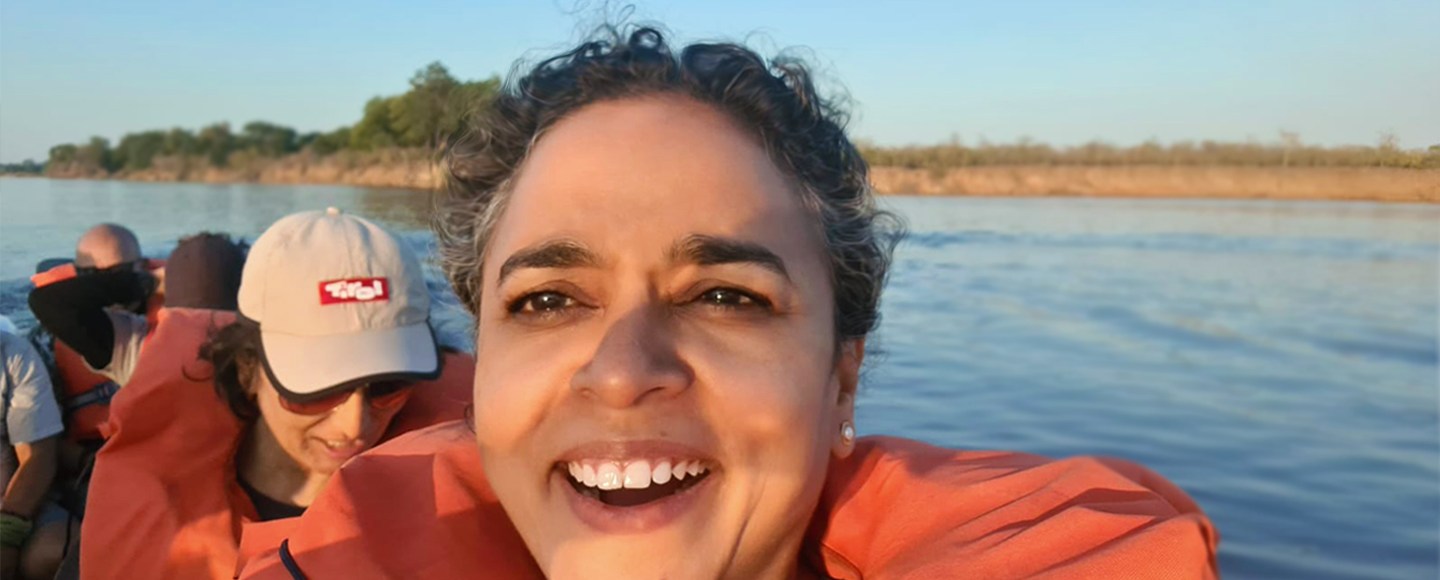

By Arti Jain
Summer of 2024. We – by which I mean me, my husband (The Papa) and our daughter (Little Mighty One, who is not so little anymore, a preteen going on 18, if you will) – are desperate to make the most of the summer ‘get the hell out of Delhi’ break.
Africa, here we come!
We land in Zambia. Not an obvious choice for tourism, but a long-standing invitation from a friend to visit their home. It is nothing like l imagined. We are out of the tiny Lusaka airport in 10 minutes. Our friends are at the airport to receive us. I comment on how pristine the airport is. l am told it won the cleanest airport award in Africa. It’s new. Only a few years ago they had wooden benches and a broken building, they tell me.
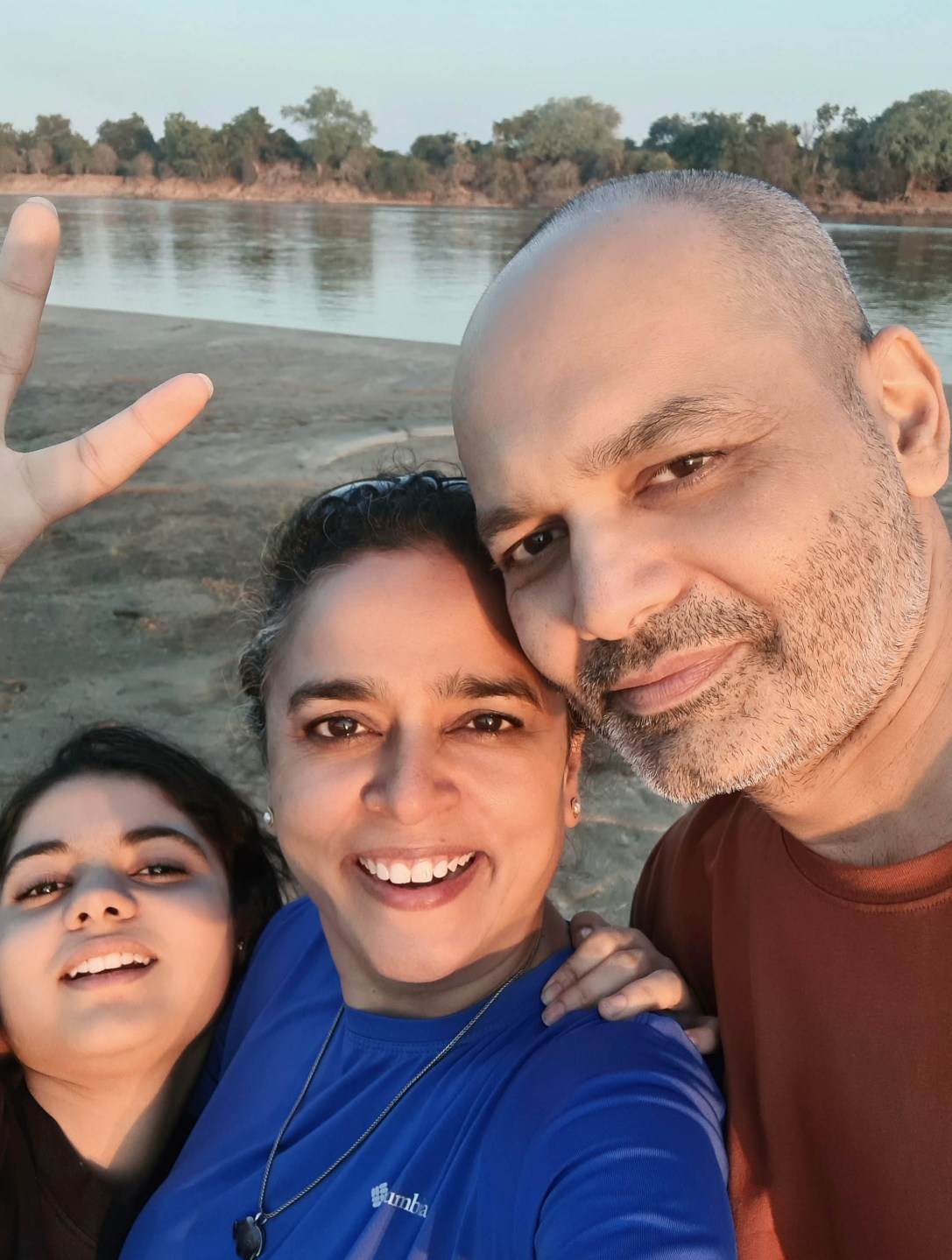
On the road, it’s not the hot and poverty-stricken Africa of the news and books that Chimamanda Ngozi Adichie accurately described as the “single story”. Nor is it the sparkling South Africa in the pictures of privileged whites. There’s a quiet serenity. You can tell it’s sparsely populated and certainly not rich, but you don’t see any roadside filth. This is a relief, somehow, from visual and mental stereotypes.
It’s late afternoon. The weather is a pleasant 20 degrees. We head out for a walk. It’s so quiet that you can’t help but remark on it again and again, to each other and to our friend, much to his amusement. It’s not the kind of quiet in American suburbia either. It’s visual and aural silence.

A few pickup trucks pass us by with construction workers in the back. They look at us curiously. A woman is walking to work or to a social gathering. She is combing her hair as she walks briskly. She didn’t expect to see people, and definitely not people who look like us. She looks hassled. A couple other cars, mostly SUVs, pass us. We later find out that Zambia is a big market for refurbished vehicles from Japan.
People greet strangers here, I am told. And you better greet them back, because if you don’t reply, someone will come back and say, “Madam, l said good morning to you, but you did not reply.” I will be careful not to embarrass myself when we go out tomorrow.

Things are not what they seem in Zambia. For instance, what I thought were unripe papayas on our friend’s dining table turned out to be avocados. Avocados are cheap and plentiful and HUGE here.
Early next morning, we head out to see White Rhinos, which are not actually white at all. It’s a distortion of the word ‘wide’ – they have wide mouths to enable grazing close to the ground. There are two of these in Lusaka National Park and they have four armed guards. We watch as these 3600 kg (each) beasts laze around after a morning graze.
Next, we head to an elephant orphanage. This is where rescued elephant calves are kept, mostly victims of human-animal conflict. Herds of elephants often enter human settlements and are then chased away by villagers. While the adult elephants manage to get away, the babies are too slow and get left behind. This is where they land up.

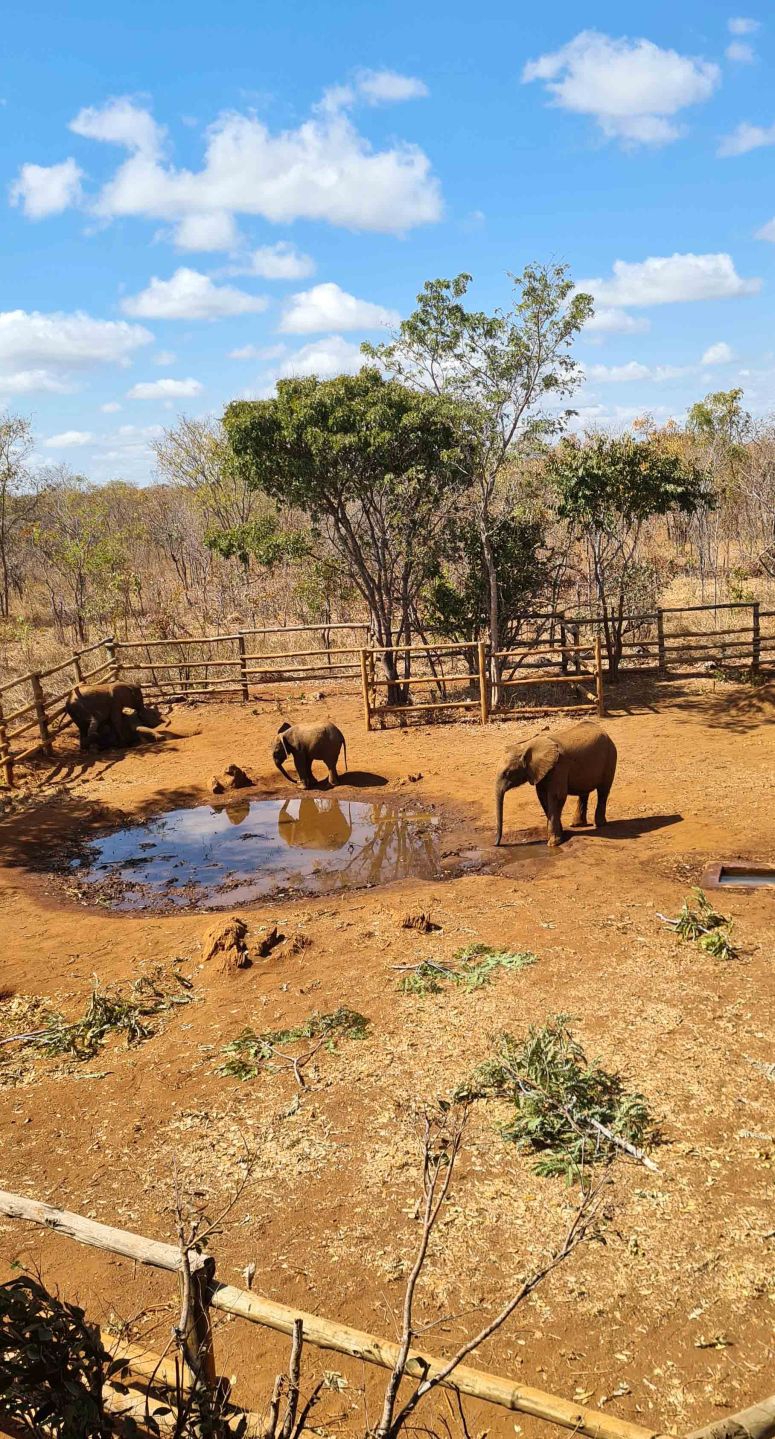
I imagined the orphanage to be a sad place. I imagine the trauma of the babies as they see their loved ones go. But sad place it isn’t. As the group of 10-odd elephant calves gather, it is like watching an elementary class at a school. The caretakers feed some babies with huge milk bottles. Some eat the food kept on the ground for them. Other rush immediately to the muddy ditch with water. It’s a special kind of joy to see baby elephants tumble around. I am happy to be proven wrong.
There’s not much to do in Lusaka, and we manage to do it all in a day. There’s the Lusaka National Museum that has recreations of city and village scenes with life-size statues, history with informational posters too long to read, and the most exquisite wood sculptures placed randomly without any info.
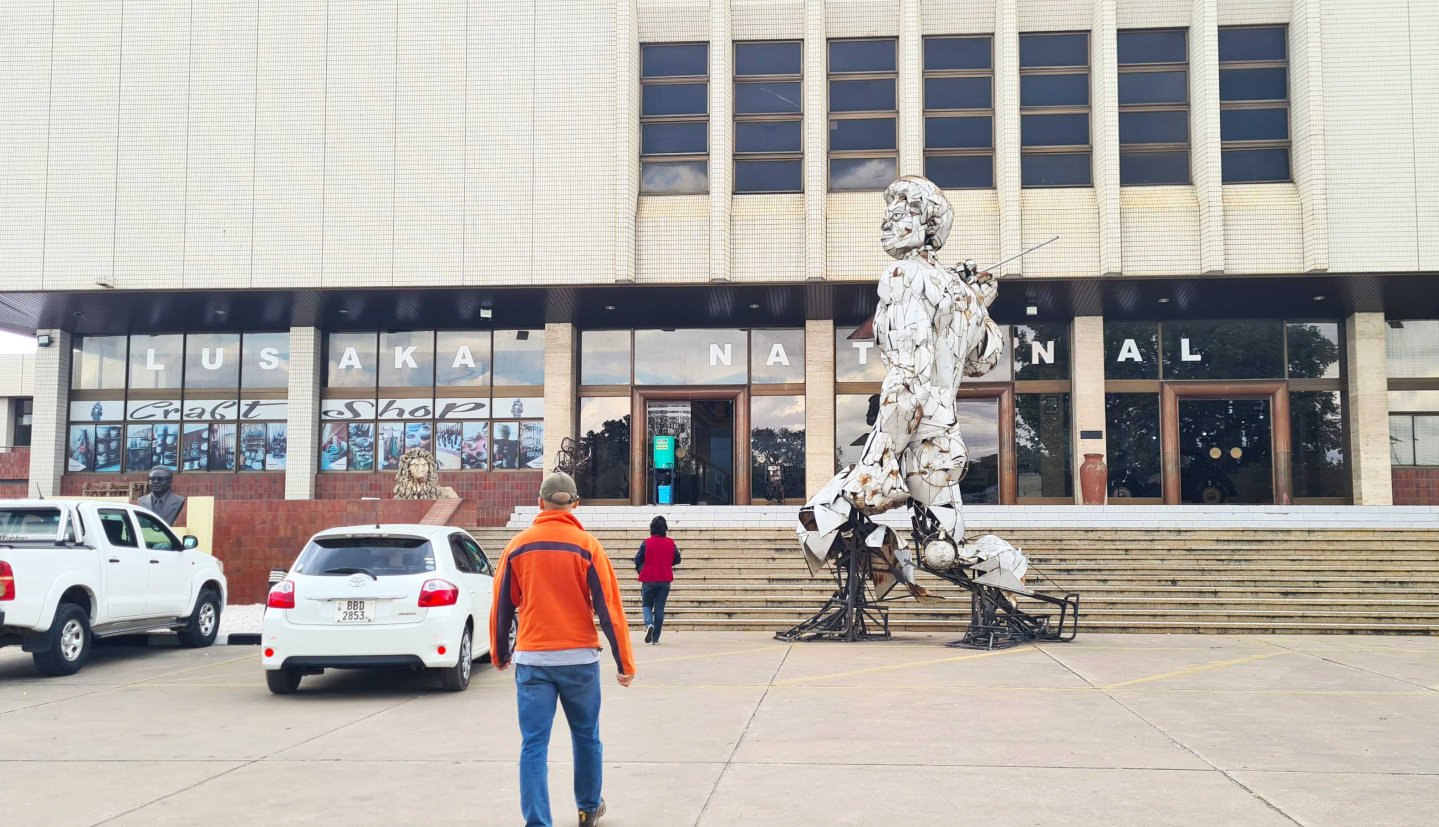
A lot of the exhibits are about the first president and founder of Zambia, Kenneth Kaunda. Cynical as one is about these things, one wonders how much of the exhibit is based on what the government dictates on how much is authentic representation of the people.
We head out to see the main thoroughfare of Lusaka, Cairo Road. It has the vibe of a well-behaved inner-city neighbourhood. You see shops catering to low-income customers. There are practically no billboards anywhere. Only a handful of buildings are multistoried.

The people you see in Lusaka downtown are not well-to-do but they are well-groomed. Copper is Zambia’s main export and is nothing short of a revered metal here. Some people sell bracelets and earrings made of copper and, as an ultimate ode, their most famous building, Society House, has a facade of copper.
We get stuck in a rare traffic jam and as we sit there close to an hour, sellers come knocking on the windows. They have everything from local cold drinks to oranges and apples (imported from South Africa), locally grown bananas, Chinese sunglasses and assorted clothes.

Sellers knock and, if you shake your head, they move on quietly. It’s astonishing that no one honks or drives past, glaring – astonishing to someone like me from a city where an average driver has the patience of a hummingbird on meth.
Next is a road trip to see the “real” Zambia. We pack ourselves in the SUV and head for Livingstone. It’s the crack of dawn. And what a dawn it is! Sunrise and sunsets here are the colour of Parle orange candies we loved as kids. To keep up with the sweets theme, the sky is full of puffy white cotton candy clouds.
We pass people heading to church in groups, all in their Sunday best: clean, ironed bright clothes, hair done and shoes shining.


There are also people walking with big cans of water. This has been a tough year for Zambia. The country is in a never-seen-before drought. With next to no rain in March, water is scarce. Since this is a new problem, people aren’t quite prepared, l am told. Roofs of houses are made of corrugated sheets or grass, so there’s no provision for overhead tanks like we have in India.

It takes us eight hours to get to Livingstone on the excellent highway with hardly any traffic.
My being a vegetarian has been more of a worry for others than me. We stop at Choma on our way to Livingstone. Right next to a small interesting museum is an eatery run by two women. This is a typical Zambian eating place where food is already prepared and you fill in your plates and pay for what you eat.
There’s various types of greens: rabe, sweet potato leaves, cabbage and okra. You have a choice of rice or nshima to eat it with. Nshima is made of maize flour and is the consistency of upma cooked with too little water, so it is chunky. It all looks… well… different, but a few bites and l am hooked. I love greens anyways and this pared-down, no-fuss version is curiously delicious.
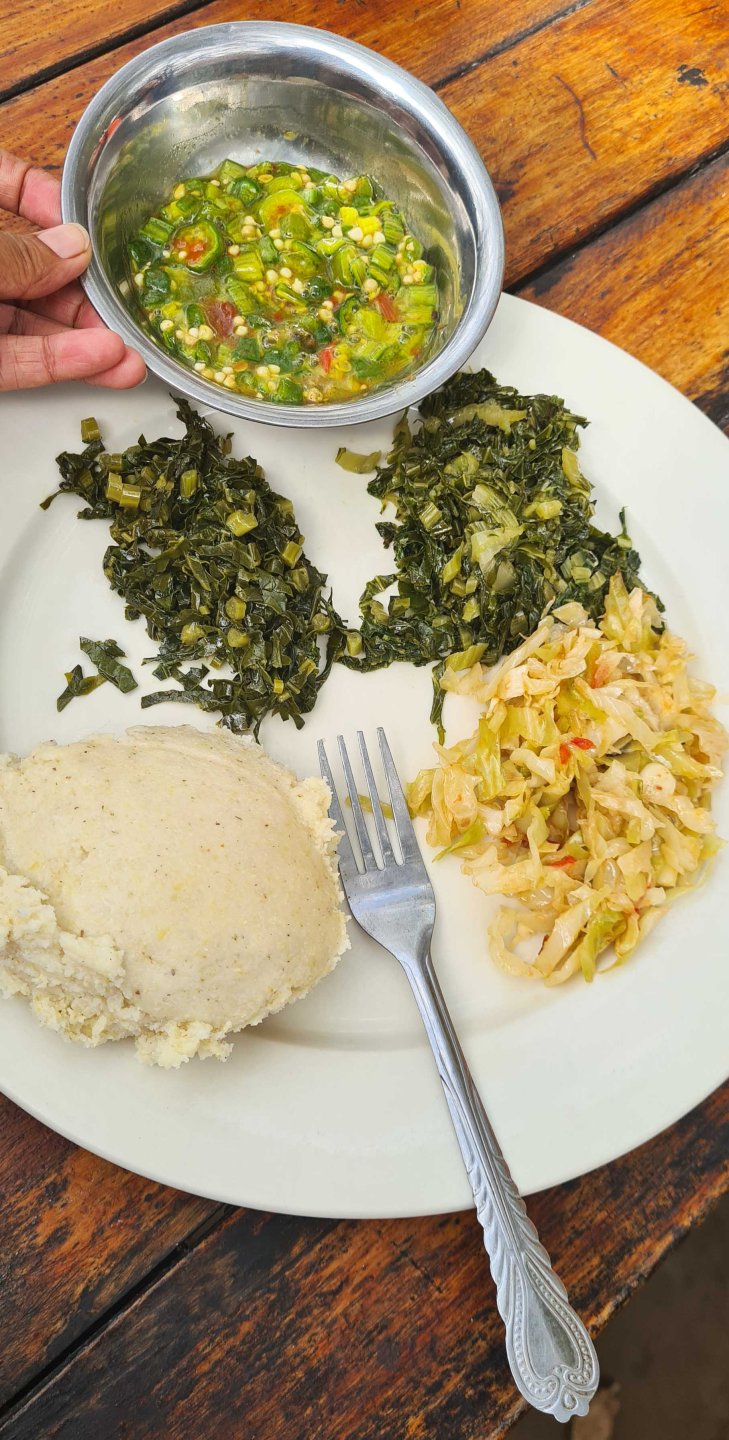

When she’s clearing the plates, co-owner Violet comments on how l haven’t finished my okra. I tell her that the slimy texture was kinda hard to swallow. I inform her about our glorious bhindi in India and about how l cook it – with onions and sometimes tomatoes. “We cook it till all the sliminess is gone,” I say.
Violet’s eyes are round as saucers. “You remove all the slime? Oh no! No!” She will have a story to tell her family about weird Indian food.
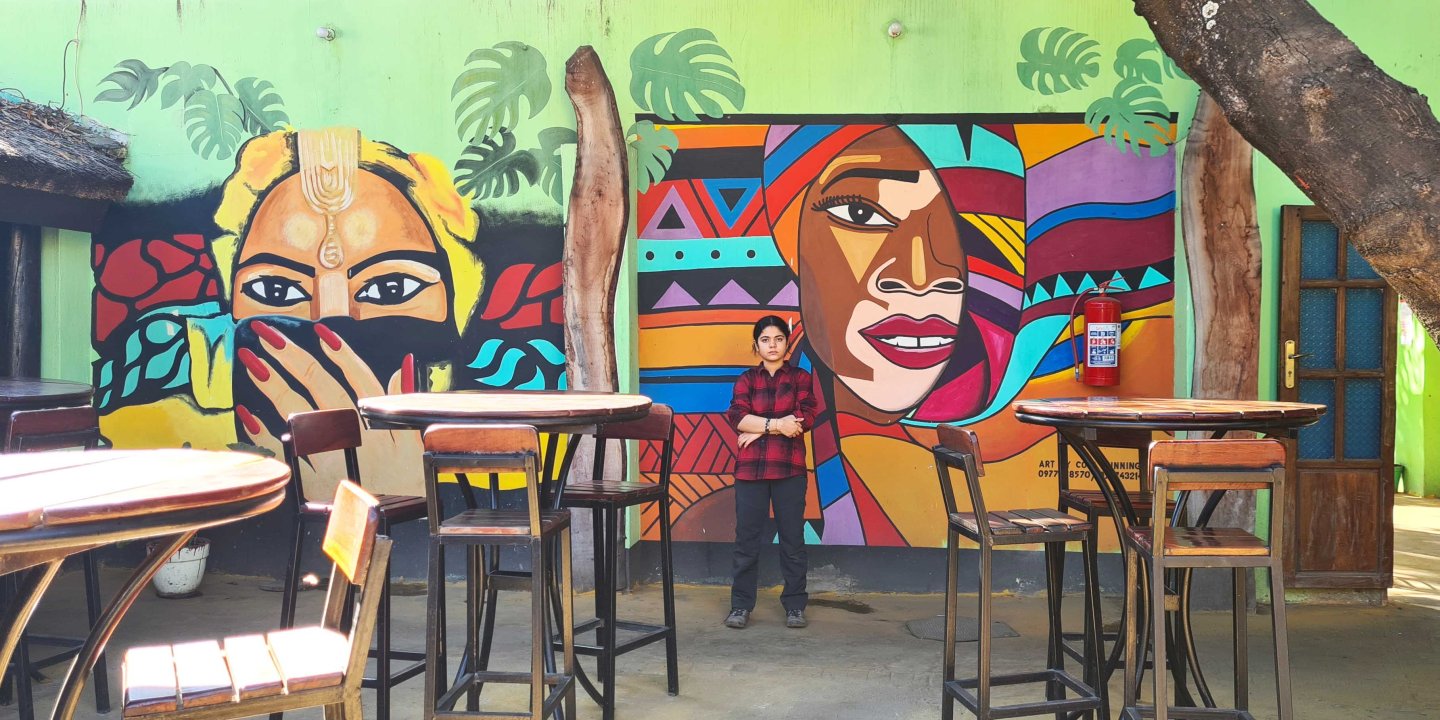
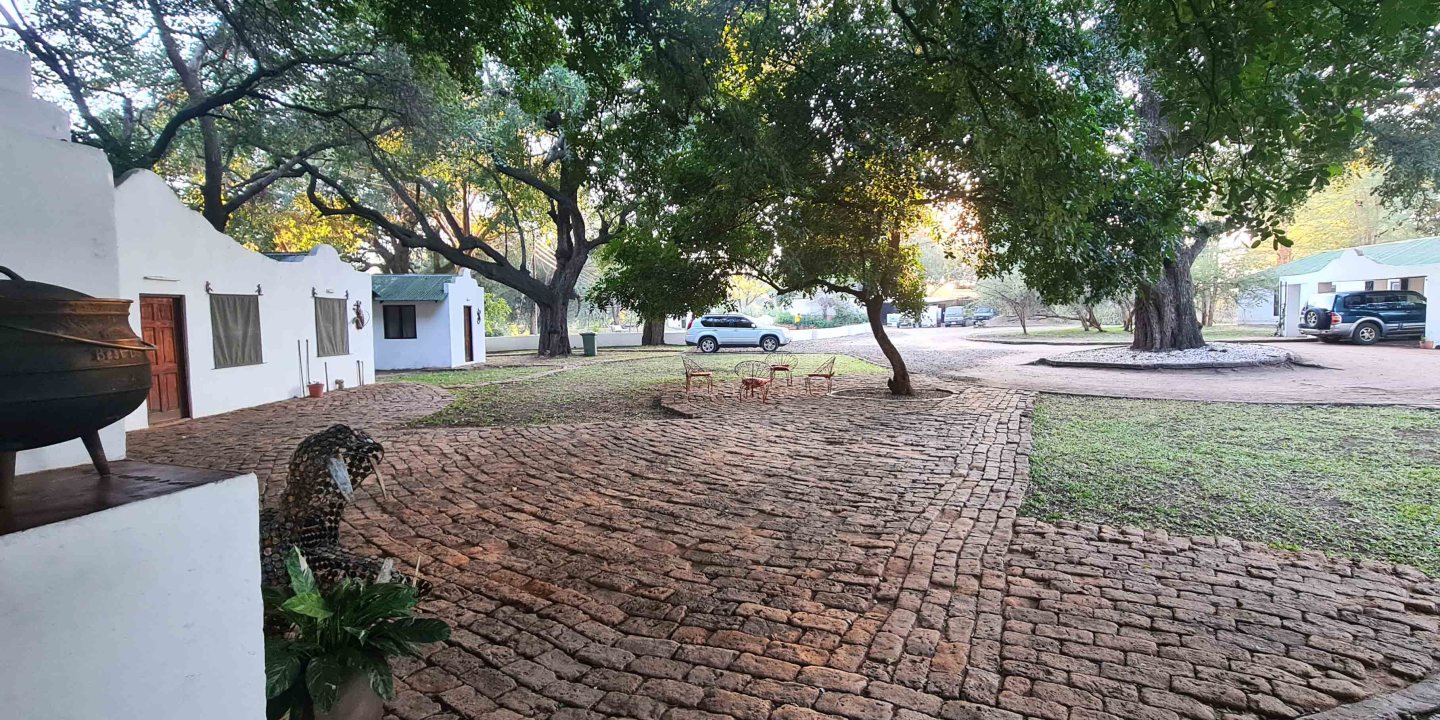
By the time we reach our lodge in Livingstone, it’s dark. Seems darker than usual. Turns out there are 12-hour power cuts here. Zambia is hydro-powered. No rain and no water in Kariba dam means no electricity. There is some confusion about the room we booked.
What they have is a room with no attached bathroom, and the communal showers and loos are about 150 ft away. I have a slight fever and a runny nose. My lungs are in shock from the AQI below 2, l joke as l sneeze. Little Mighty One says l am a scaredy-poo and it’s not like one has to use the loo at night. Of course not.
Except that at 2 am, l wake up with one nostril blocked and an urgent need to pee. Distract, distract, l tell my mind, but the monkey won’t jump. It’s 2:30. I finally get up, wear the headlamp on my throbbing head and walk out into the darkness. It’s dark, really, REALLY dark. I scuttle to the loo. I steel myself. I am not a scaredy-poo! As l almost jog my way back, l stumble a bit and the headlamp comes off.
As l look up to adjust it again, l see the sky. It’s like nothing l have ever seen. I can see the milky way smeared across it. The stars are jostling for space. It’s like someone tossed a spoonful of sugar on my black kitchen countertop. I stay for about 30 seconds until l hear some rustles and jog right back to the room.
The next morning in the common kitchen, someone remarks on how cold it is and then someone else says, “Did you hear the lions? They were really close last night, about 2:30 or so.” I stop in my tracks.
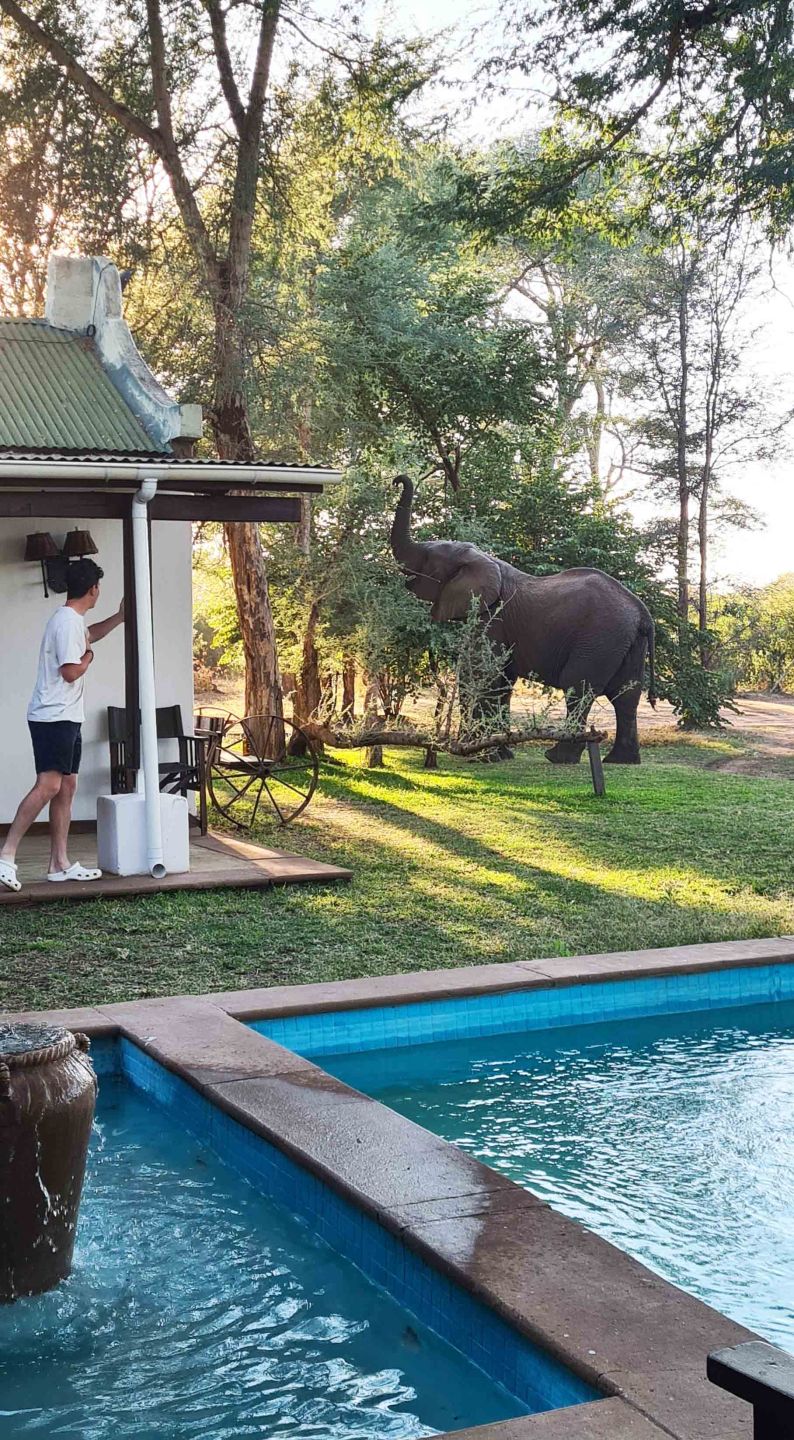
We do have other visitors this morning. The lodge is built right on the elephant corridor. Elephants stop by to drink at the swimming pool. These are not the Indian temple ellies one feeds laddus to; they are wild and ferocious and don’t like to be messed with.
After the words ‘god’ and ‘love’, perhaps the most misused word is ‘awesome’. You may use it for pizzas and the weather, but what you really should reserve it for is the Victoria Falls. These awesome, formidable, sublime waterfalls deserve it more than anything else l know. And yes, l have been to Niagara Falls, thank you.

We luck out with not one but two full rainbows. The spray of water is persistent and healing, a benediction from nature. Victoria Falls was a name given to the falls by the Scottish missionary, David Livingstone.
The Papa rightly points out that it was “discovered” for the Western world by Livingstone, but the falls have existed for eons. They have a more appropriate Tonga name too, Mosi-oa-Tunya meaning ‘Thundering Smoke’.

Next, we are in Mukuni village where you can walk alongside lions, pet them and click pictures with them. Cubs here are introduced to humans very early. When it is ascertained that the young lions are not a threat, nor look at humans as a threat, they are assigned the profession of “lion walking”. They then walk with eager tourists every day, and allow them to sit with them and pet them.
However, as soon as a lion grows more than a certain size and/or develops a more aggressive attitude, it is retired. It is these retired lions that we decide to see. There are two to five big cats per caged enclosure. They are magnificent.
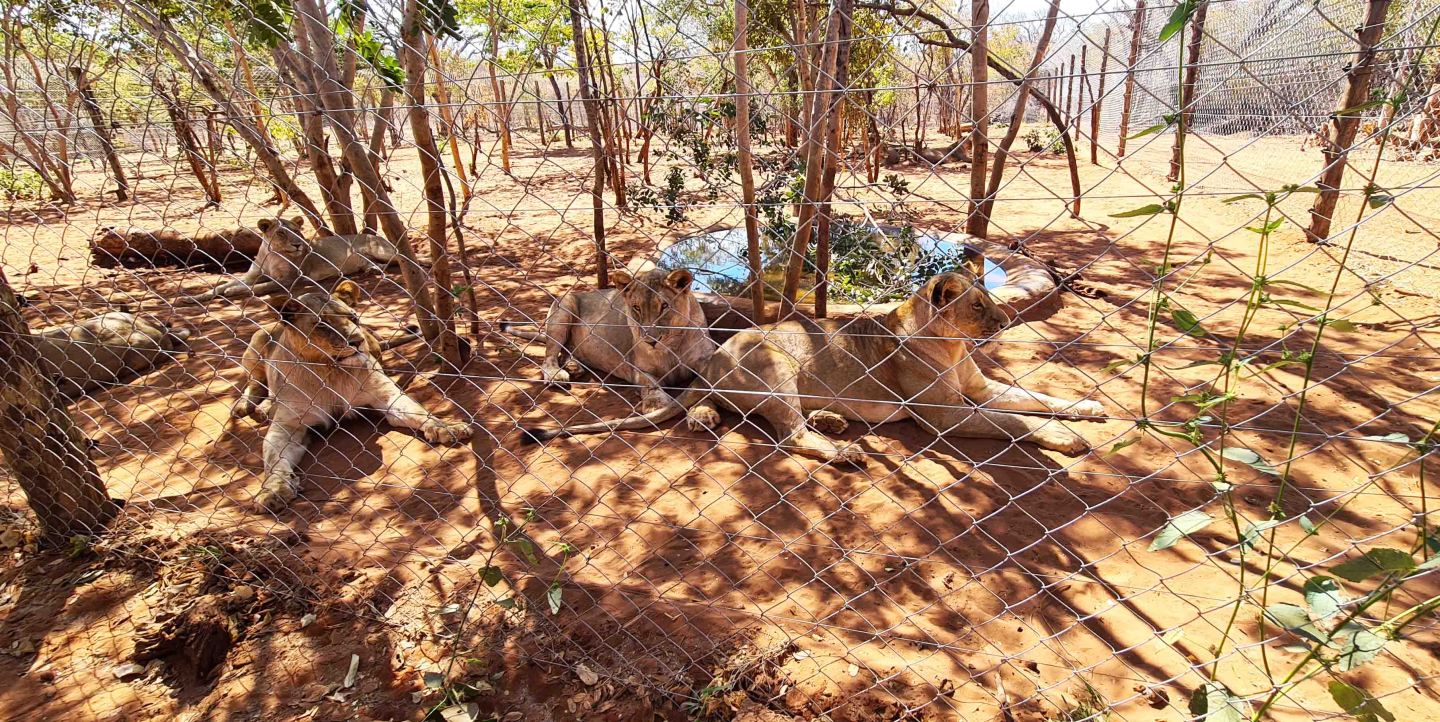
We are in a group with two Zambian couples and their kids. Our guide Frank tells us about the mating habits of lions. “There is one male and many females in a pride of lions. He likes to keep many wives.”
Jokes are cracked about Frank’s tribe, where polygamy is practised. He laughs and declares, “l have only the one!” All laugh. “Wise man!” someone says.
Then we come to the eating habits: “The lioness hunts and kills the prey. Then she waits, like a good wife, for the lion to eat first, before eating.”
I can’t help but scoff and roll my eyes, mumbling loudly, “So, she does all the hard work and he just sits there and eats?” There is an awkward silence.
The older woman (probably my age) clears her throat and says, “Some of us are good Christian women. We cook. Then we wait for the husband to eat before we eat.” The men nod. It’s not the first time that l have been put in my place for baiting the sanskari.
The younger woman nudges closer to me as we walk. With a twinkle in her eyes, she says, “My husband, he waits for me – says we will eat together.” Andddd… cue mandolin track from Dilwale Dulhaniya Le Jayenge!
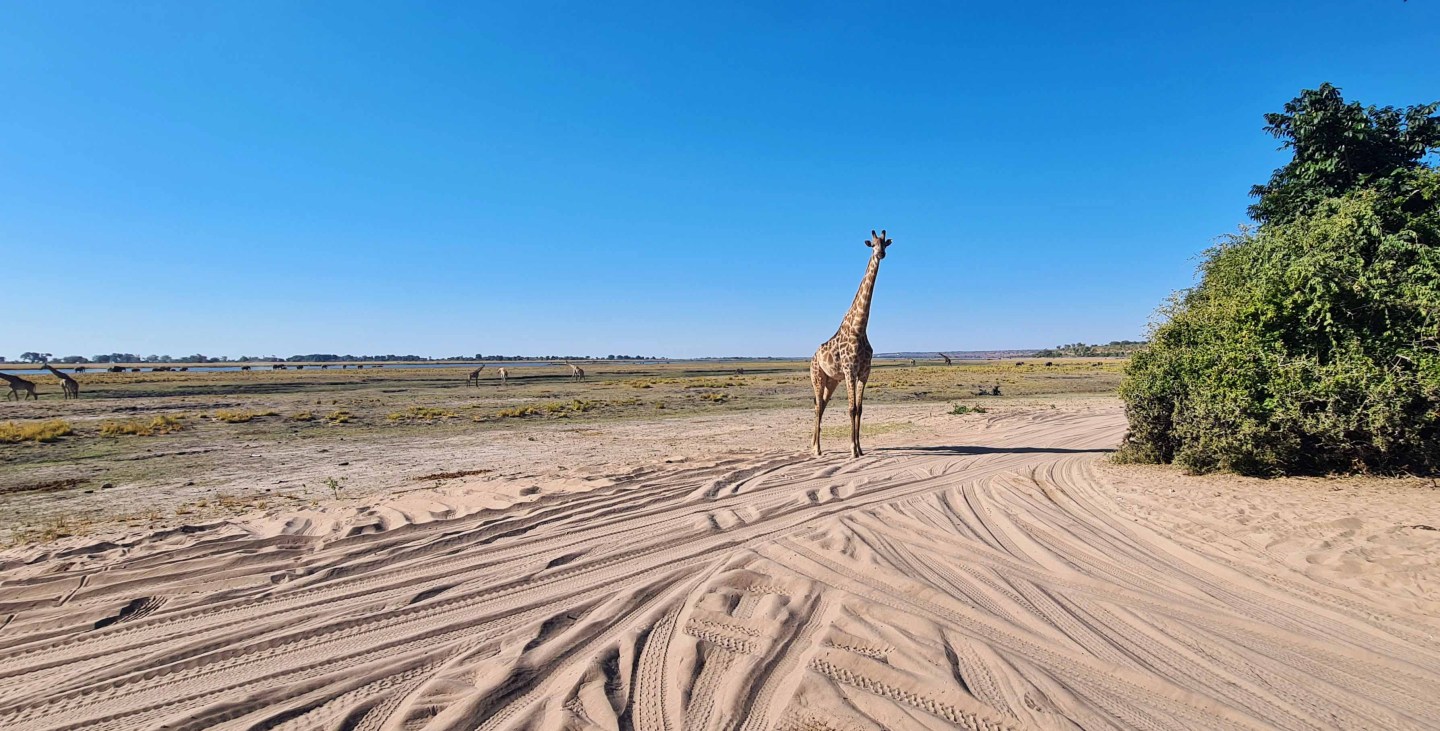
Our journey through southern Zambia continues with a brief detour. There’s a spot on the Kazungula bridge where four countries Zambia, Zimbabwe, Namibia and Botswana meet. We go past it to enter Botswana and make our way to Chobe National Park.
Oh, the sheer abundance of animals here! Scores of elephants in massive herds (Botswana has an overpopulation of elephants) and towers of giraffes (yes, that’s what a group of giraffes is called) catwalk up and down the riverbank. Impalas graze about in such huge numbers that you get bored of pointing them out to everyone around you.

Chobe River is the main watering spot. On a morning boat cruise, you can stare at lugubrious crocodiles and grunting hippos, then break for lunch and spend the rest of the afternoon in a safari vehicle spotting more animals (Kudus, African wild dogs and African spoonbills, among others).
In the last leg of our journey we are in the Lower Zambezi area, glamping (my first). The place is called Masau River Camp, named after the plentiful masau berries that fall from trees onto the lush grass. I bite into one – it’s a milder version of our ber.
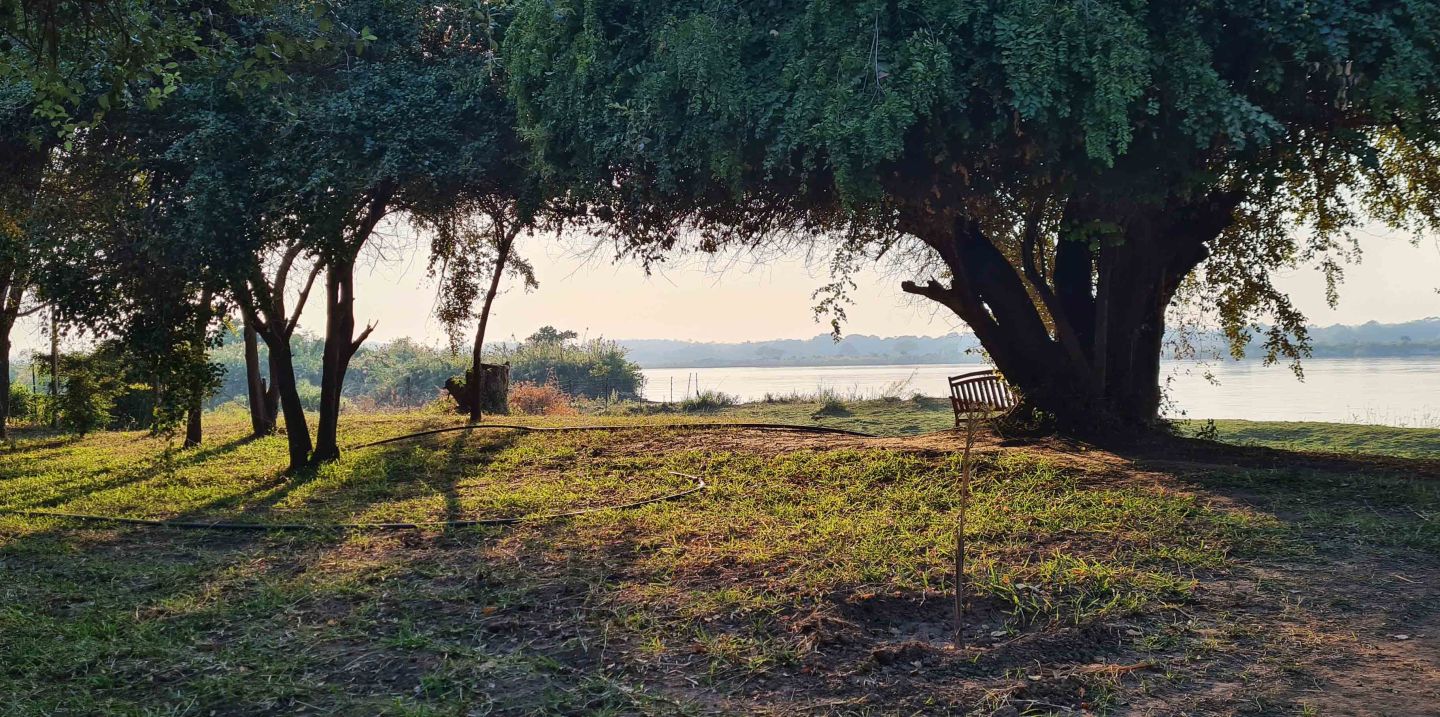
There are power cuts here too and no phone connectivity or internet. If you need to make a call you walk to one end of the vast riverfront, and if you want internet, you go to the other end. They’ve put benches in both corners for signal hunters.
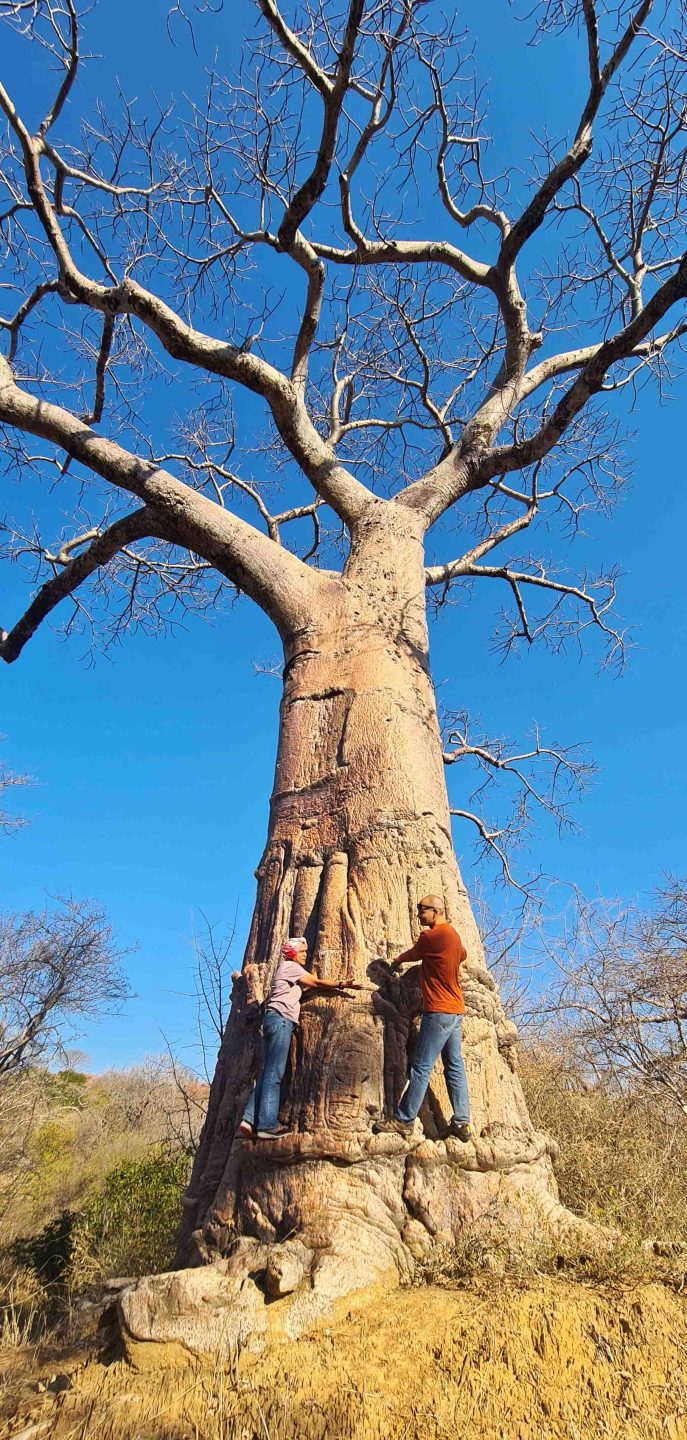
Our long hours of reading, eating and dozing are interrupted by sudden urges for exploration, so we go find baobab trees – massive and magnificent, these trees live for over 2000 years.
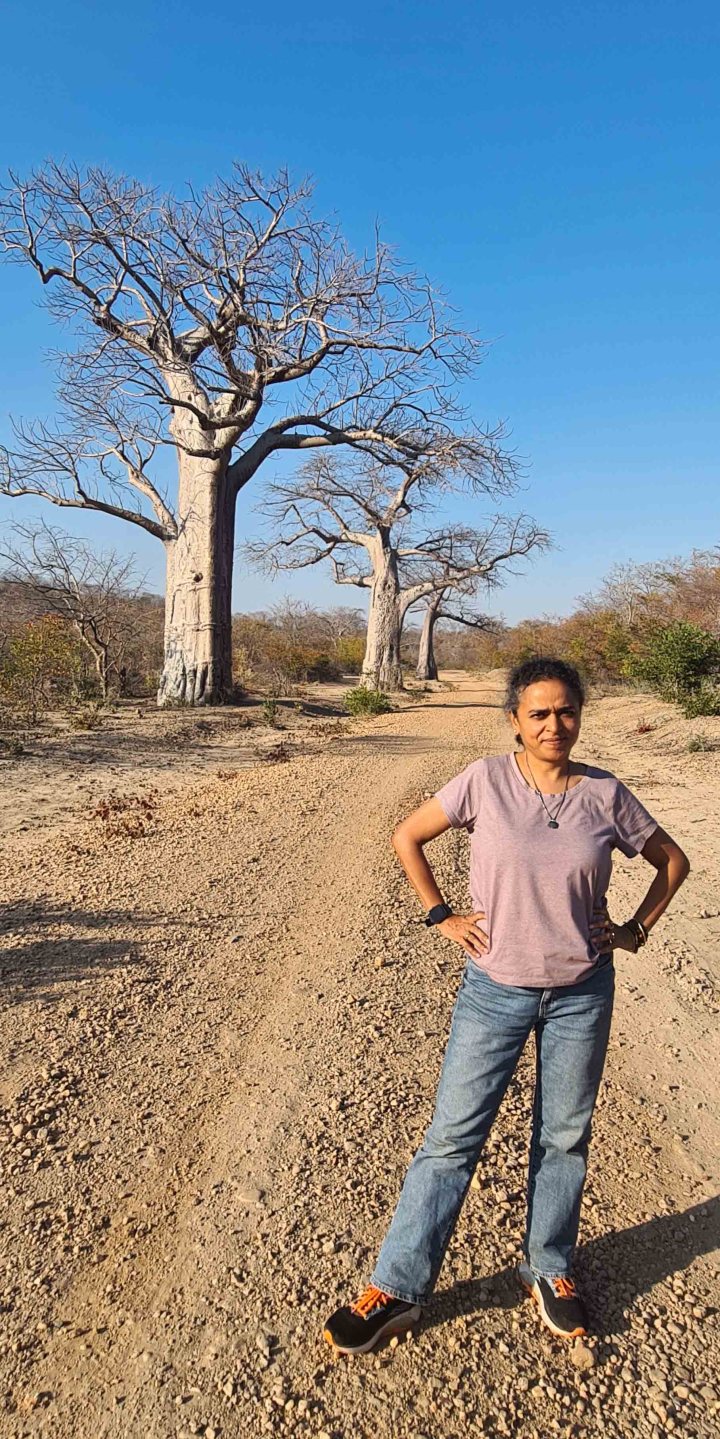
We visit a local school, villages, and go out on the boat to a small sandy island in the middle of the Zambezi River. Freddy our boatman waits for a crocodile to vamoose – we could be in a mall parking lot – before pulling the boat into the very spot.
More friends join us. There are collapsible tables and chairs, snacks and sundowners. The setting sun throws fistfuls of pinks and oranges into the sky, hippos grunt, elephants trumpet.
After a few days at the Masau camp, we load up the car once again. It’s a long drive back up to Lusaka. Everyone is quieter. The last few days have been full of laughter and long conversations, of sitting in silence with oneself. Of hitting pause in our busy lives to see a world we couldn’t have imagined.
I put my feet up and rest my head on the car window. As the clouds roll by and the sun rises, I know I want to come back to Africa again.

Arti Jain loves all the hats she wears. She is a Delhi-based podcaster, filmmaker, digital editor of a Hindi literary magazine and a mother.
Discover more from eShe
Subscribe to get the latest posts sent to your email.
 eShe
eShe 
0 comments on “Delhi family in the African wild – walking with lions and parking like crocodiles”