
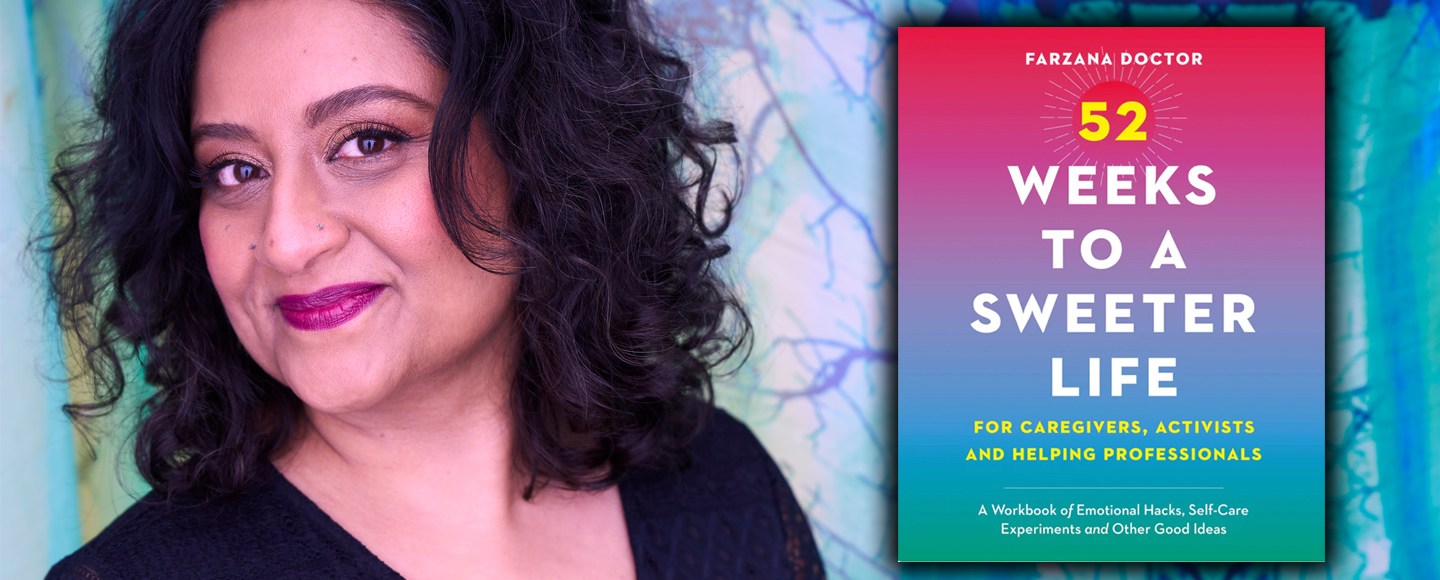

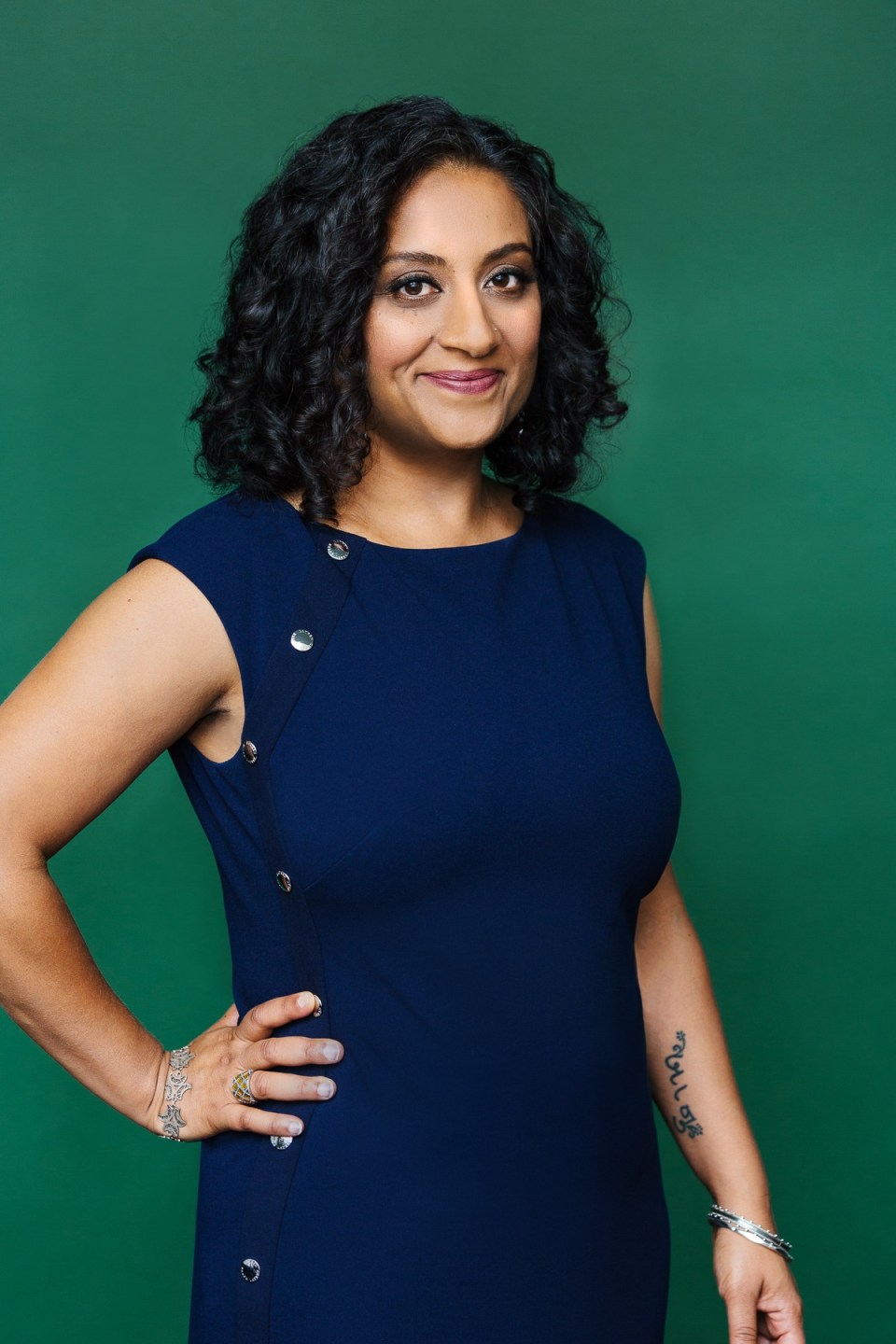
When you’re a caregiver, the last person you have time to care for is often yourself. Farzana Doctor – who has been a social worker and activist for 35 years – has seen it and experienced it often enough. “Those of us who work with people and causes seem to have high levels of overwork, overwhelm and burnout. We often preach self and community care but feel too busy or guilt-ridden to access it ourselves,” she says.
Doctor, who has been into community organising since her teens, focusing on environmental issues, gender violence and 2SLGBTQ+ rights, now runs a private practice in Ontario, Canada. She has co-authored counsellor guides, taught clinicians, and contributed on topics like self-care and female genital mutilation (FGM). Doctor co-founded WeSpeakOut and the End FGM Canada Network.
She is also an award-winning novelist and poet with several critically acclaimed titles to her credit, including Seven, which takes up the topic of FGM in the Dawoodi Bohra community in India.
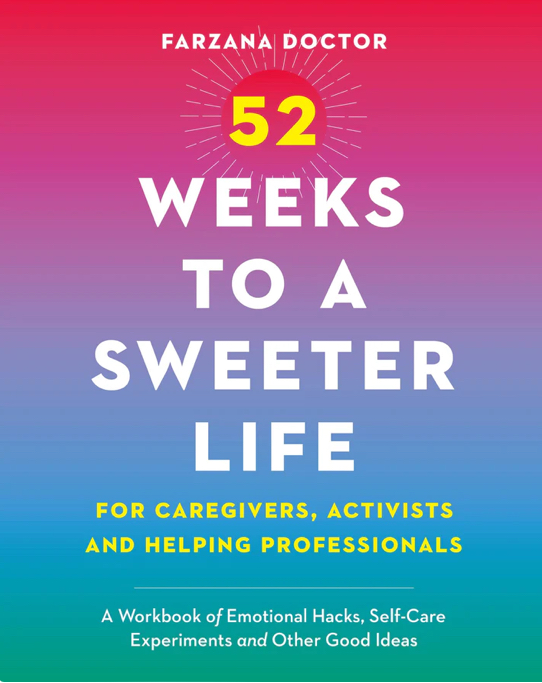
This month she has two book releases – one is a young-adult novel and the other is a self-help manual for caregivers, titled 52 Weeks to a Sweeter Life for Caregivers, Activists and Helping Professionals (Douglas & McIntyre, 2024, USD 18.95).
Here, she shares why she decided to write this book about caregiving and what she learnt along the way.
Throughout the workbook you include anecdotes from your own life experiences, including the times you experienced burnout. What was it like to include these personal pieces?
It felt important to ground the book with these examples of failing and learning and growing and failing again. I’ve learned from others’ experiences and I thought my own might be useful fodder for others. I believe in vulnerability!
When I offer clinical consultation to other service providers, I’ll often self-disclose personal examples when appropriate. We all feel less alone when we can share our vulnerability.
You stress the connections between the personal and the political over activities like ‘shopping and pedicures‘. Why was that important?
On its own, a pedicure might offer pleasure and stress relief and that’s great if you like them! But self-care needs to be both deeper and broader than this for it to be sustainable. That means we look at our personal historical losses and traumas that make us feel guilty or undeserving of self-care.
It also means we must extend our efforts to include community care and think more collectively. Finally, we need to understand the larger political context – how ableism and capitalism and other oppressions impact our ability to care for ourselves and each other.
Can you say more about self-care versus community care?
Self-care and community care needn’t be dichotomous. When we include and support one another in self-care, it’s also community care. Also, our self-care efforts and their benefits can be contagious, spreading outward to our communities. The community’s wellbeing and our individual wellbeing are linked.
You reference dogs a few times in this book. Can you say more about that?
I am a dog person! I had the privilege of being a steward to my dog for 14 years, from the time she was a shy one-year-old shelter dog until her senior years and death. While I’d already learned about the nervous system, emotional co-regulation, stress relief and mindfulness, she was my most experientially-based teacher and I’ve included these learnings in the book.
My Maggie taught me how to wake up each morning grateful for a new day. She taught me how to somatically ‘shake off’ tension. She helped me feel body neutrality and acceptance. She was a big part of my self-care. After she died, I started volunteering at the Etobicoke Humane Society, which started as a grief project, and is now a way for me to give and receive community care.
How might this book be useful to unpaid caregivers?
So many people are unpaid caregivers to loved ones. A 2020 study by the Canadian Institute for Health Information found that one in three unpaid caregivers are distressed from the work. Now, there are also countless rewards from caring for loved ones, but for this work to be sustainable the caregiver needs self and community care.
I’ve seen this firsthand. My mother-in-law lives at home with us and for the past several years has been dealing with Alzheimer’s. My partner is her primary caregiver and we’re lucky to be accompanied by many wonderful personal-support workers.
Can you talk more about why activists need to think more about self and community care?
We don’t often associate burnout and vicarious trauma with activist and community work, but all care work can expose us to individual and collective trauma. Besides that, social change can feel slow, yet the issues we’re addressing are urgent and often overwhelming.
Like other helpers, activists may feel guilty for taking breaks. As an activist myself, I’ve had to learn that activist work is not a race but a lifelong marathon, and we need to rest and get support along the way.
As you have written, much of the problem is systemic – broken social and health services, oppression, global crises. So how can we find ways to individually and collectively create sustainability and wellness in our work?
For me, the answer is in boosting our self-care and community care. It sounds simple, but for so many of us, it’s hard to do. We might feel guilty to rest or undeserving of care. We may feel way too busy or burned out to pause long enough to even think about it.
Here are some tips for boosting self- and community care in your life:
1. Know that change isn’t always easy: Each of us carries a history of learning how to survive and thrive in our families, communities and wider society. Along the way, we’ve created habits and patterns – some helpful and some not – for taking care of ourselves and others. Start by compassionately assessing how you’re doing. What are you getting stuck at?
2. Rethink the ‘grand gesture’ approach: Years ago, it was all about going full steam and waiting to rest on vacations and then wondering why it always felt like there was never enough time off. Or having a spa day but wishing I could live at the spa. I call this the grand gesture approach to self-care. It’s definitely enjoyable, but it’s reactive, maybe even expensive, and ultimately, not sustainable.
Community care had a similar tone in my life: running headlong into others’ crises without checking in on my own capacity. Or having a near breakdown and sending an SOS email to 10 friends. This approach doesn’t work in the long-term.
3. Aim for multiple daily practices: Now – on most days, because nothing is perfect – I try to schedule my day with multiple short breaks so there’s time to stretch, eat, have a cup of tea, reflect, walk, notice, daydream and have deep thoughts throughout the day. I go slower, hustle less. If a workday must be full steam, I create a buffer at the end so I can recover. I reach out to friends more often and about less urgent things. I reach back to offer them the same.
4. Boundaries are important: So many of the helpers and activists I know have trouble with drawing boundaries. Our time and energy are finite, but the need is endless! A key to working with this is to learn how to pause and (a) tune into our physical and emotional capacity and (b) consider our role before saying yes or no to a request.
5. Let your nervous system be your guide: When we notice and honour our body’s subtle cues, we are more able to relate to ourselves and others in a less overwhelmed way. If we do get overwhelmed, we can return to calm faster. We connect to one another with more intentionality and calm.
6. We need one another: Self-care easily translates into community care when we support each other to slow down, rest and lean on each other. Care is contagious. Together, we can create more gentleness in our care and activist work. We can foster more nurturing groups and workplaces.
7. It’s okay if you’re having a hard time: Caregiving, activism and helping work have an emotional impact, both positive and negative. There’s no shame in suffering burnout or vicarious trauma. Perhaps we can look at these experiences in the way we address conditions like carpal tunnel syndrome, through prevention, rest and compassionate treatment.
Discover more from eShe
Subscribe to get the latest posts sent to your email.
 eShe
eShe 
wonderful idea. Definitely going to read this book
LikeLike
I think Farzana is a role model for countless other people to serve humanity as a physician caregiver writer and social activist etc. There is a dire need of social weorker of her caliber in this materialistc world where money is the only criteria to earn it by hook and crook and give a damn consideraion to help others voluntarily. I would prefer to call Farzana as Farzana Physican cum writer. Hats off to her with love and hugs.
Kudos and Shabbash!! Shakeel
LikeLike