


By Noor e Emaan
Ever since the release of Sanjay Leela Bhansali’s web series on Netflix, Heeramandi: the Diamond Bazaar, the buzz around the old city of Lahore has renewed once again. As a modern-day resident of this historical town, I was curious to see how the famous Bollywood director would have visualised my city.
While watching, I could not help comparing it with Abhishek Verman’s film Kalank, which is also inspired by Lahore’s Heera Mandi district, though it is set in a fictional town of Husnabad, meant to be Lahore from the pre-Partition era.
The 2024 web series and the 2019 film both feature an ensemble cast of top Bollywood stars with Sonakshi Sinha bagging a leading role in both. Both period dramas are set against the Partition of 1947, drawing upon the struggles of Lahore freedom fighters and ordinary residents at the time. Both are themed around the life of ‘tawaifs’ (courtesans). Both feature glittering gowns and lehengas that reflect in the mirrors of recreated Mughal monuments where only walls remain now.
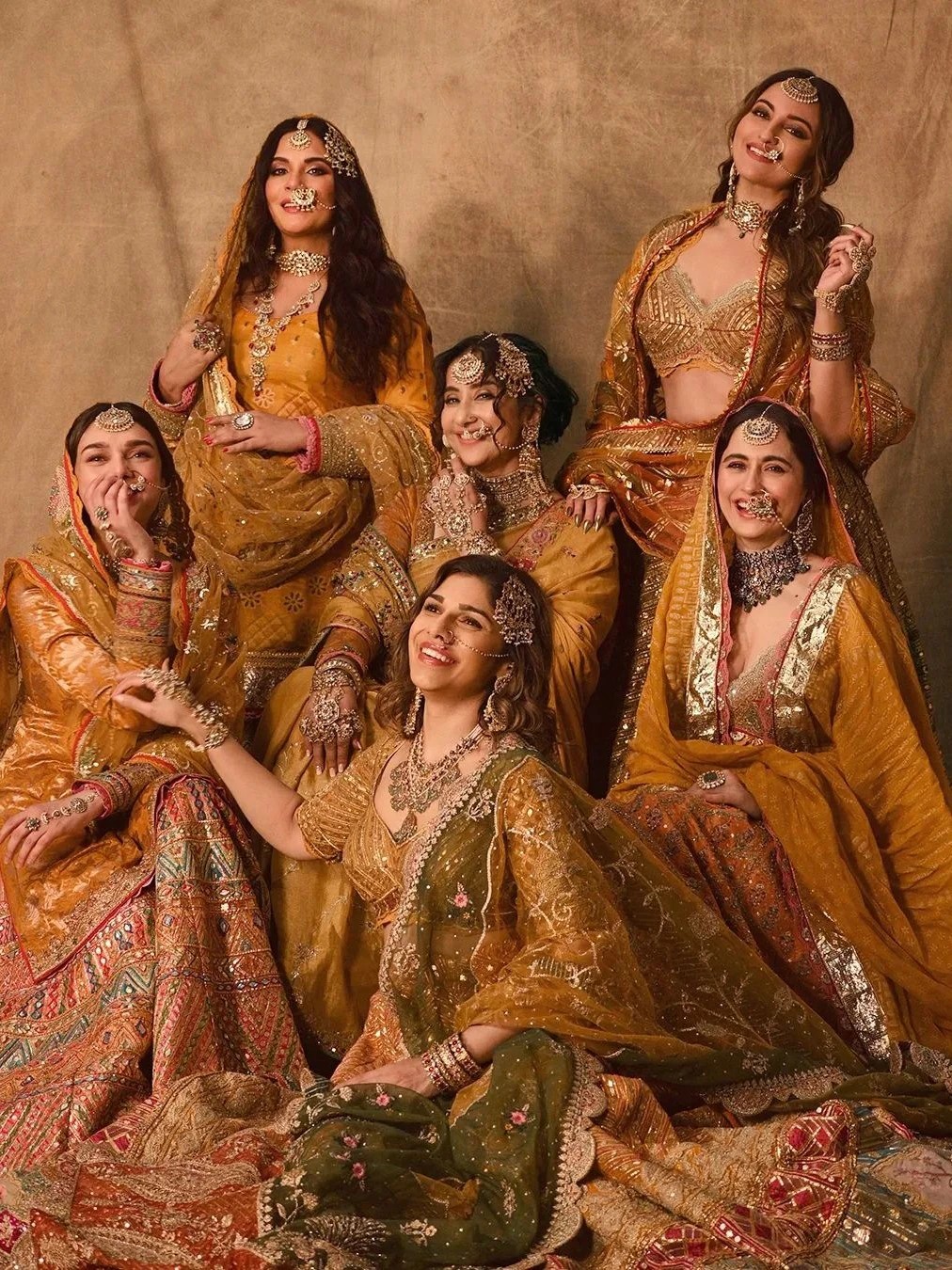
One cannot help but desire the past watching these beautiful scenes. But do the priceless jewels and monumental architecture do justice to the city of Lahore?
Lahore, the name, has countless meanings, from Lohawar, the city of blacksmiths as mentioned in Kalank, to being named after Luv, one of the sons of the Hindu god Ram. These are but two origin stories out of many that reflect the rich history of Lahore.
In Kalank, the dialogues and sets do showcase the diversity within the city, where every house is said to have a unique story behind it. Different religions are depicted and the song First class mentions “Eid mein Holi” as a fusion of Hindu-Muslim festivals. The film also highlights the socio-economic inequality in the city, juxtaposing the homes of the wealthy Chaudhary family on one side of Lahore, with the disreputable district of Heera Mandi’s tawaifs.
It could be said that Kalank draws on the difference in mindset and class differences between Heera Mandi’s population and the ‘respectable’ Chaudharys. Even today, opinions about the Partition in Lahore evoke disagreements and debates, by both Indians and Pakistanis.
And as for class differences, present-day Lahore is not much different. The richer business elite live well away from the areas surrounding Heera Mandi, where the population is either working class or lower middle class. Kalank shows this disparity, but in a way, it romanticises it.
Coming to Bhansali’s 2024 web series, it has drawn many comparisons with the 1972 Bollywood blockbuster Pakeezah. The film starring Meena Kumari and Raaj Kumar is set in Lucknow while Heeramandi is set in Lahore, but some sets, situations and garments appear rather similar.
As Indian historian Rana Safvi writes, the word tawaif comes from ‘tauf’, which means to go round and round. The tawaifs were highly skilled singers and dancers, trained in etiquette and the sensual arts. Due to various factors during British colonial rule, tawaifs – or nautch girls as the British called them – lost their significance as artistes, and became sex workers to make ends meet. Many of the tawaifs in Heera Mandi were often victims of trafficking. Indeed, the word ‘tawaif’ is itself considered an insult.

To me, it seems as if both Kalank and Heeramandi cannot seem to decide between the past splendour of these tawaifs or the present reality. In any case, they do not portray the truth. The storylines follow similar tragic trajectories for love and marriage, and both end up using tawaifs as plot devices instead of the plot itself.
Female psychology is not holistically explored, nor are a woman’s motivations correctly depicted, other than wanting to be tied into a patriarchal love marriage or to play power games. The struggles and emotions of actual tawaifs would no doubt run deeper.
The landscape surrounding the actual Heera Mandi in Lahore is presented such that one cannot recognise Lahore unless told. There are no mountains or rivers in this area. Where the series Heeramandi draws its flavours from Lucknow, Kalank seems to have drawn inspiration from Rome instead. Both similarly fail to portray any kind of history or significance of Lahore in their cinematography.
There is no denying the stunning visual appeal of both productions. The architecture and sets are noteworthy and marvellous. Kalank shows Heera Mandi as an actual bazaar inside the unnamed Delhi Gate. In contrast, Bhansali’s series shows lavish sets and shops. There’s no mention of any other neighbourhood of Lahore, not even Delhi Gate, even if it is shown.
Historical sites like Anarkali Bazaar, Gawalmandi, Grand Trunk Road, Lahore Fort and Badshahi Mosque are nowhere to be seen or heard of, even though many are near Heera Mandi Itself. Instead of the famous 17th-century Wazir Khan Masjid, other smaller mosques are shown.
The kothas (bungalows) of the tawaifs look more like palaces and are the main attractions of the film and series. The reality again, is different. The kothas were always much smaller and women did not have as much autonomy or decorate themselves with expensive jewels all day.
Lahore through the Bollywoodian gaze is more like a fantasy world created out of historical fiction. It is romanticised through the eyes of these directors to such an extent that any significance to the actual city is lost in inaccurate architecture. Kalank and Heeramandi may have different plots or directors, but what they both share is the failure to recreate Lahore.
Noor e Emaan is an A-level student in Lahore. She recently attended the International Writing Program Between the Lines at the University of Iowa, USA.
Discover more from eShe
Subscribe to get the latest posts sent to your email.
 eShe
eShe 
Such poor cinematic ‘creations’. No wonder with such prevalant mindset demonstrating lack of knowledge on Lahore and the culture of era films like Kalank and webseries like Heeramandi get an audience. Filmmakers can certainly enjoy creative freedon but Bhanslai and Abhishek Varman should either produce fantasy period dramas or based on real history. Kalank being far worse. They both seemed to mix everything. And let me not even get into period details. So stick to fantasy please- both.
Btw its not Tauf, but Tawaf. And Kotha is not a Bunglow but a balakhana or roof top/balconies of town houses. So much more has either been oversimplified or poorly researched.
LikeLike
This is indeed a beautifully and aptly critiqued piece about film Heera Mandi by Noor . I agree with Noor when she disagrees with lavish, sprawling sets of the movie as portrayed in the movie in contrast to the real Heera Mandi of Shehr Lahore. Lahore, a city historically founded by Luv or Loh the son of Lord Ram and Sita while the other twin Kush is known to be the Founder of Kasur city, as per historical facts mentioned in official websites . In the same breath the critique labels the film as a ‘historical fiction,’ which resolves the matter of reel versus reality.
However as Noor pointed out most of these pre partition films about tawaifs use a set format and not location variations, and I agree. Taken mainly from Pakeeza and Mughal-e- Azam.
This standard format for tawaifs has been fitted and replicated in most period films,with more or less degree of opulence and sprawling Spaces.
Look at film Devdas, set in Bengal. Begum Jaan, in these parts and most others.
A tangible space of the bygone era of Kings and court entertainments, is related with Cocos Den and it’s owner Iqbal Hussain in the heart of Lahore. Hussain, a renowned artist painting mostly nudes, which he has displayed most proudly. Hussain claims himself to be the son of a tawaif from Maharaja Patiala’s court. Refreshingly he has no qualms about sharing his history. In fact it has added to his USP.
However that aside, the quotient of “Kotha intrigues” is indeed quite entertaining as a storyline in Bansali’s film Heera Mandi.
Well done Noor.
P.S. I have actually visited the Heera Mandi of Lahore in the wee hours of dances in 2005 and familiar with the environment. Having stayed all 3 times at Dera Sahib Gurdwara, a stone’s throw from Heera Mandi.
Best
Rashmi Talwar
India
blog : https//:saanjh.wordpress.com
LikeLiked by 1 person