


The sun is setting over the large festival ground. A serpentine row of thousands of stylish tribals moves rhythmically to a hypnotic tune being doled out by a live band. Outside the ‘dance floor’, rows of pop-up shops selling locally produced handicrafts and indigenous foods do brisk business. Families and youth mill about, everyone seems to know everyone else, and the atmosphere is convivial and jolly.
This is the Shapawng Yawng Manau Poi tribal dance festival, held every February in Arunachal Pradesh in one of the handful of villages dominated by the Singpho tribe.
I’m trying to fit in, wearing a ceremonial wraparound skirt and checked chest cloth over my collared shirt, swaying from side to side holding a starched white handkerchief in my hands.
I’m probably out of step, and the glorious jewellery on the dancers ahead of me and behind me in the queue distinguishes the real Singphos from the phonies (like me!). Even so, I’ve never felt more at ease, and less inhibited.
That’s the thing about Arunachal Pradesh that I’ve noticed so far on this trip with my bestie Ritu: the social fabric is more equal, the vibe is chill, and the women are wow – strong, empowered, badass. As a newbie to India’s northeast, it is this difference from north India that strikes me most.

Ritu specialises in curating offbeat trips to unexplored parts of India through her enterprise Ease India Travel. It’s my good luck that I have my college friend to myself on this getaway after decades of living apart, embroiled in our own families and careers.
Our trip begins from Dibrugarh airport in Assam, from where we travel by road to Miao, a hamlet in east Arunachal Pradesh. The drive takes four hours and we stop for lunch en route.
Ritu tells me about the 26 tribes of Arunachal, each with their own culture and cuisine, who speak about 50 languages and dialects among them. None of them have a written script, though two tribes are currently working on it, Ritu tells me. Almost everyone knows Hindi and some know English, so it’s easy to communicate.

We reach Tikhak homestay at dusk; it’s a lovely property in the hills owned by a mother of three called Bella. My room overlooks the Noa Dihing river and the cool evening breeze is literally a breath of fresh air after the hazardous pollution of Delhi.
Bella is a powerhouse of effortless grace and positive energy. She belongs to the Khamti tribe, one of the dominant ones with connections that go up to the political bigwigs. Her late husband was a Tikhak, which is a sub-tribe of the Tangsas.

Sophisticated, generous-hearted and well-read, Bella and her daughter Sherin have long conversations with us over the next few days on a range of subjects – from the local cuisine, trees and fruits, to Bella’s interview in a coffee-table book, women’s emancipation, and the Tikhak housecat.
After a nutritious breakfast in Bella’s dining room the next morning, Ritu and I head to a traditional Tangsa home in Old Plone village near Miao. The octogenarian Kamwang who owns it is the last master craftsman of the Tangsa tribe to make the traditional homeware and farming accessories of his ancestors.

His son and grandson display Kamwang’s creations made of wood, reed, metal and straw, explaining their purpose. I try on some of the super-large hats that farmworkers would wear and the old-world version of a backpack – a back-basket – that they would use to carry their harvest.
These heritage tools and wearables are no longer used now by today’s farm workers, who have adapted to more modern means of farming and lifestyle.
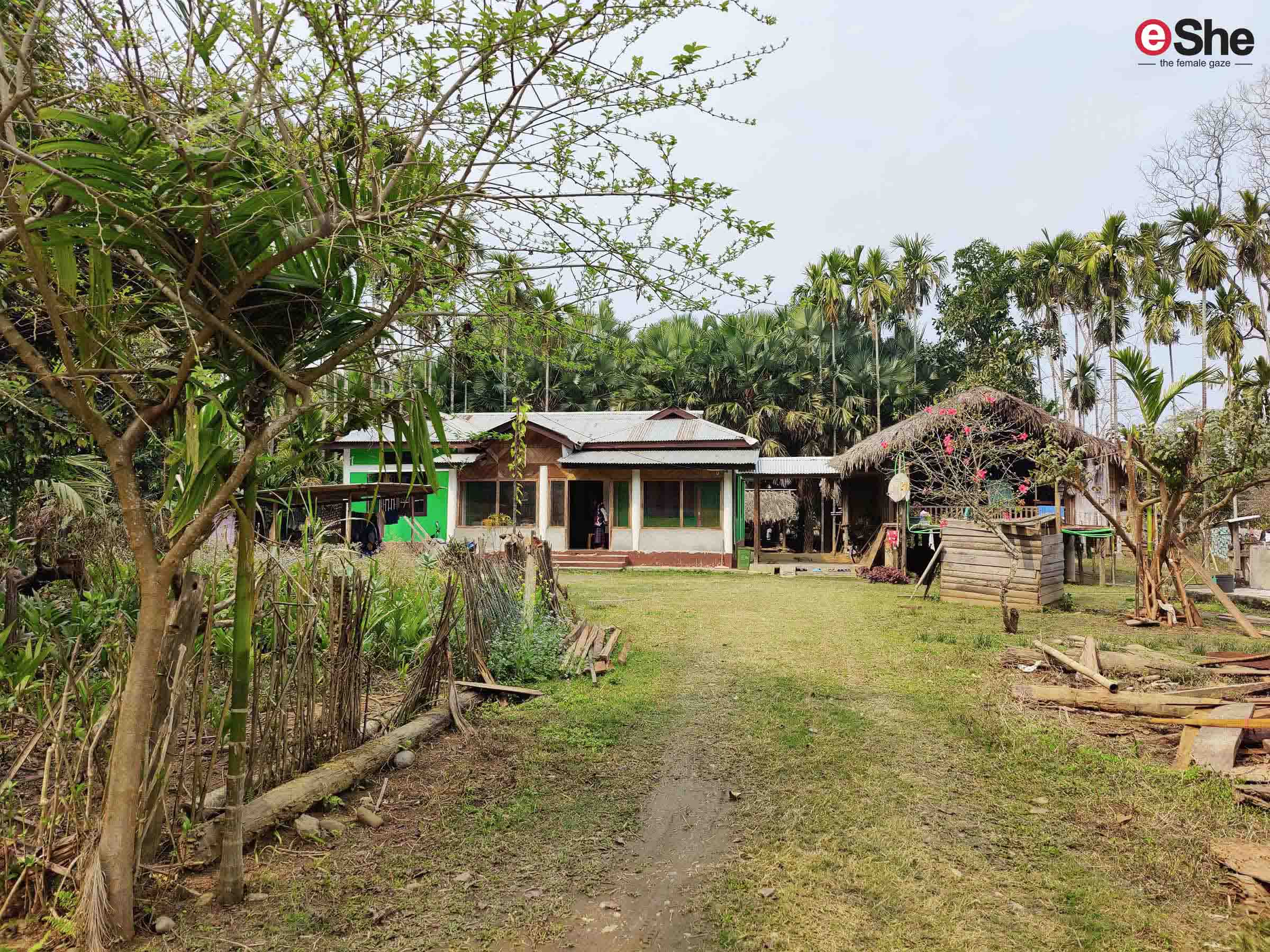
Kamwang, who estimates he is around 83 to 85 years old, shows us around his small, rustic home. I am smitten by the hammock, thatched open-air kitchen, and expansive greens all around. We then visit a Tibetan settlement of carpet-weavers and marvel at their cottage industry.
For lunch, Ritu and I head to – and I do not say this lightly – the loveliest restaurant I have visited in the entire world. I fall so deeply in love with this place that we will return here every day until we leave Miao. It’s called Pisi’s because it belongs to Pisi, a wealthy tea-estate owner.
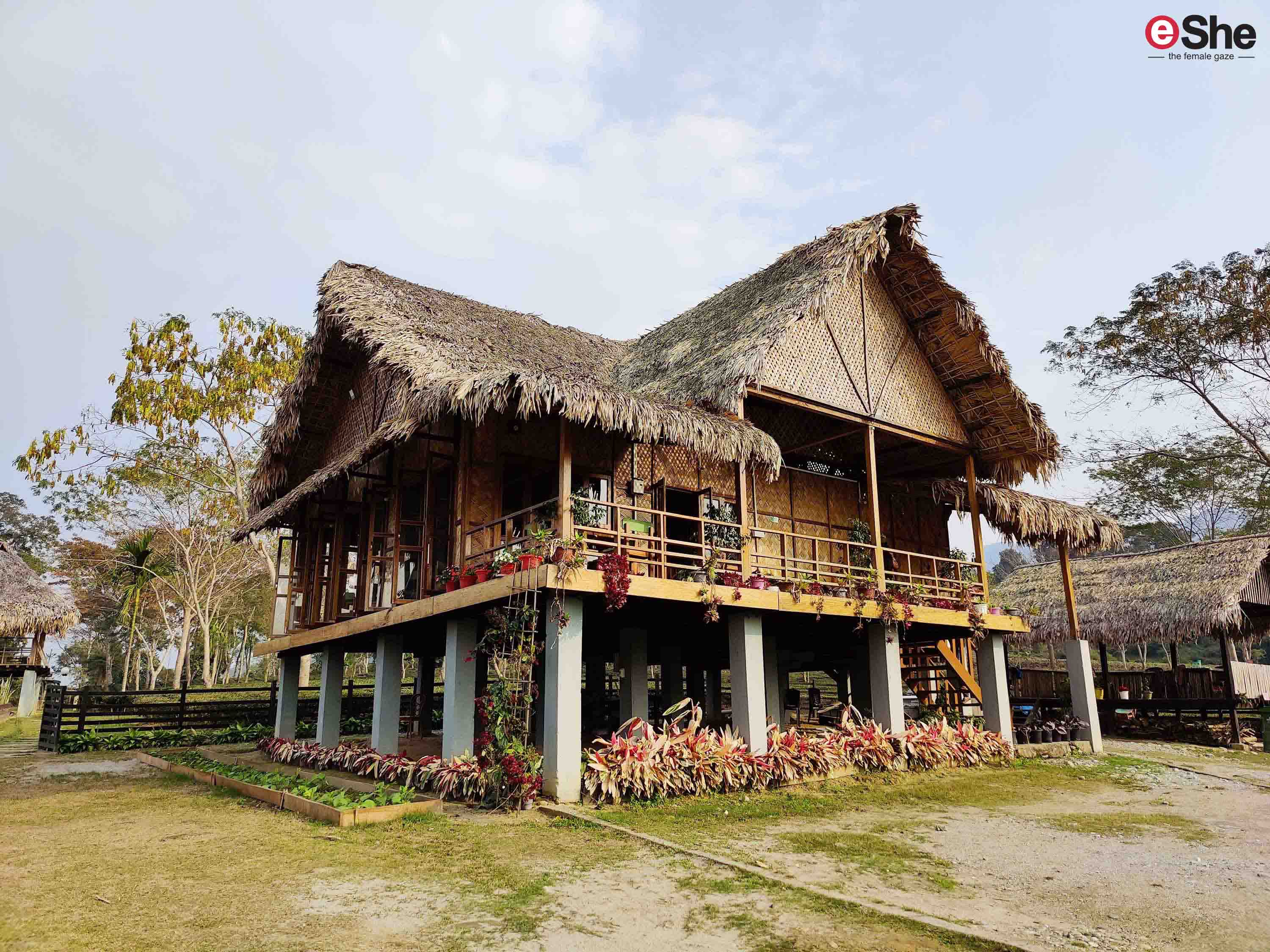
Her two grown-up daughters run the restaurant at timings that are convenient for them, which is 9.30 am to 5 pm, five days a week (it was four earlier). There’s something to be said about the slow mountain life.
But the space – a whole hilltop of it – is so stunning that it’s worth moving our own schedule around so that we can make it to their open-hours. With plenty of outdoor spaces to sit – patios, treehouses, lawns – and an indoor room atop a traditional Arunachal stilt construction, you want to try a different space each time.
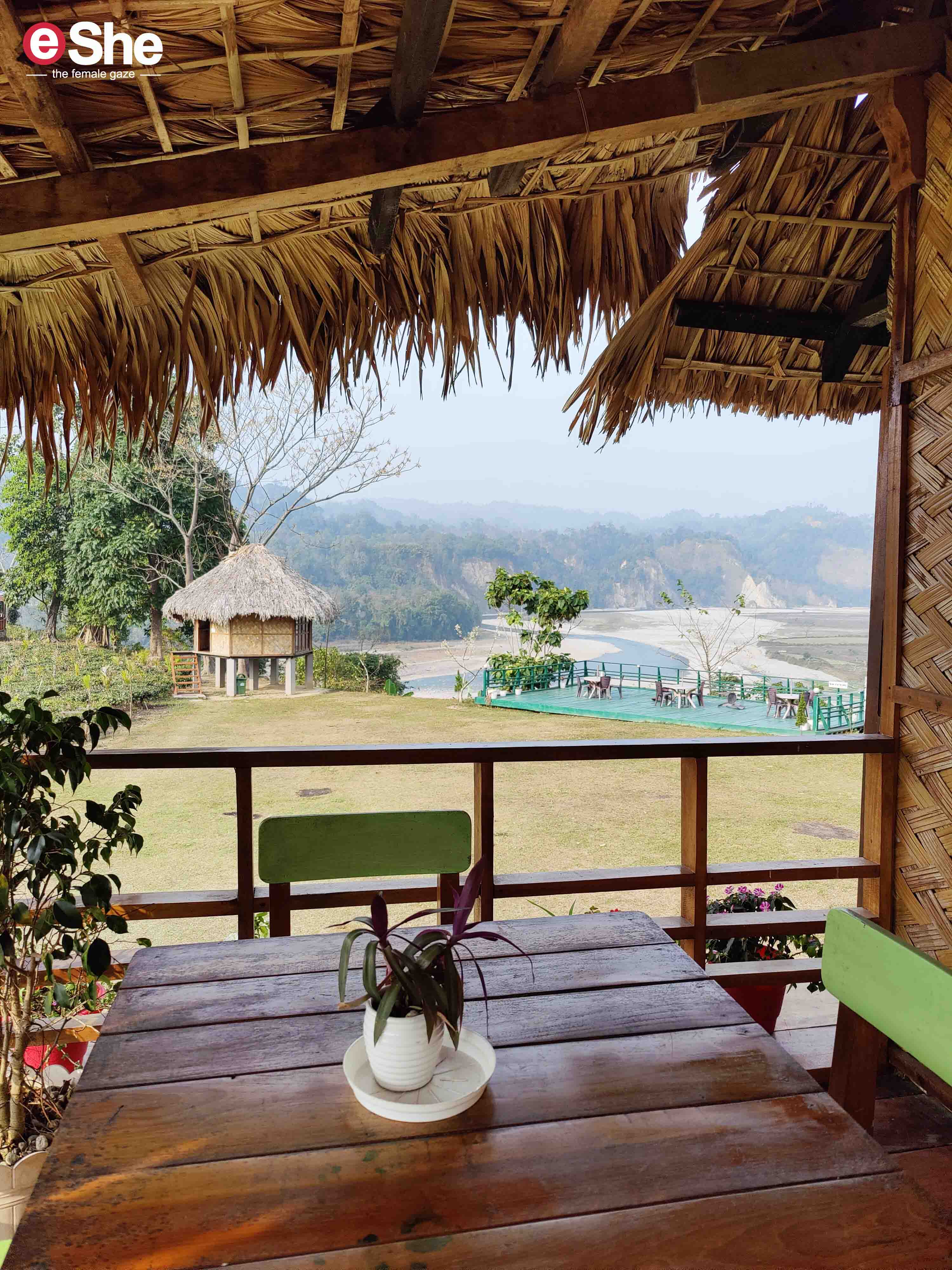
One side of the property overlooks the river valley, the other a lush tea estate where an elephant casually walks through while we wait for our meal. The mountain breeze is intoxicating, the green wooded landscape soothing.
Ritu and I discuss our perimenopausal sex lives lying on the floor of the raised stilt platform seating area, which has cushions instead of chairs, which just makes the entire experience memorable AF in my brain.

And the food never disappoints. On our first visit, we sit indoors to have a traditional Singpho thali. As a vegetarian, my options are limited in most places, and I find Arunachali food bland on the whole. But here at Pisi’s, I try every single vegetarian option on the menu over the next few days, and it just gets better and better.

At dusk, we go on a long drive to see the Golden Pagoda, a Buddhist temple complex built by the Khamtis in Namsai district, and take photos of the sun setting against the gilded structures.

That evening, I opt out of dinner with Bella. Instead, I lounge in my room with my laptop. Later, I message Ritu that I am hungry, but I’m also too lazy to walk up to the dining room. She sends across her business partner with a tray to deliver dinner to me.
I am abashed to see the gentleman standing outside my door in the dark and cold. “You shouldn’t have done that! I am so embarrassed!” I tell Ritu the next day. “Yes, I wanted you to be,” she replies sternly.
It is a humbling lesson in the way of the mountain-dwellers. Unlike metropolitan cities in India where domestic help is easily and cheaply available, and unlike hotels with 24×7 room service, homestays in rural India are run and operated by owners with skeletal staff.
Disregarding their schedules and efforts, and treating homestays as a ‘hotel’, is a discourtesy, an inconsiderate faux pas. I am on time at the dining room for every meal thereafter!
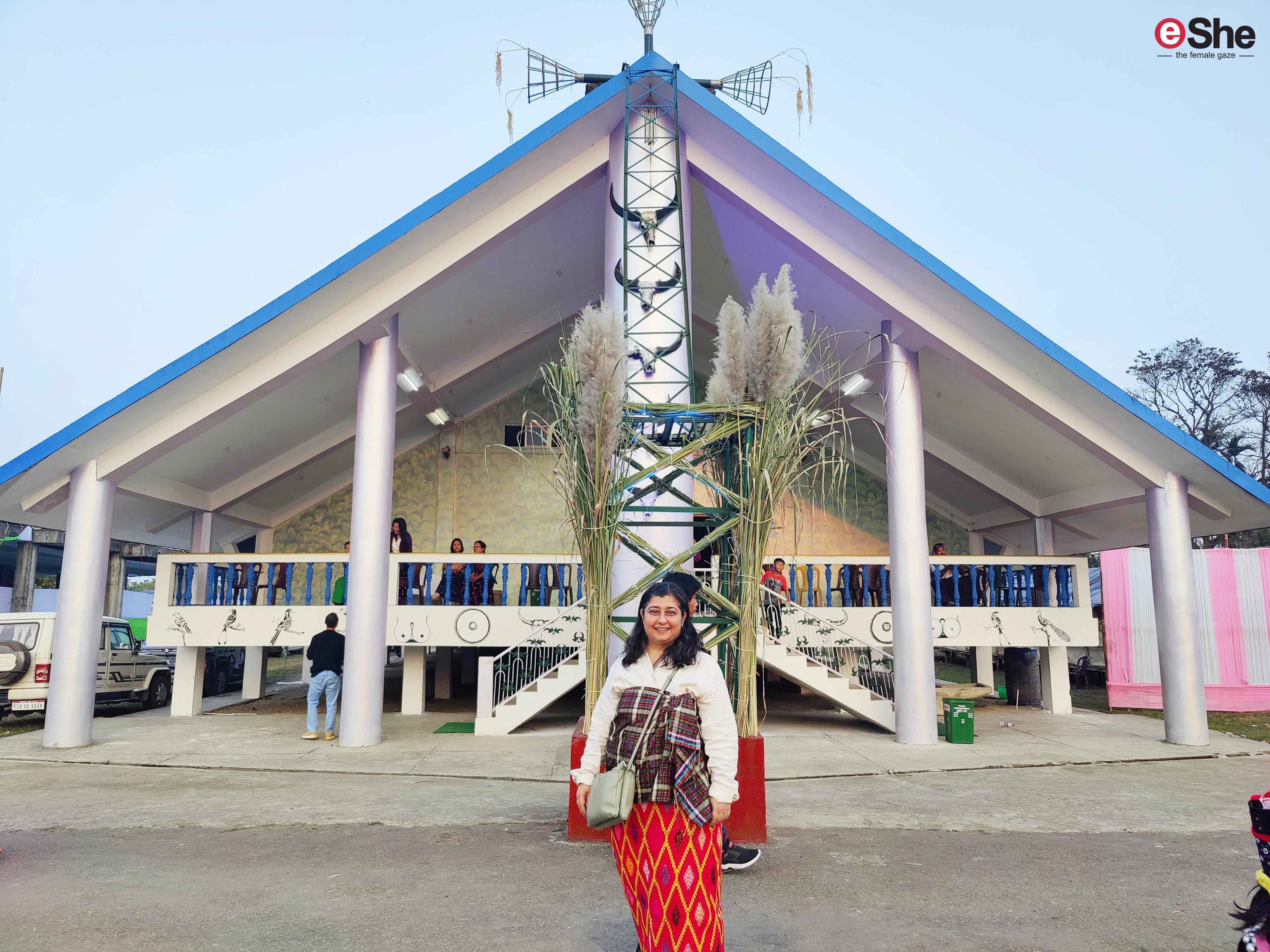
And now for the highlight of this trip – the dance festival of the Singpho tribe in Bordumsa.
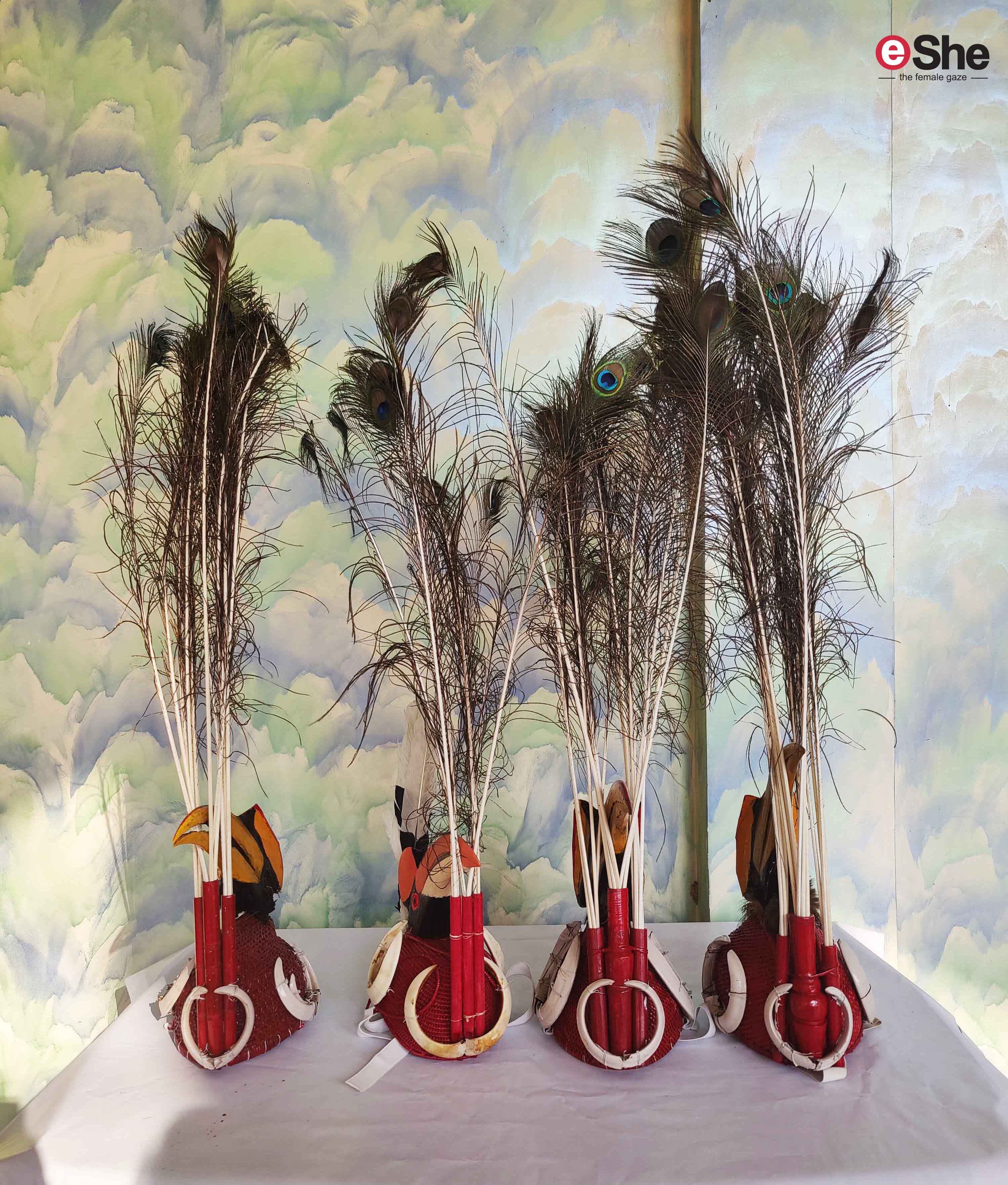
In preparation, we visit a local tailor to customise our gale (pronounced gah-lay) skirts that Ritu has bought for both of us. It’s a lovely red handwoven fabric that is a hallmark of the Singphos. Each tribe has its own kind of gale.
Shibu, the tailor, is irate. “The Singpho women know their festival happens at the same time every year – why don’t they get their clothes stitched in advance? Why must they all drop in at the last minute?” he grumbles about his workload, taking our sizes.
He charges us 500 rupees each for the alteration, which I find expensive compared with Delhi. But everything is expensive in Arunachal, Ritu tells me, hotels, food, products, services. Which is why my tour costs me three times more than a similar trip to Himachal Pradesh. Even cabs in Arunachal cost twice the amount they would in nearby Assam because of the remoteness of the region and the low population density.

The tribal festival is a day of breathtaking cultural beauty and bonding. We are accompanied by Pinna, who has three little daughters. Pinna belongs to the Tangsa tribe herself but she is married to a Singpho man, making her attendance at the festival almost mandatory.
Besides the dance, which culminates at an installation to the guardian deity Shapawng Yawng, the festival’s highlights include a free lunch for visitors served by the organisers. We sit on the floor of a huge auditorium where beaming middle-aged men and women serve us on our leaf plates. Once again, I have only limited vegetarian options – boiled chickpea curry, rice and salt-and-pepper jackfruit – while others also savour fish and chicken.

We stay till night to watch the fireworks. My impression of ‘tribal culture’ is rewritten today – unlike the stereotypical image that city-dwellers have of rustic, illiterate forest-folk, these tribals are educated, tech-savvy, trendily dressed and empowered.
Yet, unlike us, they are also more in tune with nature, more protective of the ecology they are dependent on, and more community conscious. In 2024, the dance festival will be in the village of Namgo.
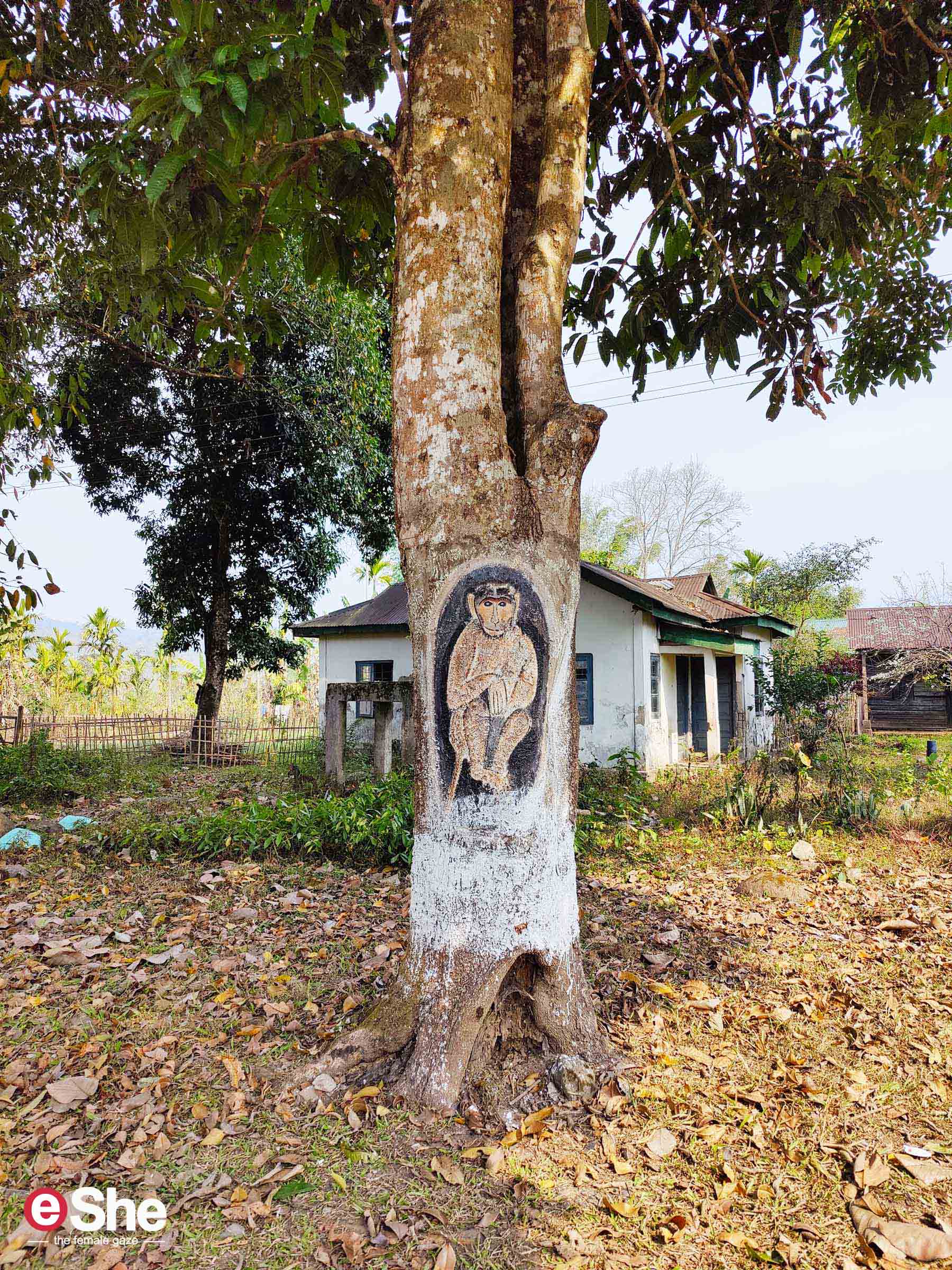
Besides immersing you in authentic local lifestyles, what I find most interesting about Ritu’s curated trips is the opportunity for personal transformation through experiential tourism. One such moment comes on our day trip to Namdapha National Park.
I love the sensorial luxury of forest bathing – the feeling of being enveloped in the heart of nature and sinking into the pulse of life itself. In addition, Ritu arranges a short trek here with a local guide, which I am initially apprehensive about but which leads to an inner awakening of sorts.
Our guide, Ajat Aboh, belongs to the Nocte tribe who typically live in the southeastern region of Arunachal. His mother is from Nagaland, he says, and his father is a retiree from the forest department. The national park is a cellphone-free zone. We begin our trek by treading across a bed of river stones, and then crossing a section of the Noa Dihing river over a lean bamboo bridge.
We then climb a precariously placed and extremely tall ladder into a dense forest, where we walk and talk for a couple of kilometres.
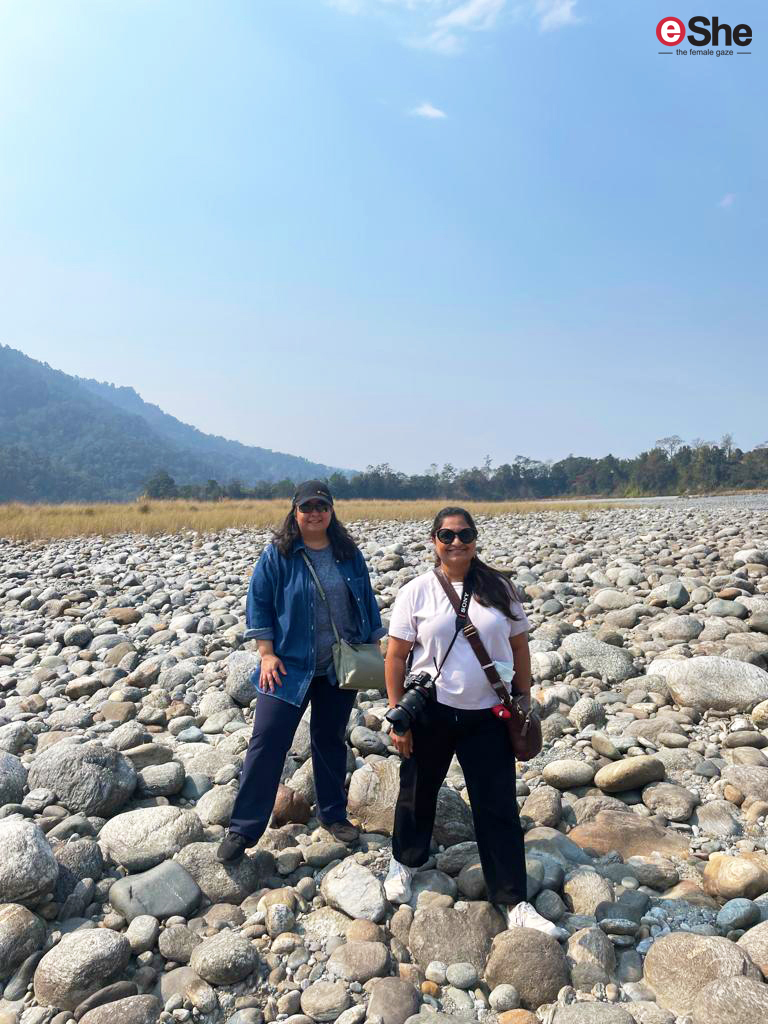
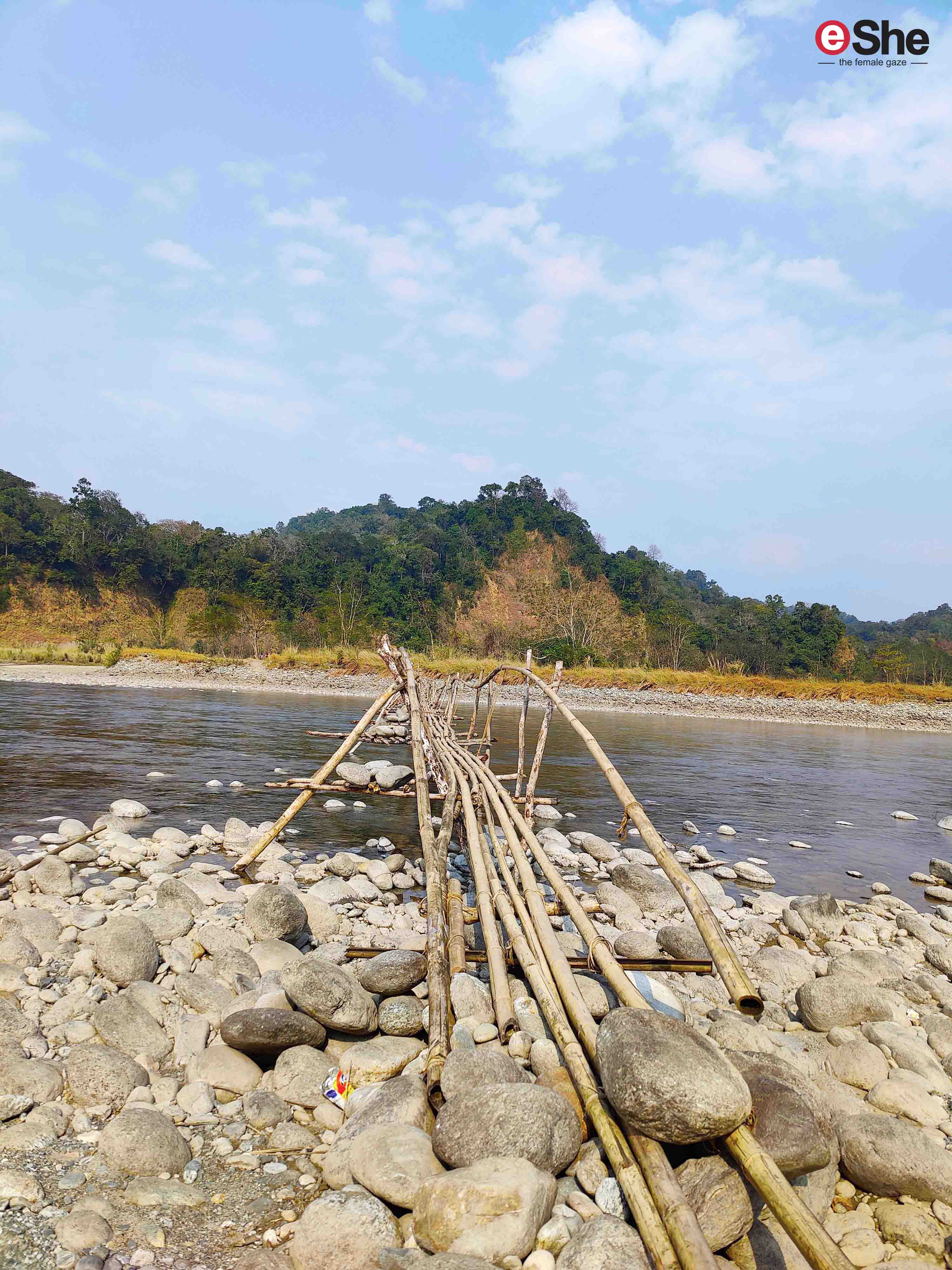
The path goes further but we turn around after encountering a huge fallen tree trunk across our path, and stroll back, discussing China’s increasing influence in Arunachal villages, the importance of preserving local ecosystems, and India’s lack of infrastructural investment in these remote areas.
Leaves rustle, birds twitter, the forest stands tall and silent, listening in to our unhurried conversation.
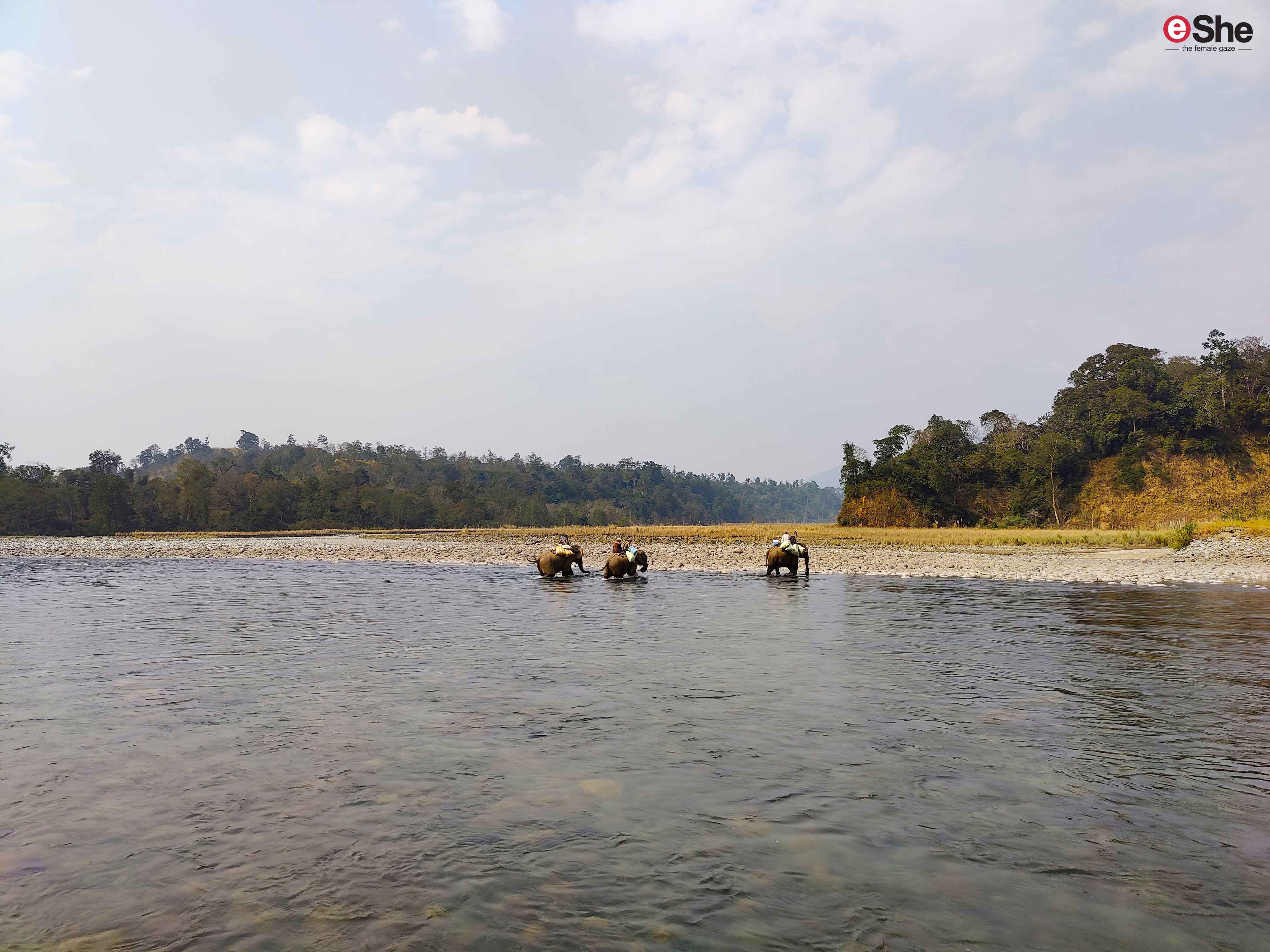
Climbing down the almost vertical ladder to the riverbed is frightening, but we all make it back safe and sound. I am amazed not only that I was able to overcome my fear and challenge myself physically, but also that I was able to be truly present in the energy of the land for a few hours.
“We often surprise ourselves with what we’re capable of when we push our limits,” Ritu says.

On our last night in Arunachal, we check in at the Namdapha Jungle Camp where I have my first experience of staying in a traditional Arunachal stilt construction. The hut has basic bamboo and wood furniture, and a functional toilet and bath. Since the walls of the dwelling are thin, one must be prepared to hear the sounds of the forest and other guests all night.
We eat our meals at the canteen – and I am delighted to discover they serve delicious pan-Indian vegetarian cuisine. Early the next morning, I realise I have no hot water since I forgot to turn the geyser on, and now there’s a power cut. Luckily, there’s hot water in Ritu’s room, so I don’t have to shiver.
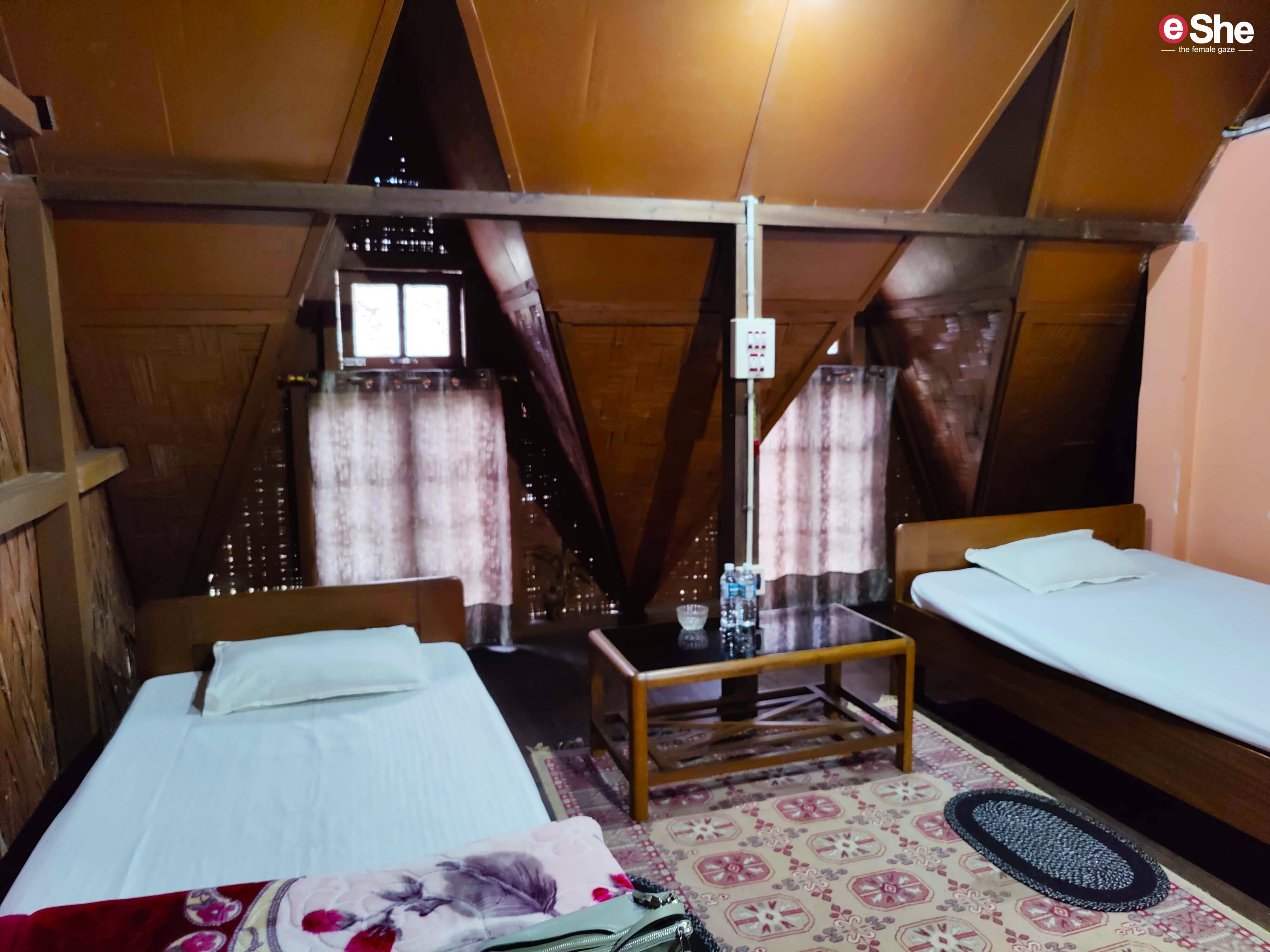
Ritu already left late at night for another district in Arunachal, so her driver Jitu Dutta drops me to Dibrugarh airport by myself. Introspecting on the long drive, I feel invigorated, alive and full of wonder at the marvels my country has to offer.
I am now trying to decide between Ease India Travel’s ‘snow leopard quest expedition to Ladakh’ or the ‘signature holiday to bewitching Bastar’. Which one would you choose?
Discover more from eShe
Subscribe to get the latest posts sent to your email.
 eShe
eShe 
0 comments on “Offbeat Arunachal Pradesh: trysts with tribal powerwomen and a Singpho dance festival”