

By Dhaani Singhal
The role and influence of Mughal queens and noblewomen on the politics, society, art, and culture of the powerful Mughal empire (1526 – 1857) has become a subject of much interest lately. Despite the patriarchal conventions prevalent at the time, Mughal women occupied versatile roles as strategists, peacekeepers, diplomats, and counsellors in Mughal political and social spheres.
From the early peripatetic queens like Khanzada Begum and Gulbadan Begum, author of the Humayun-nama, to later legends like Nur Jahan and Jahanara Begum, the Mughal landscape is dotted with several notable women. Beyond politics, they played a vital role in cultivating the art and cultural milieu which left an unrivalled legacy for future generations.
While these are profound contributions, it is equally true that these women were bound by many constraints and restrictive societal norms like purdah, dowry and polygamy.
Due to these restrictions that indirectly or directly led to the erasure of women from public life and historical records, it is all the more challenging for historians and researchers to unearth and fully recognise the role of queens and noblewomen in the history of the Mughal empire.
The Mughals came from the powerful Timurid-Chingizi legacy in Central Asia. Their tradition and ideal of empire-building was indoctrinated from an early age into the mindsets of both the men and women.
In her 2018 book Daughters of the Sun, historian Ira Mukhoty writes, “In their roles as ambassadors, peacekeepers, rulers in absentia and even guardians of memory, it was the Timurid-Chingizid ideal that these Mughal women were claiming.”
Scholar Ruby Lal has also observed that during the reigns of Babur and Humayun, there was no hard segregation between the public and the private, the court and the harem.
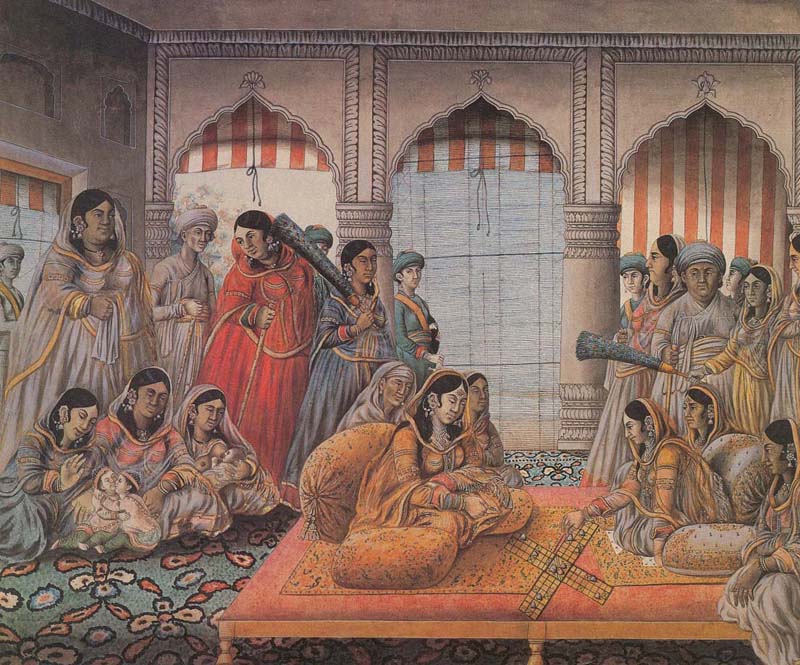
However, over the next 50 years from Babur’s rule to Akbar’s reign, as the Mughal empire prospered and consolidated across India, the concept of a separate, sequestered space (the zenana) for the royal women came into existence.
Read also: Mythological women revered, stories of historical women censored in India
In Fatehpur Sikri, the city that Emperor Akbar built, a separate walled palace was designed as the zenana with around five thousand rooms to accommodate all the royal women.
Many historians attribute the absence of women from politics to purdah, the practice of covering their faces and staying behind the high-walled enclosures of their zenanas. Despite this, there were a few strong female figures in almost every generation of Mughal rulers that impacted the political destinies of their empires. Here are three of them.
Maham Anaga: Akbar’s milk mother and vakil
An important figure is a commoner, Maham Anaga, one of Emperor Akbar’s “milk mothers” to whose care he was entrusted in 1555 when orphaned at the age of 13. Maham Anaga became Akbar’s strongest political strategist and advisor and was referred to as the vakil or vice regent of the empire.
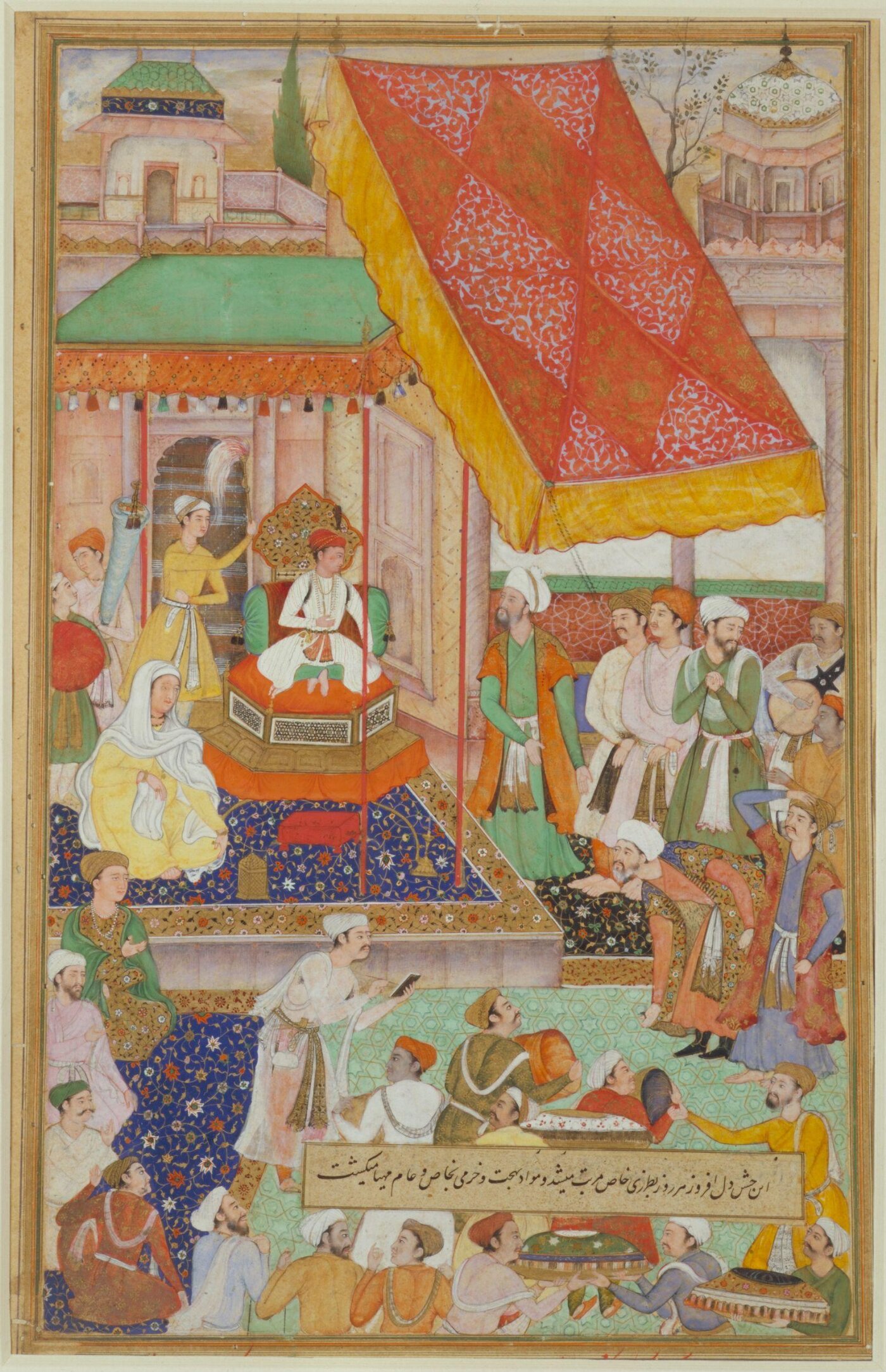
Her authority is shown in this painting from the Akbarnama painted by artists Lal and Sanwla showing a 12-year-old Akbar on the throne with Maham Anaga beside him addressing the courtiers at a wedding. In the Akbarama, she has been described by the Akbar’s biographer, Abu’l Fazl in the following words:
“In reality the function of vakil (deputy) was carried out by Maham Anaga… in this amazing labour wisdom and patience are necessary. And those two qualities she possessed to perfection.”
Maham Anaga was immortalised by Bollywood in a villainous role in the Hrithik Roshan and Aishwarya Rai starrer Jodhaa-Akbar (2008). The blockbuster film directed by Ashutosh Gowariker depicted her as Akbar’s evil foster mother who tried to ruin his relationship with his Rajput bride Jodhaa in order to retain her own power over the empire.
Nur Jahan: the co-regent who almost ruled
In the next generation (1577-1645), Nur Jahan, the last wife of emperor Jehangir, son of Akbar, wielded so much political power that she was considered the co-regent with her own seals and edicts to conduct the business of the state.
European diplomats in the Mughal court wrote often about the cumbersome nature of the necessity to acquire her approval for every trade agreement or political pact. There are Persian couplets describing silver and gold coins and seals bearing her name, something that is unprecedented for a woman.

A particularly imposing portrait of Nur Jahan holding a rifle painted by the court painter Abul Hasan at the Rampur Raza library shows her as a skilled markswoman as well as an astute military strategist.
Read more: How a Mughal empress broke the glass ceiling five centuries ago
Among all the Mughal queens, Nur Jahan came closest to ruling over one of the largest empires in the world.
Princess Zeb-un-Nisa: the invisible poet
A few generations later, emperor Aurangzeb’s daughter Zeb-un-Nisa emerged as a scholar and poet par excellence. At the age of just seven, she memorised and recited the Quran.
As she progressed in age, Zeb-un-Nisa learnt to write in Persian and Arabic, became an expert at calligraphy, singing and even mastered a form of love poetry called ghazal. Her collection of poems called Divan-e-Makhfi, has over 5000 verses. It was published posthumously.
Given the puritanical nature of emperor Aurangzeb and his legendary dislike of the arts, it is no surprise that she took on the pen name of Makhfi, the invisible.
Historians such as Annie Krieger Krynicki believe that Aurangzeb would have been mortified had he known about his daughter’s liberal and free-thinking poetry. She spent the last 20 years of her life imprisoned by her father at Salimgarh Fort in Delhi.
Zeb-un-Nisa never married though she had many suitors. Her poetry speaks of love and longing that is free from the constraints of religion:
I bow before the image of my Love
(Translated by Willis Barnstone from the Divan-e-Makhfi)
No Muslim I
But an idolater
I bow before the image of my Love
And worship her
No Brahman I
My sacred thread
I cast away, for round my neck I wear
Her plaited hair instead
While we see glimpses of the involvement of women in the political, art and cultural atmosphere of the Mughal dynasty, much remains unexplored. It is vital that we direct our efforts towards unearthing the entire scope of women’s roles, eventually recognising and appreciating their contributions to the great empires in history.
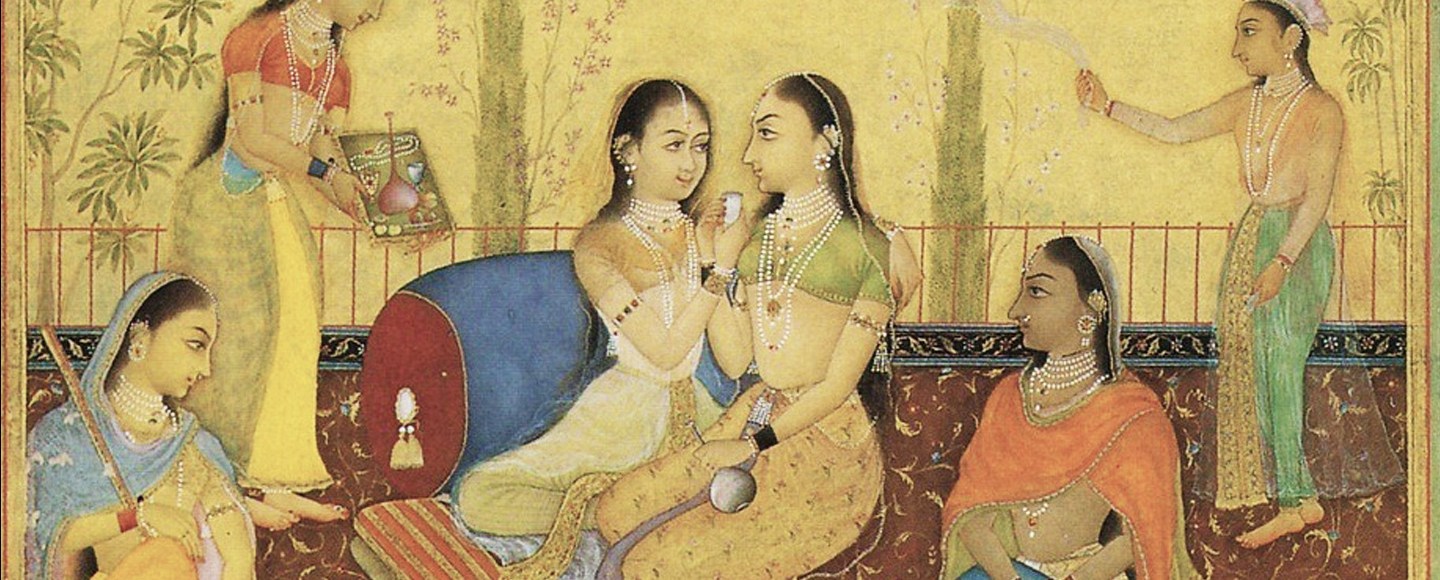
Lead image: Ladies of the zenana on a roof terrace. Painting by Ruknuddin, Bikaner, 1675. Photo: The Kronos Collections
Discover more from eShe
Subscribe to get the latest posts sent to your email.
 eShe
eShe 
It is worth reading . As a Muslim I know that our mothers and sisters lived in purdah but they were decision makers and advisers in every aspect of life. My sister as a student had won essay writing competition observing purdah.
LikeLike